The boundary between human imagination and digital reality is dissolving faster than ever. As we approach a new era of creative expression, the future of 3D art is being rapidly rewritten by groundbreaking technological advancements. For decades, 3D modeling and digital sculpting required years of specialized training, complex software, and immense computational power. Today, that paradigm is shifting completely.
Whether you are a seasoned digital sculptor, a game developer, or a traditional artist looking to transition into the digital realm, understanding the digital sculpture trends 2026 is critical to staying ahead. The convergence of artificial intelligence, immersive realities, and advanced manufacturing is not just changing how we create art—it is fundamentally changing what we can create.
In this article, we will explore the core technologies driving this revolution, from the rise of AI 3D art to the seamless integration of digital models into the physical world, and provide actionable advice on how to future-proof your creative workflow.
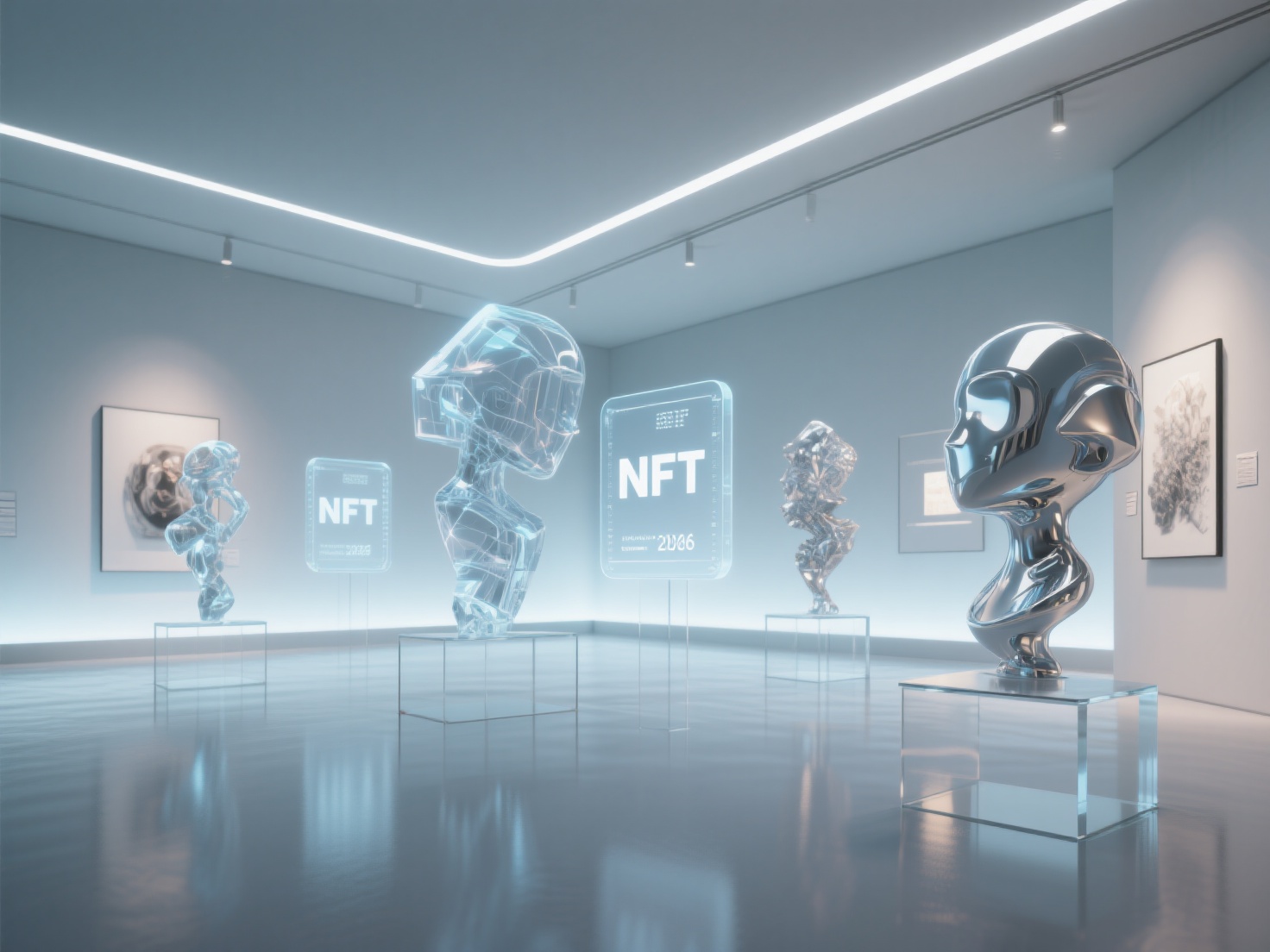
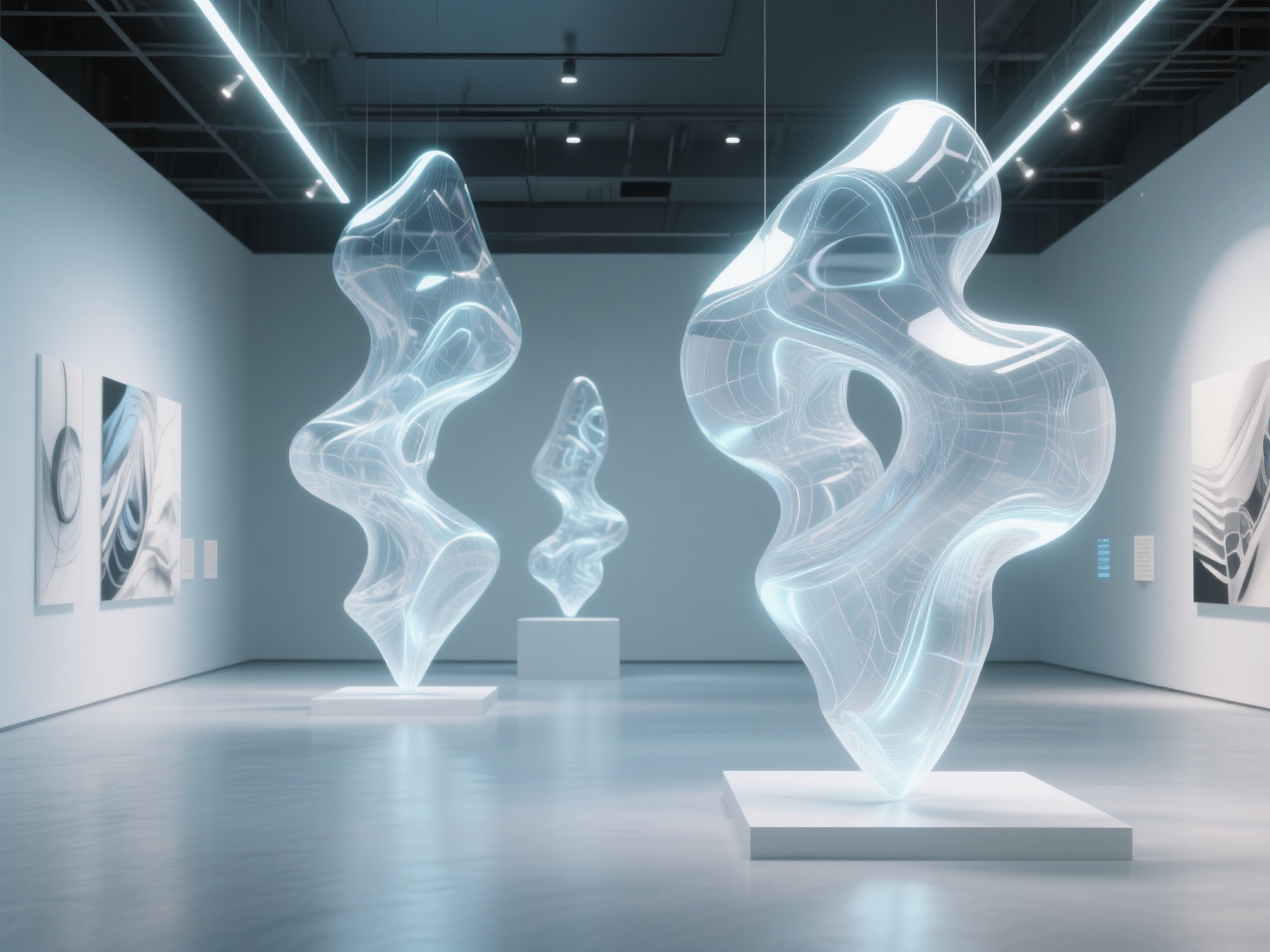
Futuristic digital art gallery with holographic 3D sculptures and XR elements.png
What is the Future of 3D Art and Digital Sculpture?
The future of 3D art and digital sculpture is an interconnected, highly accessible ecosystem where artificial intelligence, real-time rendering, and immersive extended reality (XR) seamlessly bridge the gap between digital creation and physical fabrication. By 2026, the focus will shift from the tedious mechanics of manual topology and mesh editing to pure creative direction, empowered by intelligent tools that automate technical hurdles and democratize high-fidelity 3D asset generation.
Key Digital Sculpture Trends in 2026
To understand where 3D art technology is heading, we must look at the specific trends that are actively reshaping the industry. Here are the most impactful developments defining the landscape in 2026.
1. AI-Powered 3D Generation (The Game Changer)
The most disruptive trend in the industry is undoubtedly the rapid maturation of AI 3D art generators. What began as experimental text-to-3D concepts has evolved into robust, production-ready workflows. Artists can now transform 2D concepts into fully realized 3D models in minutes.
Next-generation platforms like Hitem3D are leading this charge, built on proprietary high-precision AI models like Sparc3D and high-efficiency models like Ultra3D. Unlike early AI tools that generated messy geometry, today’s advanced systems can intelligently reconstruct invisible or hidden parts beyond the visible surface of a single 2D image. This guarantees full geometric accuracy and clean, production-ready topology that artists can immediately use in professional pipelines.
2. The Convergence of Digital and Physical (Phygital Art)
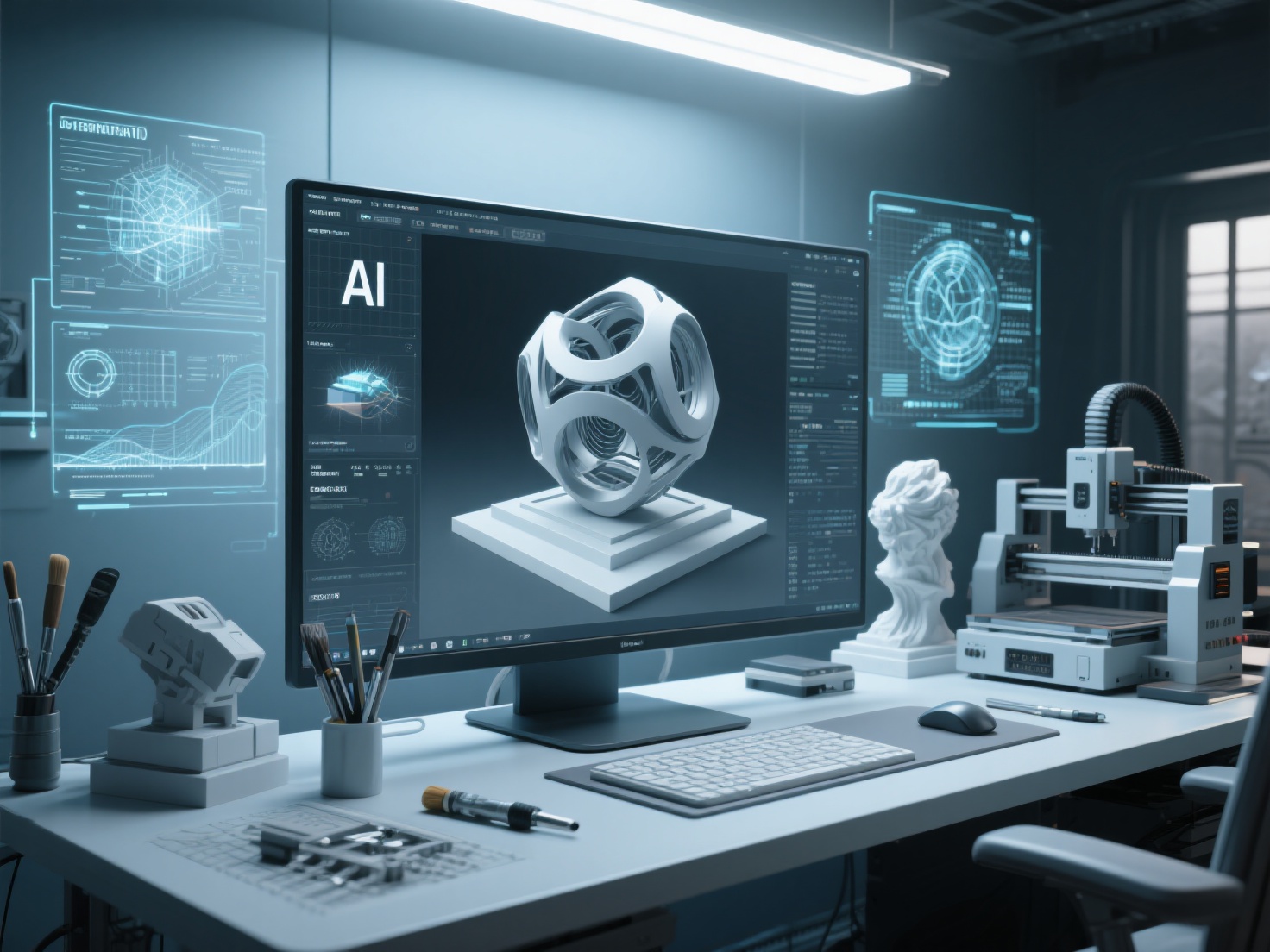
Digital art is no longer confined to screens. The seamless pipeline between digital sculpture and physical fabrication is a defining trend for 2026. High-resolution 3D printing and CNC milling are becoming standard extensions of the digital artist’s studio.
This bridge is being strengthened by software integrations that cater directly to makers. For instance, tools that offer print-ready geometry with sharp edges and features like Multi-Color Model Segmentation allow artists to instantly slice their models into clean color regions. With platforms offering one-click direct send to Bambu Studio and OrcaSlicer, the friction between clicking “export” and holding a physical sculpture has been entirely eliminated.
3. Immersive XR: VR Galleries and AR Public Art
Extended Reality (XR), encompassing both Virtual Reality (VR) and Augmented Reality (AR), is transforming how audiences experience 3D art. By 2026, AR public art installations and VR-native galleries will become mainstream platforms for digital sculptors.
Furthermore, spatial computing is changing the creation process itself. Artists are increasingly sculpting in volumetric space using VR headsets and haptic feedback gloves, allowing them to mold digital clay with their bare hands. These models are then exported in universal formats like GLB or USDZ for instant deployment across web and mobile AR environments.
4. Generative Art and Algorithmic Sculpture
Generative art relies on algorithms and procedural node-based systems to create complex, mathematically perfect structures that would be nearly impossible to sculpt by hand. In 2026, algorithmic sculpture is pushing the boundaries of fractal art, parametric architecture, and avant-garde jewelry design. By combining these procedural workflows with AI generation, artists can create infinite variations of a single concept, rapidly exploring artistic directions.
5. Real-Time Rendering and AI-Assisted Animation
The days of waiting hours for a single frame to render are ending. The integration of real-time rendering engines (like Unreal Engine 5) with AI-assisted motion and rigging is a massive trend. Artists can now view their high-polygon sculptures with cinematic lighting in real-time. Moreover, AI is being used to automatically rig and animate static 3D sculptures, bringing digital statues to life with realistic physics and movement with just a few clicks.
6. Democratization of Professional 3D Tools
Historically, 3D modeling had a massive barrier to entry. The future is browser-based, cloud-powered, and infinitely more accessible. Complex processes like UV unwrapping, retopology, and texturing are being automated. This democratization allows traditional 2D illustrators, painters, and art enthusiasts to participate in 3D creation without spending years learning legacy software interfaces.
Real-World Applications of 3D Art Technology
How are these theoretical trends translating into actual industry applications? The impact of modern 3D art technology spans across multiple creative sectors.
Game Development, Film, and VFX
In entertainment, the demand for high-quality 3D assets is insatiable. Studios are utilizing AI-generated models to populate vast background environments, saving human artists for hero assets. Crucial to this is the quality of textures. Advanced AI now provides 4K resolution PBR-ready textures. Specifically, technologies like De-Lighted Texture intelligently remove baked-in lighting and shadows from generated images, resulting in true, relightable materials that react perfectly to dynamic lighting in game engines and VFX compositing software.
Physical Art and Sculptural Reliefs
Traditional sculptors and artisans are adopting digital tools to create physical molds, coins, jewelry, and architectural panels. A growing application is the use of AI to generate layered depth from 2D reference images. Tools that offer a 3D Relief feature can instantly convert a photograph or painting into a beautifully layered bas-relief model with smooth depth transitions, which is then 3D printed or CNC machined into wood, stone, or metal.
Digital Collectibles and the Phygital Market
The market for digital art continues to evolve beyond basic NFTs into interactive, utility-driven digital collectibles. Artists are creating “phygital” bundles—where a collector purchases a verifiable digital 3D sculpture and receives an exclusive, mathematically identical 3D-printed physical counterpart.
Best Practices: How Artists Can Prepare for the Future
To thrive amidst these digital sculpture trends 2026, artists must adapt their mindsets and workflows. Here are actionable best practices to stay relevant:
- Embrace AI as a Co-Creator: Do not view AI as a replacement, but as a powerful assistant. Use AI image-to-3D generators to rapidly prototype shapes and base meshes, then use your artistic eye to refine and detail them.
- Focus on Fundamentals and Storytelling: As technical execution becomes easier and automated, the true value of an artist will lie in their taste, composition, anatomy, and ability to tell a compelling visual story.
- Experiment Without Fear: Take advantage of platforms that encourage iteration. Look for tools that offer a Free Retry system, allowing you to regenerate 3D results without wasting credits until you achieve the perfect base model.
- Design for Multiple Formats: A successful 3D artist in 2026 must be versatile. Ensure your workflow supports exporting to diverse industry-standard formats like GLB, OBJ, STL, FBX, and USDZ to accommodate web, gaming, AR, and 3D printing.
- Master Materiality: A great sculpture can be ruined by poor materials. Pay close attention to PBR (Physically Based Rendering) workflows and utilize De-Lighted texturing techniques to ensure your art looks realistic in any lighting environment.
Conclusion & Shaping the Next Era of Creativity
The future of 3D art is incredibly bright, characterized by unprecedented freedom and speed. As we navigate the digital sculpture trends 2026, the fusion of AI generation, XR immersion, and seamless physical fabrication is opening doors that were previously locked behind steep technical learning curves. For creators willing to embrace these new 3D art technologies, the only limit is their imagination.
To participate in this creative revolution, you need tools designed for the future. Hitem3D is a next-generation AI-powered 3D model generator built specifically for this new era. Trusted by creators in over 50 countries, Hitem3D transforms single or multi-view images into high-fidelity, production-ready 3D models with up to 1536³ Pro resolution (2M polygons).
Whether you need to reconstruct hidden parts for a complex game asset, generate De-Lighted 4K PBR textures for VFX, create stunning 3D Reliefs for physical sculpture, or utilize automatic Multi-Color Segmentation for flawless 3D printing, Hitem3D provides an unparalleled, highly efficient workflow. Stop fighting with complex software and start bringing your ideas to life instantly.
Frequently Asked Questions (FAQ)
Will AI replace traditional 3D artists and sculptors?
No, AI will not replace artists; it will elevate them. AI acts as a powerful catalyst that handles repetitive, highly technical tasks (like retopology, UV mapping, and base mesh generation). This frees up 3D artists to focus entirely on creative direction, storytelling, and high-level detailing.
What makes a 3D model “production-ready”?
A production-ready 3D model requires clean geometry (good topology without non-manifold edges), appropriate polygon counts for its intended use, and high-quality, relightable textures. Tools like Hitem3D ensure models are production-ready by utilizing technologies like De-Lighted Textures and reconstructing invisible parts for full geometric accuracy.
How does 3D printing connect with modern digital sculpture?
3D printing is the physical manifestation of digital sculpture. Modern AI workflows have made this connection seamless by generating print-ready geometry with sharp edges. With features like multi-color segmentation and direct export to slicing software (like Bambu Studio), digital sculptors can easily turn virtual assets into tangible art.
Can AI generate 3D models from a single 2D image?
Yes. Next-generation AI platforms can take a single 2D image and extrapolate the volumetric data required to build a full 3D model. Advanced models, such as Hitem3D’s Sparc3D, can intelligently predict and reconstruct the hidden or invisible structures that are not shown in the original 2D picture, resulting in a complete 360-degree asset.