The first thing a player notices about your game isn’t the complex coding, the tightly woven narrative, or the brilliant level design—it is the visual aesthetic. A game’s visual identity dictates its atmosphere, sets player expectations, and often determines whether someone will click “Add to Wishlist.”
Navigating the vast landscape of game art styles is one of the most critical decisions an indie developer or art director will make. Choose a style too complex, and you risk draining your budget; choose one that doesn’t fit your genre, and your target audience may never connect with the experience.
In this comprehensive guide, we will explore the most popular video game visual styles, examine their technical requirements, and help you establish a clear game art direction that aligns with your team’s size, budget, and gameplay mechanics.
What is a Game Art Style?
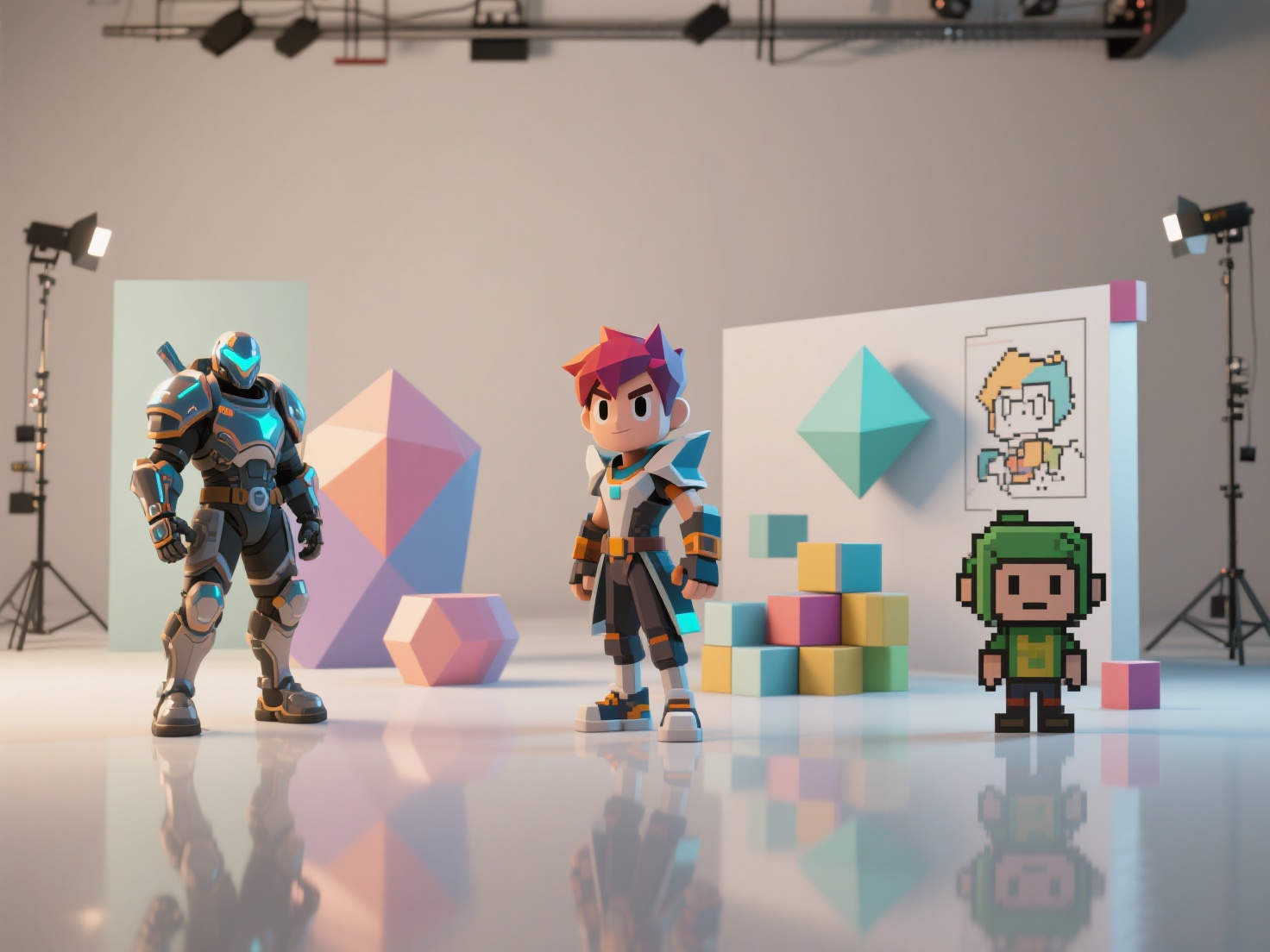
A game art style is the foundational visual language and aesthetic framework used to design all graphical elements within a video game, including characters, environments, UI, and visual effects.
It serves as the visual DNA of a project. Whether you are aiming for gritty realism or vibrant abstraction, a consistent game art style ensures that every visual asset belongs in the same universe, providing players with a cohesive and immersive experience.
The Most Popular Game Art Styles Explained
Understanding the characteristics, costs, and technical requirements of different game art styles is the first step in defining your project’s visual identity. Here is a breakdown of the major styles dominating the industry today.
1. Photorealistic (AAA Realism)
Photorealistic art aims to mimic the real world as closely as possible. It relies heavily on advanced lighting, high-polygon 3D models, and physically based rendering (PBR) textures.
- Visual Characteristics: Lifelike textures, accurate anatomical proportions, dynamic lighting, and highly detailed environments.
- Technical Requirements: Requires powerful hardware, high-resolution textures, motion capture, and advanced game engine rendering.
- Best-Fit Genres: First-person shooters (FPS), survival horror, and cinematic action-RPGs (e.g., The Last of Us, Call of Duty).
- Development Cost: Extremely high. Usually reserved for large AAA studios with massive budgets.
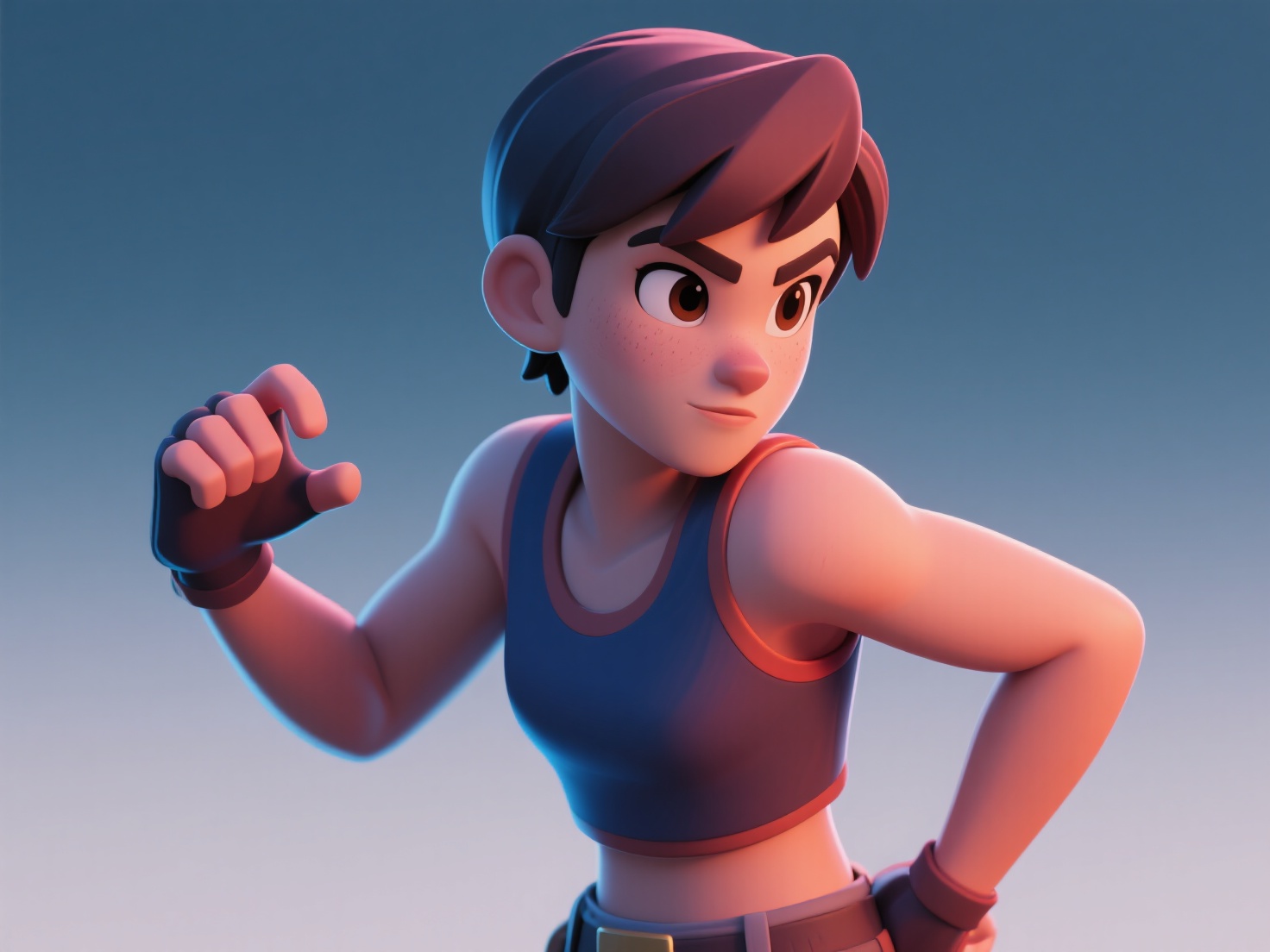
2. Stylized 3D
Stylized 3D takes a step away from reality, favoring exaggerated proportions, vibrant color palettes, and smooth shapes. Because it doesn’t chase graphical perfection, it ages incredibly well.
- Visual Characteristics: Expressive character designs, chunky silhouettes, painterly textures, and colorful environments.
- Technical Requirements: Mid-to-high polygon counts with a heavy emphasis on strong art direction rather than raw graphical power.
- Best-Fit Genres: Hero shooters, platformers, and family-friendly adventures (e.g., Fortnite, Overwatch, Valorant).
- Development Cost: Moderate to High.
3. Cel-Shaded (Toon Shading)
Cel-shading uses a specific rendering technique to make 3D models look like flat, 2D comic books or anime.
- Visual Characteristics: Flat colors, minimal shading gradients, and thick black outlines around characters and objects.
- Technical Requirements: Requires custom shaders applied to 3D geometry to manipulate how light interacts with the models.
- Best-Fit Genres: JRPGs, action games, and narrative adventures (e.g., Borderlands, The Legend of Zelda: The Wind Waker, Genshin Impact).
- Development Cost: Moderate. It saves time on texture detailing but requires technical shader expertise.
4. Low-Poly
Low-poly art intentionally limits the number of polygons used to create 3D models, resulting in a minimalist, blocky aesthetic that has become synonymous with the indie game scene.
- Visual Characteristics: Sharp geometric shapes, flat colors, lack of complex textures, and a clean, retro-modern look.
- Technical Requirements: Very low processing power required. Highly optimized for mobile and VR.
- Best-Fit Genres: Indie exploration games, casual mobile games, and puzzle games (e.g., Superhot, Journey).
- Development Cost: Low. Excellent for solo developers and small indie teams.
5. Hand-Drawn / 2D
Hand-drawn games rely on traditional animation techniques where every frame is meticulously drawn by artists.
- Visual Characteristics: Fluid animations, unique brushstrokes, and a highly personalized artistic signature.
- Technical Requirements: Low on engine rendering, but requires massive memory storage for high-resolution sprite sheets.
- Best-Fit Genres: Metroidvanias, platformers, and fighting games (e.g., Cuphead, Hollow Knight).
- Development Cost: High (in terms of human labor and time).
Pixel Art vs 3D Game Art: Which Should You Choose?
One of the most common debates among indie developers is pixel art vs 3D game art. Both have distinct advantages depending on your project scope.
Pixel Art uses precisely placed individual pixels to create 2D sprites and environments.
- Pros: Highly nostalgic, excellent for retro aesthetics, relatively cheap to produce, and requires less programming overhead.
- Cons: Can be difficult to animate fluidly, and the market is highly saturated. Best for 2D platformers, roguelikes, and farming simulators (e.g., Stardew Valley).
3D Game Art involves creating objects in a three-dimensional space using polygons.
- Pros: Allows for dynamic lighting, physics-based interactions, and easier animation via skeletal rigging (you don’t have to redraw every frame).
- Cons: Requires a steeper learning curve (modeling, UV unwrapping, texturing, rigging).
The Verdict: If you are a solo developer with a strong 2D background aiming for a retro vibe, pixel art is a safe bet. However, if your gameplay relies on physics, camera movement, or dynamic lighting, transitioning to an accessible 3D style (like low-poly or stylized) is the better investment.
How to Choose the Right Game Art Direction for Your Project
Selecting the right visual style is a balancing act between creative vision and practical constraints. Here are the best practices for defining your game art direction:
1. Evaluate Your Team’s Capabilities and Budget
If you are a solo developer or a small indie team, aiming for AAA realism is a recipe for project failure. Be realistic about what your team can produce at scale. Low-poly, pixel art, or minimalist stylized 3D are often the safest choices for small budgets.
2. Align the Art with Gameplay Mechanics
Your art style must serve your gameplay. If you are building a fast-paced tactical shooter, visual clarity is paramount—players need to instantly distinguish enemies from the background, making stylized or cel-shaded art highly effective. If it’s a slow-burn horror game, photorealism with gritty lighting will build better tension.
3. Rapidly Prototype Different Styles
Never commit to a final art style without prototyping. Create a “vertical slice” or a small test room with a few assets in different styles to see how they look in-engine.
Traditionally, prototyping 3D assets in multiple styles takes weeks. However, modern AI tools have revolutionized this workflow, allowing developers to test visual concepts almost instantly.
Accelerate Your Game Art Pipeline with Hitem3D
Defining and executing a 3D game art direction traditionally requires extensive time spent modeling, texturing, and fixing geometry. This is where Hitem3D steps in as a game-changer for developers and 3D artists.
Hitem3D is a next-generation AI-powered 3D model generator that transforms 2D concept images into high-fidelity, production-ready 3D models. Built on proprietary Sparc3D (for high precision) and Ultra3D (for high efficiency) AI models, it solves the most common bottlenecks in game development:
- Rapid Style Prototyping: Have 2D concept art for a stylized character or a realistic prop? Upload a single image (or 2–4 multi-view images), and Hitem3D will generate a clean 3D model. This allows you to prototype different video game visual styles in minutes rather than weeks.
- Invisible Parts Reconstruction: Unlike basic generators, Hitem3D intelligently reconstructs hidden or invisible structures beyond the visible surface of your 2D reference, outputting complete assets ready for game environments.
- De-Lighted PBR Textures: For game engines like Unity and Unreal, baked-in lighting ruins dynamic shadows. Hitem3D’s AI Texturing automatically generates 4K PBR-ready textures and features a unique De-Lighted Texture process that removes baked-in lighting, giving you true, relightable materials.
- Engine-Ready Exports: Instantly export your generated assets in standard industry formats like FBX, GLB, and OBJ, supporting resolutions up to 1536³ Pro (up to 2 million polygons for high-quality hero assets).
- Free Retry System: Indie developers on a budget will appreciate the Free Retry mechanism, allowing you to regenerate results and dial in your exact style without burning through additional credits.
By integrating Hitem3D into your workflow, you can bridge the gap between concept art and playable 3D assets, drastically reducing production costs and time-to-market.
Conclusion
Choosing the right game art style is about finding the perfect intersection between your creative vision, your target audience’s expectations, and your team’s production capabilities. Whether you decide on the nostalgic charm of pixel art, the timeless appeal of stylized 3D, or the immersive depth of photorealism, consistency is your ultimate key to success.
Take the time to prototype your ideas, test your assets in-engine, and don’t be afraid to leverage modern AI tools to accelerate your pipeline.
Ready to bring your 2D game concept art to life in 3D? Create For Free -> https://www.hitem3d.ai/create and see how Hitem3D can revolutionize your game development workflow today.
Frequently Asked Questions (FAQ)
1. What is the most popular game art style today?
Stylized 3D is currently one of the most popular and commercially successful art styles. Games like Fortnite, Overwatch, and Genshin Impact (which uses stylized cel-shading) dominate the market because this style is visually appealing, runs well on lower-end hardware, and ages much better than photorealism.
2. Is pixel art easier to make than 3D art?
Not necessarily. While the barrier to entry for pixel art is lower because it doesn’t require learning complex 3D software, mastering pixel art and creating fluid 2D frame-by-frame animations is incredibly time-consuming and requires a deep understanding of color theory and silhouette.
3. How can AI help with game art direction?
AI tools like Hitem3D allow art directors to take rough 2D sketches or concept art and instantly generate fully textured 3D models. This enables teams to quickly test how different visual styles look in a 3D space, saving weeks of manual modeling during the pre-production phase.
4. Why is a cohesive video game visual style important?
A cohesive visual style ensures immersion. If a highly realistic weapon is placed in a low-poly, cartoonish world, the visual clash breaks the player’s suspension of disbelief. Consistency in your game art direction builds a believable universe.