The magic of modern cinema often relies on the breathtaking, terrifying, or awe-inspiring entities that share the screen with human actors. Whether it is a colossal kaiju destroying a city or a subtle, empathetic alien in a sci-fi drama, successful creature design film projects require a masterclass in biology, art, and technology. For concept artists, 3D sculptors, and VFX students, understanding the pipeline from a blank canvas to a breathing, photorealistic beast is essential.
In this comprehensive guide, we will explore the professional pipeline for VFX creature creation, breaking down how artists transform initial 2D sketches into production-ready, fully animated 3D characters.
What is Creature Design in Film and VFX?
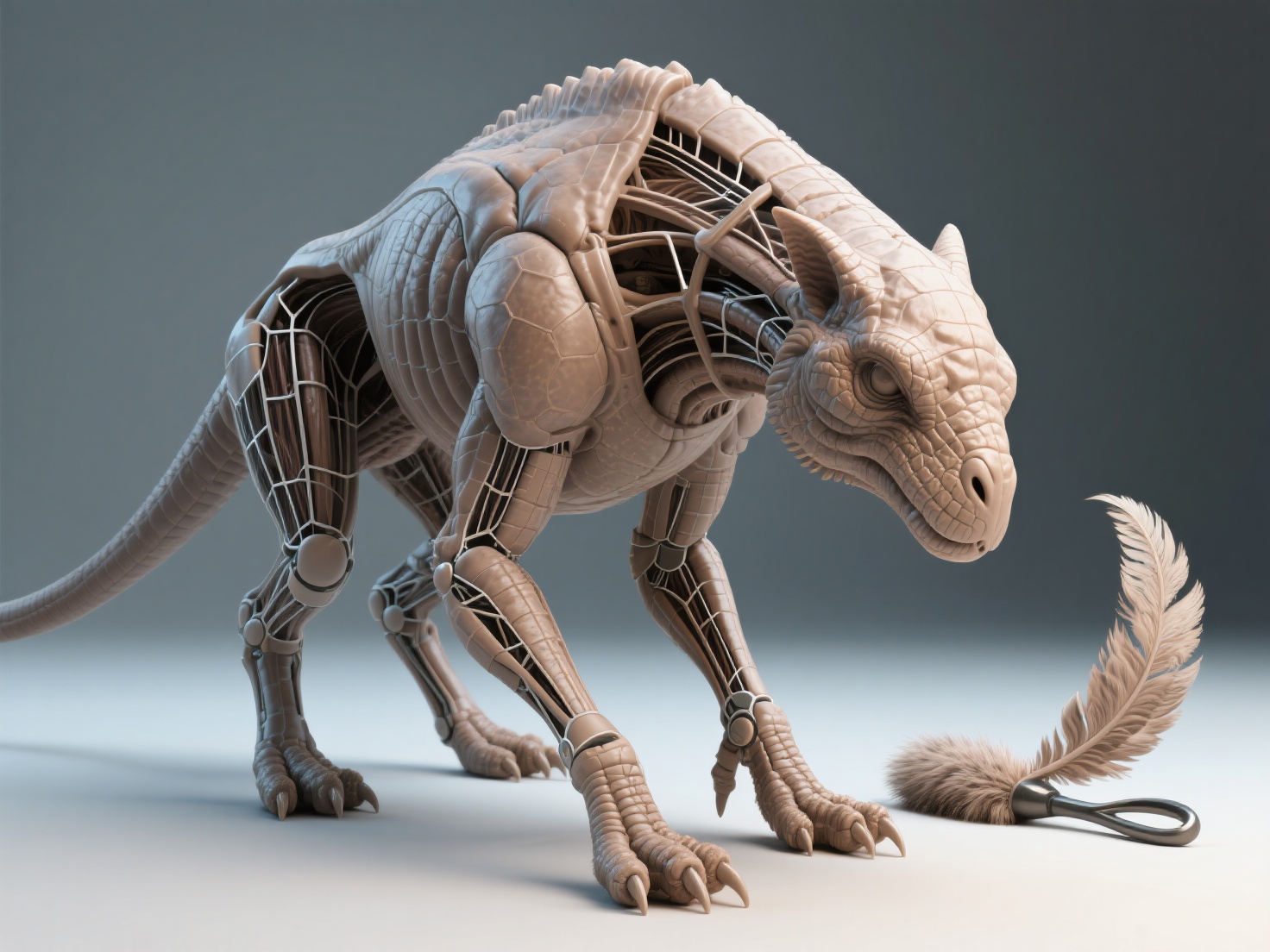
Creature design is the specialized discipline of conceptualizing and creating original, believable non-human entities for visual storytelling, combining principles of real-world anatomy, biomechanics, and artistic imagination.
Unlike standard prop creation or environment art, creature design requires the entity to look as though it could naturally evolve, move, and survive in its specific ecosystem. In the context of film creature design, this process involves a massive collaborative pipeline—moving from 2D concept art and complex 3D creature modeling to intricate rigging, grooming, and look development before final rendering.
The Professional Pipeline for VFX Creature Creation
Creating a believable creature for a feature film is a meticulous process that passes through the hands of multiple specialized artists. Here is the step-by-step breakdown of the creature design pipeline.
1. Research and Reference Gathering
Before picking up a stylus, artists must become amateur zoologists. The foundation of any great creature is real-world anatomy. Artists gather vast reference boards featuring animal skeletons, muscle structures, skin textures, and locomotion patterns. If you are designing a flying dragon, you must study the anatomy of bats, birds of prey, and reptiles to understand how wings attach to a skeletal frame and how scales transition into leathery membranes.
2. Concept Sketching and Ideation
During this phase, concept artists explore silhouettes, proportions, and personality. The goal is to establish the creature’s visual impact before adding details.
- Silhouette: A strong creature can be instantly recognized just by its shadow.
- Biomechanics: Concept artists must think about weight distribution. How does the creature balance? Where is its center of gravity?
- Narrative Design: Scars, asymmetric features, or specific color patterns are added to tell the creature’s backstory without words.
3. 3D Creature Modeling and Sculpting
Once the 2D concept is approved, the design moves into software like ZBrush for 3D creature modeling. Sculptors usually work in three passes:
- Primary Forms: Establishing the massive shapes, ribcages, skulls, and overall proportions.
- Secondary Forms: Carving out individual muscle groups, tendons, and fat pads.
- Tertiary Details: Adding micro-details like skin pores, wrinkles, scales, and scars.
This stage requires an intimate knowledge of anatomy, ensuring that muscles appear to attach realistically to bone structures, allowing for believable deformation later.
4. Retopology and Rigging for Locomotion
A high-resolution sculpt can have tens of millions of polygons, making it impossible to animate. Retopology is the process of creating a new, optimized mesh over the high-poly sculpt. Artists carefully place edge loops around joints and muscle groups to ensure the mesh deforms naturally when moving.
Next comes rigging, where technical animators build a digital skeleton (armature) inside the mesh. For creatures, rigging is uniquely complex. It often involves creating custom IK (Inverse Kinematics) setups for extra limbs, tentacles, or non-human leg structures like digitigrade legs found in dogs or dinosaurs.
5. Grooming (Hair, Fur, and Feathers)
If a creature requires fur, hair, or feathers, specialized artists take over the grooming process. Using software like Houdini or XGen, artists dictate the flow, clumping, length, and frizz of millions of individual hair strands. Grooming must also account for dynamics—how the fur reacts to wind, water, or the creature’s own movement.
6. Look Development and Texturing
Look development (LookDev) is where the creature truly comes alive. Texture artists paint detailed color maps, specular maps, and displacement maps. For organic creatures, Subsurface Scattering (SSS) is vital. SSS simulates how light penetrates the surface of translucent materials (like flesh or cartilage) and scatters inside before exiting, giving skin its fleshy, lifelike appearance.
Creature Design vs. Character Design
While they share similar pipelines, 3D creature modeling and character design have distinct focuses:
- Anatomy: Characters are usually bipedal humanoids. Creatures often require invented anatomy (e.g., a six-legged beast) that still needs to look functionally plausible.
- Locomotion: Characters walk and act like humans. Creatures require study into animal gaits, weight distribution, and non-verbal, instinctual body language.
- Wardrobe vs. Biology: Character artists spend significant time on clothing and cloth simulation. Creature artists spend that time on intricate biological surface details like scales, slime, or complex fur patterns.
Applications of 3D Creature Modeling in Cinema
The demand for high-quality creature design spans various genres in modern visual effects:
- Sci-Fi Extraterrestrials: Designing aliens requires pushing the boundaries of biology while maintaining recognizable emotional features so audiences can connect with them.
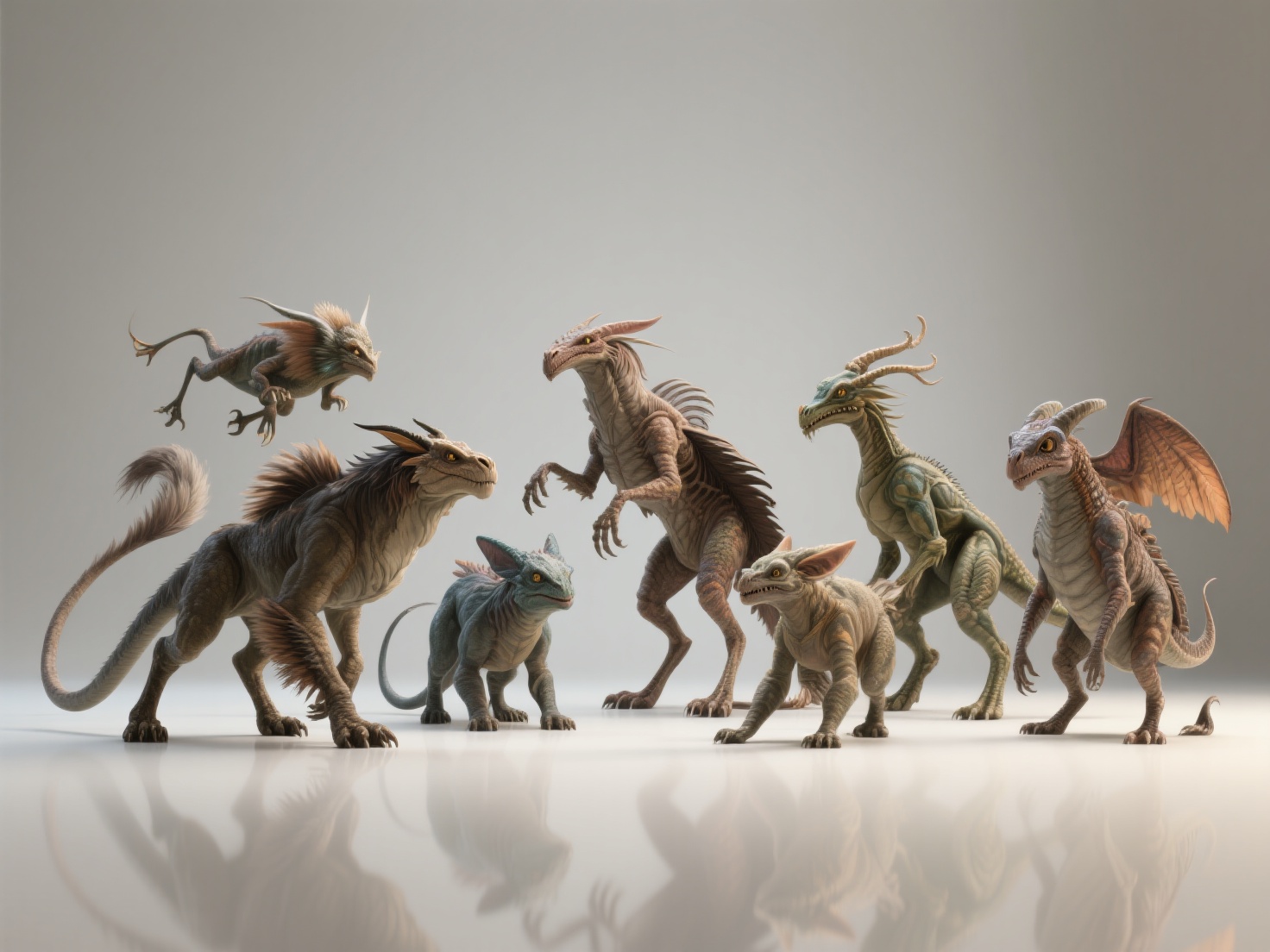
- Fantasy Beasts: Dragons, griffins, and mythical monsters require blending multiple real-world animal anatomies into one cohesive, majestic design.
- Horror and The Supernatural: Horror creatures rely on unsettling proportions, uncanny valley elements, and grotesque textures to evoke fear and revulsion.
Best Practices for Exceptional Film Creature Design
To succeed in film creature design, keep these professional tips in mind:
Form Follows Function: Never add a spike, horn, or extra limb just because it looks cool. Ask yourself: Why did this evolve? Is it for mating, defense, or hunting? Grounding your design in logic makes it believable.
Focus on the Eyes: The eyes are the emotional anchor of your creature. Spend extra time on the shaders, moisture, and anatomical structure surrounding the eyes to make the creature feel “alive.”
Use AI to Accelerate the Block-Out Phase: One of the biggest bottlenecks for 3D sculptors is translating a 2D concept into a 3D base mesh. Instead of starting from a primitive sphere, modern artists use AI tools like Hitem3D to jumpstart their workflow.
By uploading a 2D concept sketch (single or multi-view), creators can use Hitem3D to generate a highly accurate, production-ready 3D model in minutes. Powered by the in-house Sparc3D model, Hitem3D offers Invisible Parts Reconstruction, meaning it intelligently guesses and builds the hidden biological structures of your creature behind the visible camera angle. This provides an incredibly strong, geometrically clean base mesh (up to 2M polygons via the 1536³ Pro resolution) that you can immediately import into ZBrush for detailing.
Conclusion: Mastering the Art of Film Creature Design
Mastering creature design film pipelines is a challenging but immensely rewarding endeavor. From the initial spark of an idea in a concept sketch to the intricate 3D creature modeling, rigging, and LookDev phases, every step is crucial for convincing the audience that a digital monster is a living, breathing entity.
For modern VFX artists looking to optimize their workflow, integrating next-generation AI tools can save days of tedious block-out time. Hitem3D is designed specifically to solve these industry pain points. Not only does it generate clean base meshes from 2D concepts, but its AI Texturing also provides 4K PBR-ready materials with De-Lighted processing—intelligently removing baked-in shadows so your creature’s skin reacts perfectly to your custom VFX lighting setups. With a Free Retry system and support for industry-standard formats like GLB, OBJ, FBX, and USDZ, it fits seamlessly into any Maya, ZBrush, or Blender pipeline.
Ready to bring your creature concepts into the third dimension instantly?
Create For Free -> hitem3d.ai/create
Frequently Asked Questions (FAQ)
What software is standard for VFX creature creation?
The industry standard includes ZBrush for high-poly sculpting, Maya for retopology, rigging, and animation, Mari or Substance 3D Painter for texturing, and Houdini for complex grooming and FX simulations. AI generators like Hitem3D are increasingly used for rapid concept-to-3D block-outs.
How important is anatomy in 3D creature modeling?
It is the most critical aspect. Even if you are designing a fantasy monster, its underlying bone structure and muscle attachments must make sense. Without anatomical logic, the creature will look like a rubber toy when animated.
How long does it take to design a creature for film?
The entire pipeline, from initial 2D concept art to a fully rigged, groomed, and textured 3D asset ready for final animation, can take anywhere from a few weeks to several months, depending on the complexity of the design and the required screen time.