If you have recently purchased an FDM 3D printer, or if you are looking to expand your material repertoire, you are likely facing the ultimate maker’s dilemma: PLA vs ABS vs PETG. Choosing the right material can mean the difference between a flawless print and a frustrating failure.
With so many options on the market, finding the best 3D printing filament for your specific project is crucial. Each material offers a unique balance of strength, heat resistance, and printability. Whether you are crafting delicate tabletop miniatures or engineering robust outdoor drone parts, understanding these plastics is the first step toward 3D printing mastery.
In this comprehensive 3D printer filament guide, we will break down the pros, cons, and specific use cases of the big three. By the end of this filament comparison, you will know exactly which spool to load into your extruder next.
What Are PLA, ABS, and PETG?
To win a featured snippet on search engines and give you a quick baseline, here is the core definition of each material:
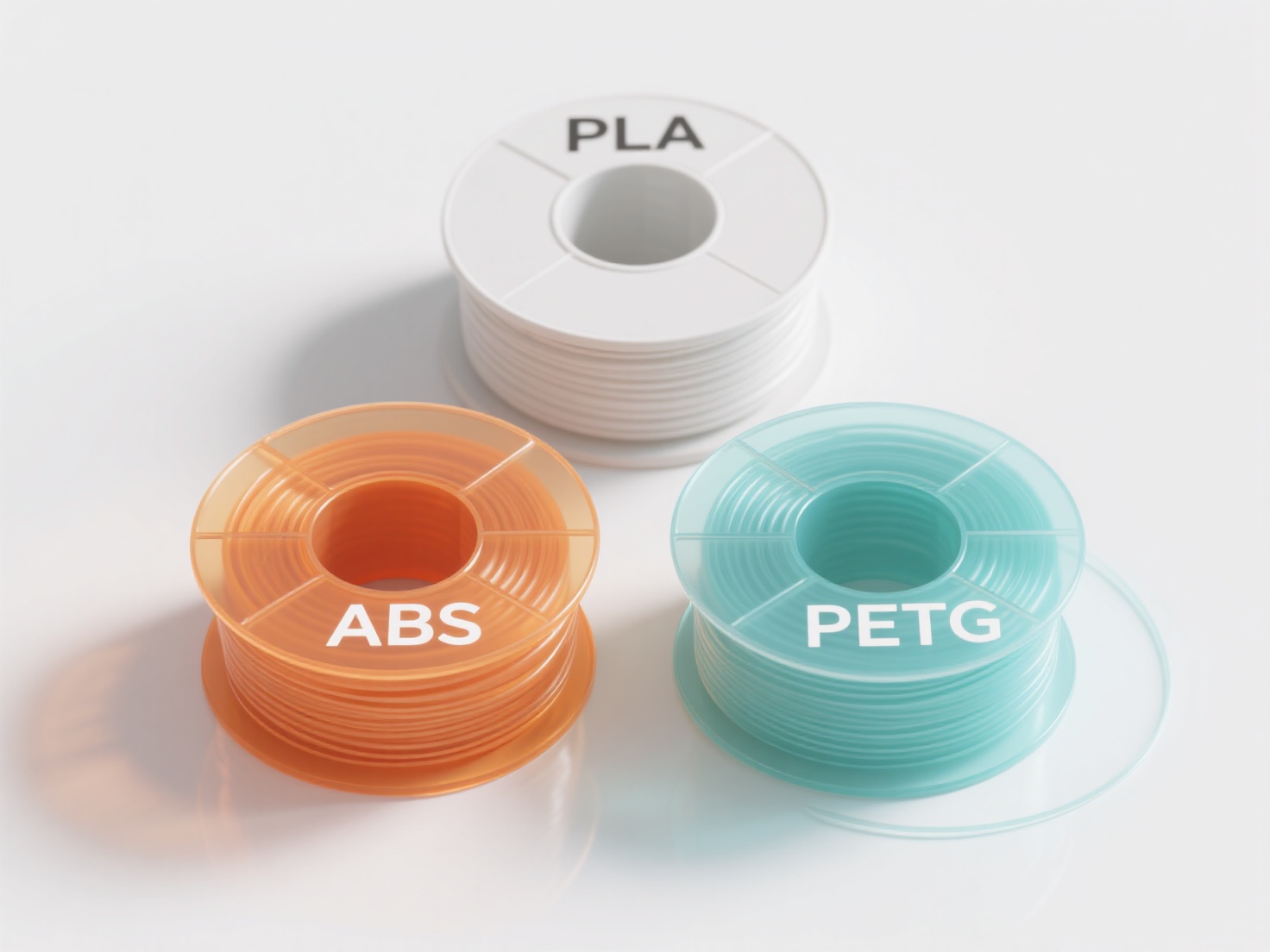
- PLA (Polylactic Acid): A biodegradable, plant-based thermoplastic that is incredibly easy to print, making it the go-to choice for beginners, decorative items, and high-detail prototypes.
- ABS (Acrylonitrile Butadiene Styrene): A durable, petroleum-based plastic known for its high impact resistance and heat tolerance, widely used for structural and functional mechanical parts.
- PETG (Polyethylene Terephthalate Glycol): A versatile, tough hybrid filament that combines the mechanical strength and temperature resistance of ABS with the ease of printing found in PLA.
The Ultimate Filament Comparison: Head-to-Head
To help you make an informed decision, let’s compare these materials across several critical dimensions. The table below highlights the key differences you need to know before slicing your next model.
| Feature | PLA | ABS | PETG |
|---|---|---|---|
| Print Temperature | 190°C – 220°C | 220°C – 250°C | 220°C – 245°C |
| Bed Temperature | 50°C – 60°C (Optional) | 90°C – 110°C (Required) | 70°C – 80°C |
| Strength & Durability | Moderate | Very High | High |
| Flexibility | Low (Brittle) | Moderate | High (Bends before breaking) |
| Heat Resistance | Low (Softens at ~60°C) | High (Softens at ~105°C) | Moderate (Softens at ~80°C) |
| Odor & Emissions | Sweet, very low | Strong, requires ventilation | Very low, no harsh fumes |
| Ease of Printing | Very Easy | Difficult (Prone to warping) | Moderate (Prone to stringing) |
| Environmental Impact | High (Biodegradable in industrial compost) | Low (Petroleum-based, recyclable) | Moderate (Highly recyclable) |
PLA: The Undisputed King of Convenience
PLA is the undisputed champion of the 3D printing community. Because it prints at lower temperatures and doesn’t require a heated enclosure, it suffers from almost zero warping. It delivers the sharpest details and sharpest overhangs of the three materials.
However, PLA has its limitations. It is quite brittle; if dropped, it tends to shatter rather than bend. Furthermore, its heat resistance is notoriously low. If you leave a PLA print in a hot car during the summer, it will warp and melt. Cost-wise, PLA is highly affordable, making it the perfect everyday drafting material.
ABS: The Heavy-Duty Champion
Long before PLA took over, ABS was the standard. It is the exact same plastic used to manufacture Lego bricks, which tells you everything you need to know about its durability. ABS offers exceptional impact resistance and can withstand high temperatures without deforming, making it ideal for mechanical parts.
The trade-off is its notoriously difficult printability. ABS shrinks as it cools, leading to severe bed adhesion issues and corner warping. To print ABS successfully, an enclosed 3D printer is practically mandatory. Additionally, melting ABS releases toxic VOCs (Volatile Organic Compounds) and a harsh odor, meaning you must print in a well-ventilated area.
PETG: The Perfect Middle Ground
If PLA is too weak and ABS is too hard to print, PETG steps in as the Goldilocks solution. It offers a fantastic combination of strength, slight flexibility, and impact resistance. Unlike ABS, it barely warps and emits no noxious odors during printing.
PETG is exceptionally resilient against water and harsh chemicals, making it the premier choice for outdoor applications. Its main drawback is “stringing”—the fine, spiderweb-like hairs left behind as the nozzle moves between print areas. This requires careful tuning of your retraction settings to achieve a clean final product.
Practical Applications: Which Should You Choose?
Understanding the technical specs is helpful, but how does this translate to your actual projects? Here are specific use case recommendations.
When to Use PLA
Choose PLA when aesthetics and precision matter more than raw strength. It is perfect for:
- Tabletop gaming: D&D miniatures, terrain, and custom board game pieces.
- Decorative art: Sculptures, vases, and cosplay props that won’t be exposed to high heat.
- Rapid prototyping: Quickly testing the dimensions and fit of a design before committing to a more expensive or difficult material.
When to Use ABS
Reach for ABS when you are building something that needs to take a beating or survive in a hot environment. It is best for:
- Automotive accessories: Phone mounts, cup holder adapters, or exterior trim pieces.
- Printer upgrades: Fan ducts or extruder housing parts that sit close to the hotend.
- Interlocking mechanisms: Gears, hinges, and snap-fit joints that require durability.
When to Use PETG
PETG is the ultimate utility material for functional household and outdoor items. Use it for:
- Outdoor use: Plant pots, bird feeders, and customized mailbox numbers that must survive rain and UV exposure.
- Mechanical components: Drone frames, robotics parts, and protective casings.
- Liquid containers: Vases and custom water bottle holders (though keep food safety regulations in mind).
Getting the Perfect 3D Model for Your Filament
Having the perfect filament is only half the battle; you also need a flawless 3D model. Finding high-quality, print-ready files can be a frustrating bottleneck. This is where Hitem3D revolutionizes your workflow.
As a next-generation AI-powered 3D model generator, Hitem3D allows you to upload a single 2D image and instantly generate a production-ready 3D model. Powered by its proprietary Sparc3D engine, it doesn’t just guess what the back of an object looks like—it features groundbreaking Invisible Parts Reconstruction technology to generate full, accurate geometry with the sharp edges needed for FDM printing.
Whether you are printing a detailed PLA sculpture or a sturdy PETG bracket, Hitem3D ensures your base mesh is perfect. Best of all, it offers a one-click direct send to Bambu Studio and OrcaSlicer, seamlessly bridging the gap from AI generation straight to your 3D printer. Want to print in multiple colors? Hitem3D’s Multi-Color Model Segmentation instantly splits models into clean color regions for multi-material systems.
Best Practices for Printing with PLA, ABS, and PETG
To guarantee successful prints regardless of your filament choice, follow these actionable tips:
Keep Your Filament Dry: All three plastics are hygroscopic (they absorb moisture from the air), but PETG is especially sensitive. Wet filament causes popping sounds, stringing, and weak layer lines. Always store your spools in airtight bags with desiccant or use a dedicated filament dryer.
Master Bed Adhesion: For PLA, a clean PEI sheet or a simple glass bed works wonders. For ABS, an enclosure and a generous coat of ABS slurry or high-strength glue stick are necessary. PETG actually sticks too well to glass and PEI; always use a release agent like a glue stick or hairspray to prevent it from tearing chunks out of your build plate.
Tune Your Cooling Fans: PLA requires 100% part cooling to achieve sharp details and steep overhangs. ABS, conversely, requires zero cooling fans; cooling it too quickly causes immediate warping and layer splitting. PETG generally prints best with a low fan speed (around 30–50%) to balance detail and layer adhesion.
Calibrate Retraction: If you are transitioning from PLA to PETG, you will need to increase your retraction distance and speed slightly to combat PETG’s tendency to ooze and string.
Conclusion: Making the Right Choice
In the debate of PLA vs ABS vs PETG, there is no single “best” filament—only the right material for your specific needs.
If you want a hassle-free, highly detailed print for indoor use, PLA is your best friend. If you are engineering a high-strength, heat-resistant mechanical part and have an enclosed printer, ABS is the traditional powerhouse. For a durable, water-resistant part that bends without breaking, PETG is the modern middle ground.
Once you have chosen your filament, you need a high-quality model to feed your printer. Don’t let complex CAD software slow you down. Let AI do the heavy lifting. With Hitem3D, you can generate print-ready STL, OBJ, and GLB files directly from images. Plus, with the Free Retry system, you can regenerate results without spending additional credits until your model is perfect.
Ready to transform your ideas into tangible 3D objects?
Frequently Asked Questions (FAQ)
1. Can I mix PLA, ABS, and PETG in the same print?
Generally, no. These materials require vastly different printing temperatures and do not chemically bond well to each other. However, if you have a multi-extrusion printer, PETG can sometimes be used as a breakaway support material for PLA, as they do not fuse together permanently.
2. Which filament is safest to print indoors?
PLA is widely considered the safest filament to print indoors. It is derived from renewable resources like corn starch and emits a slightly sweet, non-toxic odor. PETG is also safe for indoor use, while ABS should always be printed in a ventilated area or a filtered enclosure due to VOC emissions.
3. Is PETG food safe?
The raw PETG plastic is inherently food safe (it is the same plastic used in water bottles). However, FDM 3D printing creates microscopic layer lines where bacteria can easily grow. Additionally, standard brass nozzles can deposit trace amounts of lead. If you need a food-safe print, you must coat the final PETG object in a food-safe epoxy resin.