Developing an incredible video game is only half the battle for modern indie developers and studio founders. The other half? Figuring out exactly how to monetize a game without alienating your player base. As we move into 2026, the gaming landscape is more competitive than ever, and player expectations surrounding value and fairness have never been higher.
Whether you are launching a hyper-casual mobile game, a narrative-driven indie PC title, or an expansive multiplayer universe, choosing the right game monetization approach is critical for your studio’s survival. Relying on outdated methods can stunt your growth, while adopting modern game revenue strategies can turn a passion project into a highly profitable business.
In this comprehensive guide, we will break down the most effective game monetization models in 2026, explore the ethics of in-game purchases, and reveal how leveraging next-gen AI tools can streamline your cosmetic asset production pipeline.
What is Game Monetization?
Game monetization is the strategic process of generating revenue from a video game through various models—such as upfront premium sales, in-app purchases, advertising, or subscription fees—ensuring financial sustainability and ongoing development for the creators.
Securing a featured spot in today’s crowded market requires aligning this definition with a system that genuinely respects the player’s time and wallet.
Core Game Monetization Models for 2026
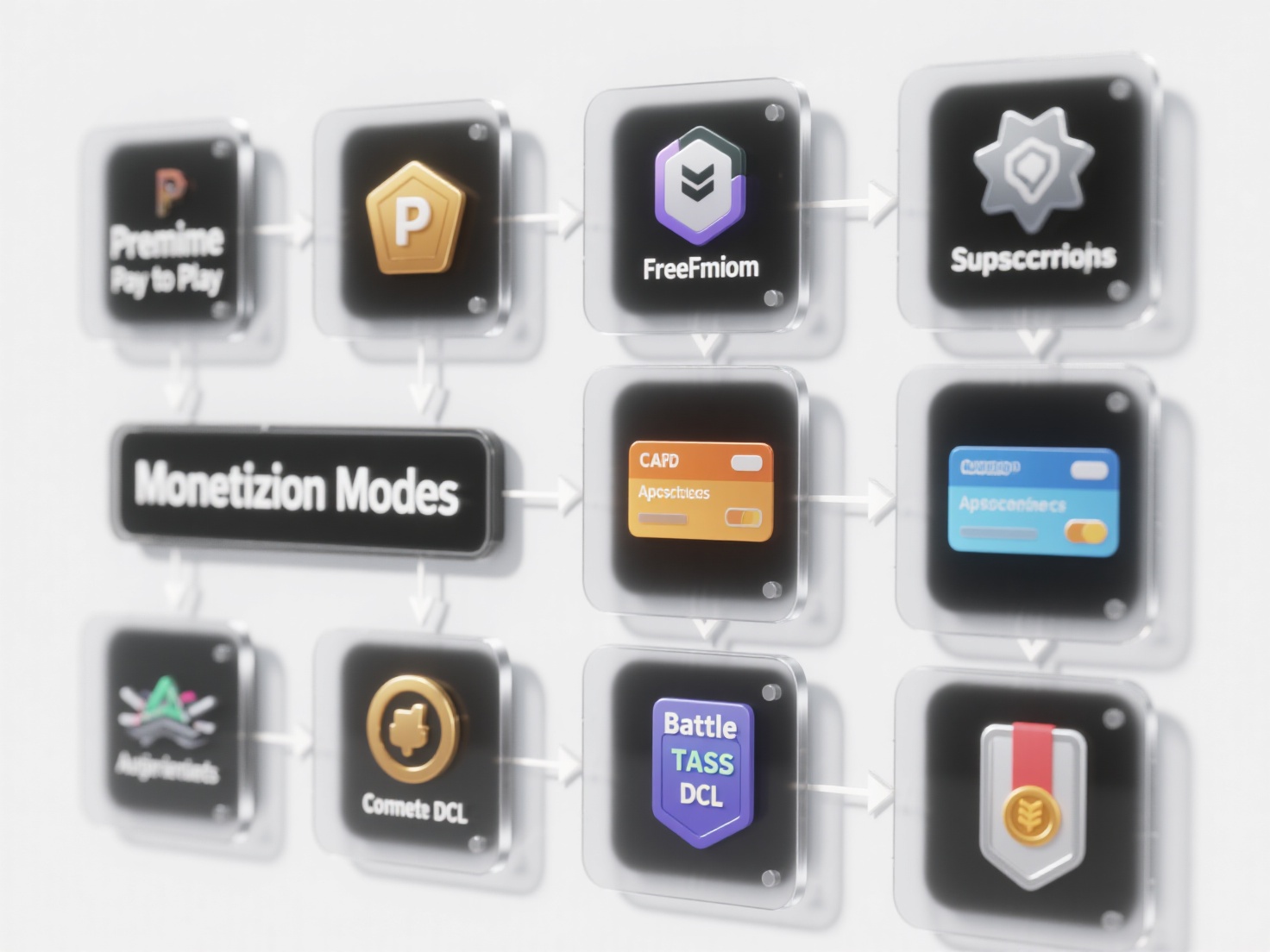
There is no one-size-fits-all solution for generating revenue. The optimal strategy depends heavily on your game’s genre, platform, and target audience. Here is a breakdown of the leading models dominating the industry today.
1. Premium (Pay-to-Play)
The most traditional model: players pay a one-time upfront fee to access the full game.
- How it works: The player buys the game on platforms like Steam, PlayStation Store, or Nintendo eShop, and receives the complete experience.
- Pros: Generates immediate revenue per user; highly respected by core gamers; free from complex microtransaction balancing.
- Cons: High barrier to entry; requires exceptional marketing to convince players to buy; revenue drops sharply after the launch window.
- Best for: Narrative-driven single-player games, RPGs, and premium indie titles (e.g., Black Myth: Wukong, Hollow Knight).
2. The Freemium Game Model (In-App Purchases)
The freemium game model has reshaped the industry. The game is entirely free to download and play, but revenue is generated through optional In-App Purchases (IAPs).
- How it works: Players can buy virtual currency, speed-ups, characters, or resources to enhance their gameplay experience.
- Pros: Massively lowers the barrier to entry, resulting in huge player bases; infinite revenue ceiling for highly engaged players (“whales”).
- Cons: Requires constant content updates; careful balancing is needed to avoid “pay-to-win” accusations.
- Best for: Multiplayer mobile games, Gacha games, and live-service titles (e.g., Genshin Impact, Clash of Clans).
3. Battle Passes & Subscriptions
A predictable, recurring revenue stream that rewards active players.
- How it works: Players pay a recurring fee (monthly) or buy a seasonal “Battle Pass” to unlock a premium tier of rewards as they play.
- Pros: Creates highly predictable game revenue strategies; boosts player retention and daily active users (DAU).
- Cons: Requires a relentless content pipeline to justify the recurring cost.
- Best for: Competitive shooters, MMOs, and live-service games (e.g., Fortnite, World of Warcraft).
4. Cosmetic DLCs & Microtransactions
Players pay real money for virtual items that change how their character, weapons, or environment looks, without affecting gameplay.
- How it works: Selling character skins, weapon camos, emotes, or profile banners.
- Pros: Extremely player-friendly; highly profitable if the aesthetic appeal is strong.
- Cons: Demands a massive volume of high-quality 3D assets, which traditionally requires expensive 3D artists and long production cycles.
- Best for: Competitive multiplayer games where fairness is paramount (e.g., Valorant, Counter-Strike 2).
Pro Tip for Indie Devs: Creating hundreds of 3D cosmetic items to sustain a store used to be impossible for small teams. Today, forward-thinking studios use AI to bridge the gap. By utilizing Hitem3D, an AI-powered 3D model generator, developers can simply upload 2D concept art and instantly generate production-ready 3D weapon skins, character accessories, or environment props. Powered by the Sparc3D (high precision) model, Hitem3D can reconstruct hidden structures beyond visible surfaces, ensuring your cosmetic items have print-ready geometry and clean edges, drastically reducing your asset production costs.
5. In-Game Advertising
Primarily used in the mobile sector, developers sell screen space or player attention to advertisers.
- How it works: Implementing Rewarded Video Ads (players watch an ad for an in-game reward), Interstitials (full-screen ads between levels), or Banner Ads.
- Pros: Monetizes non-paying users (which typically make up 95% of a free-to-play audience).
- Cons: Intrusive ads can severely damage user experience and increase churn rates.
- Best for: Hyper-casual and puzzle mobile games.
6. Emerging Models (Web3/NFTs & User-Generated Content)
Looking strictly at 2026, alternative models are maturing.
- Blockchain/NFTs: Players truly own their digital assets and can trade them, with developers taking a royalty cut on secondary market sales.
- User-Generated Content (UGC): Platforms where players create the content, and developers take a revenue split (e.g., Roblox model).
Balancing Profit and Player Trust: Pay-to-Win vs. Cosmetics
When deciding how to monetize a game, ethical considerations are just as important as financial projections. The gaming community in 2026 is highly vocal and will quickly abandon a game that feels exploitative.
The Pitfall of Pay-to-Win (P2W)
P2W occurs when a game allows players to purchase items or advantages that give them a statistical edge over non-paying players. While this can cause short-term revenue spikes, it invariably destroys the game’s competitive integrity. Non-paying players leave out of frustration, and eventually, the “whales” leave because there is no one left to play against.
The Power of Cosmetic Monetization
In contrast, cosmetic monetization is widely praised. Players love expressing their individuality through unique skins and weapon variants. Because cosmetics do not affect gameplay balance, they maintain competitive fairness. To succeed here, your 3D assets must be visually stunning and varied. This is where high-fidelity PBR (Physically Based Rendering) textures become vital, ensuring your skins react dynamically to in-game lighting.
Best Practices for Implementing Game Revenue Strategies
To maximize your revenue while maintaining a loyal community, follow these best practices:
Embrace Hybrid Models: Don’t rely on just one stream. A successful freemium game model often combines a free base game with a Battle Pass for retention, Cosmetic Microtransactions for spikes in revenue, and Rewarded Ads for non-paying users.
Respect the Player’s Time: If you implement a Battle Pass, ensure the progression feels rewarding, not like a second job. Grind-heavy passes lead to burnout.
Optimize Your Asset Pipeline: If your monetization relies on selling 3D assets, you cannot afford bottlenecks. Use tools that support high-resolution outputs and standard formats (GLB, OBJ, FBX) to seamlessly integrate into game engines like Unity or Unreal Engine.
Test Pricing Early: Use A/B testing in soft-launch regions to find the sweet spot for your in-app purchase pricing. What sells for $10 in North America might need regional pricing in other territories.
Provide Real Value in Rewarded Ads: Give players a compelling reason to click “Watch Ad.” Offer premium currency, extra lives, or exclusive items, making the ad feel like a mutual transaction rather than an interruption.
Conclusion: Build Your Game Monetization Engine
Mastering game monetization strategies in 2026 requires a deep understanding of your audience, a commitment to ethical design, and a streamlined development pipeline. Whether you opt for a premium release, a highly engaging freemium game model, or a robust cosmetic storefront, your goal should be to align your financial success with player satisfaction.
For studios relying on cosmetic DLCs or continuous content updates, the speed and quality of 3D asset generation will dictate your profitability. Hitem3D is a next-generation AI-powered 3D model generator that transforms single or multi-view 2D images into high-fidelity, production-ready 3D models.
Trusted by creators in 50+ countries, Hitem3D leverages its Ultra3D (high efficiency) and Sparc3D (high precision) models to output assets up to 1536³ Pro resolution (2M polygons). With its exclusive De-Lighted Texture AI, baked-in lighting and shadows are intelligently removed, providing true relightable 4K PBR materials perfect for game engines. Plus, with a generous Free Retry system, you can regenerate results without wasting credits until your cosmetic item is perfect.
Ready to scale your game’s asset production and maximize your monetization strategy?
Frequently Asked Questions (FAQ)
1. What is the most profitable game monetization model?
While it varies by genre, the freemium game model paired with Cosmetic In-App Purchases and a Battle Pass currently generates the highest revenue in the industry. It lowers the barrier to entry while providing an uncapped spending limit for dedicated fans.
2. How do indie games make money if they are free to play?
Indie games using a free-to-play model typically monetize through a mix of cosmetic microtransactions, non-intrusive rewarded advertising, and occasionally premium expansions or battle passes.
3. How can I create enough 3D cosmetics to sustain a game store?
Traditionally, it requires a large art team. However, modern indie developers use AI-powered platforms like Hitem3D to convert 2D concept art directly into fully textured, game-ready 3D models (OBJ, FBX, GLB), drastically reducing the time and cost of asset production.
4. What is the difference between Pay-to-Win and Pay-to-Skip?
Pay-to-Win gives paying players a statistical advantage in competitive play. Pay-to-Skip (or convenience items) allows players to pay to bypass time-gated mechanics or grinding, which is generally more acceptable in PvE (Player vs. Environment) or single-player games.