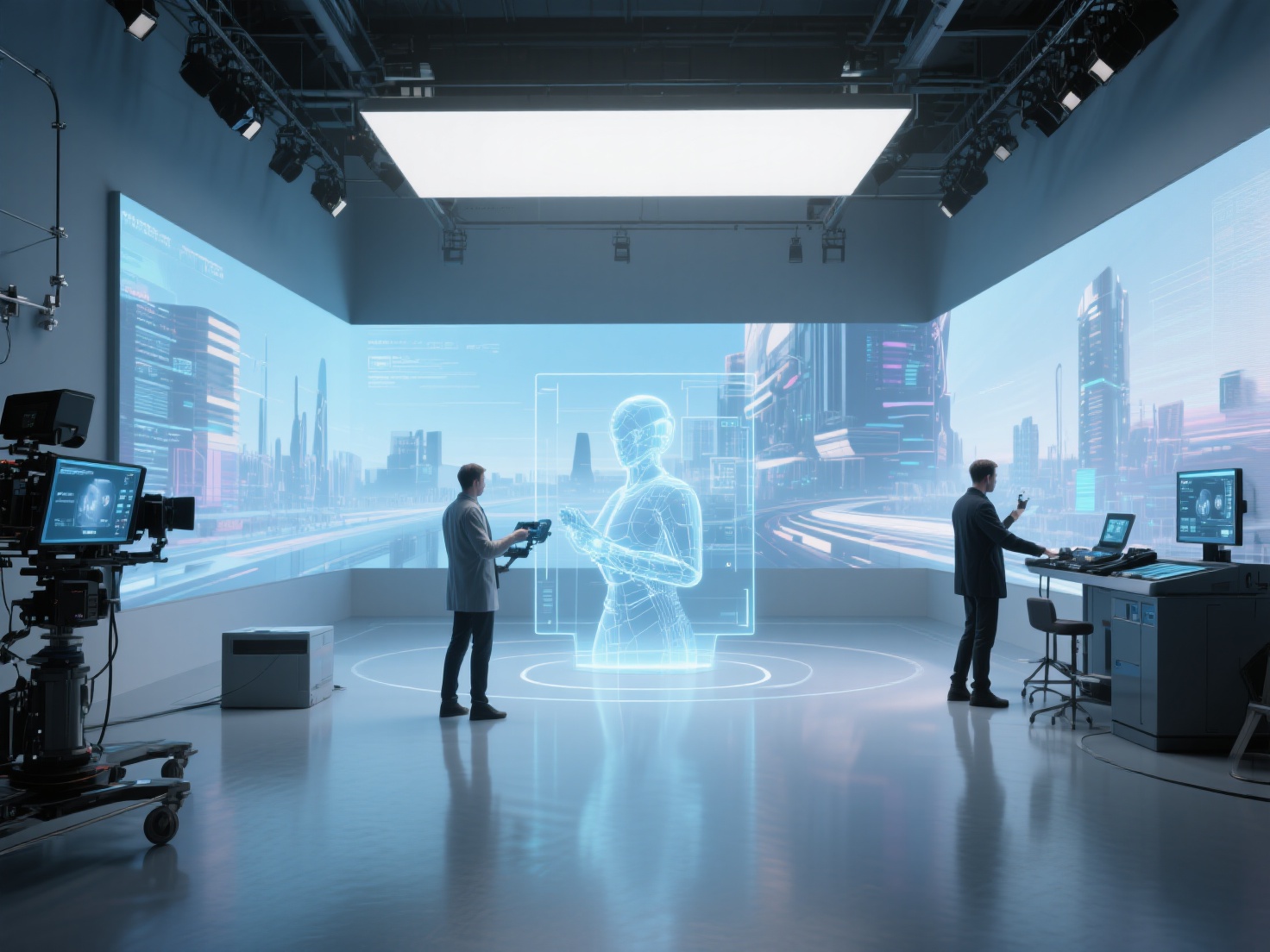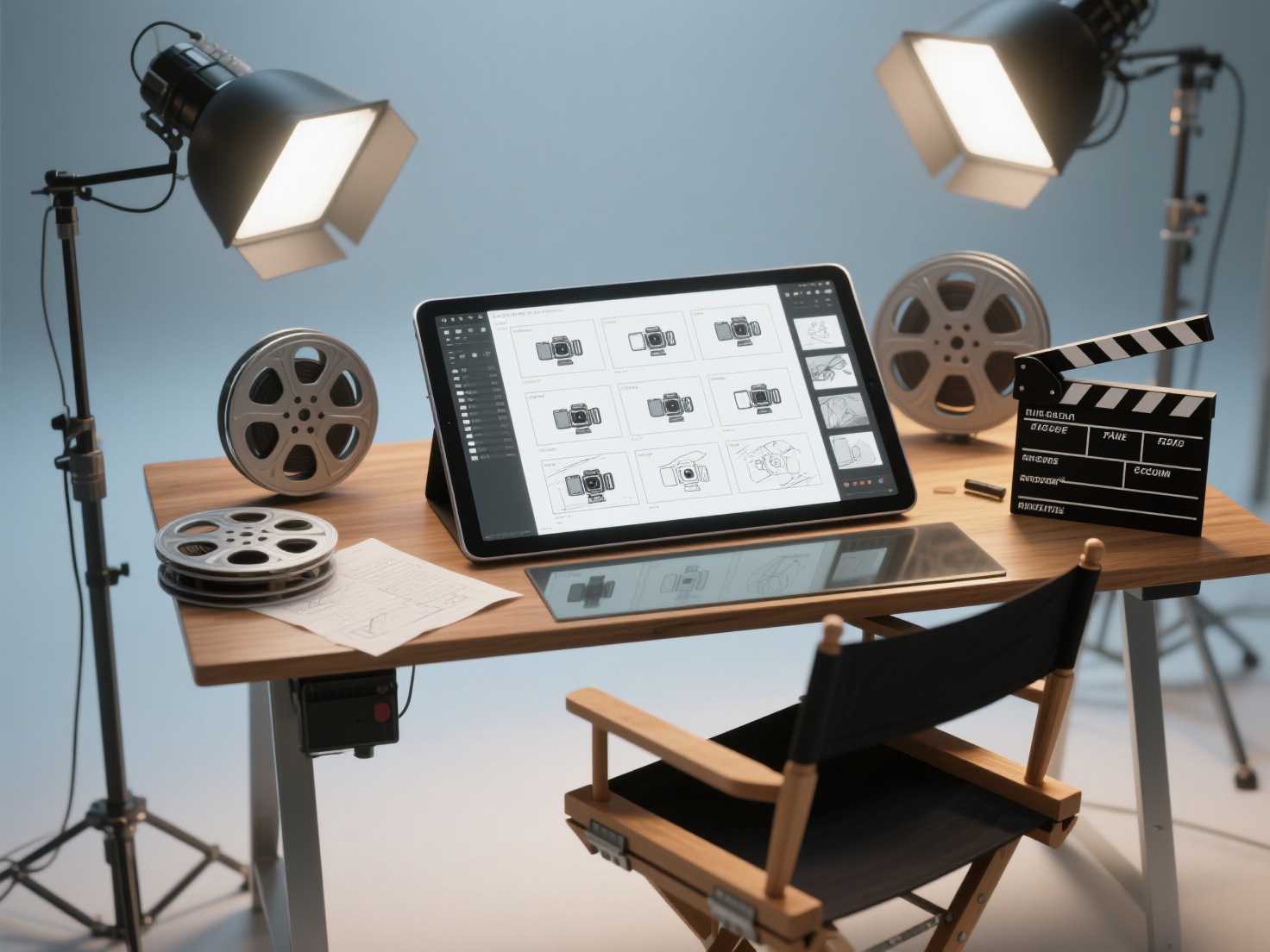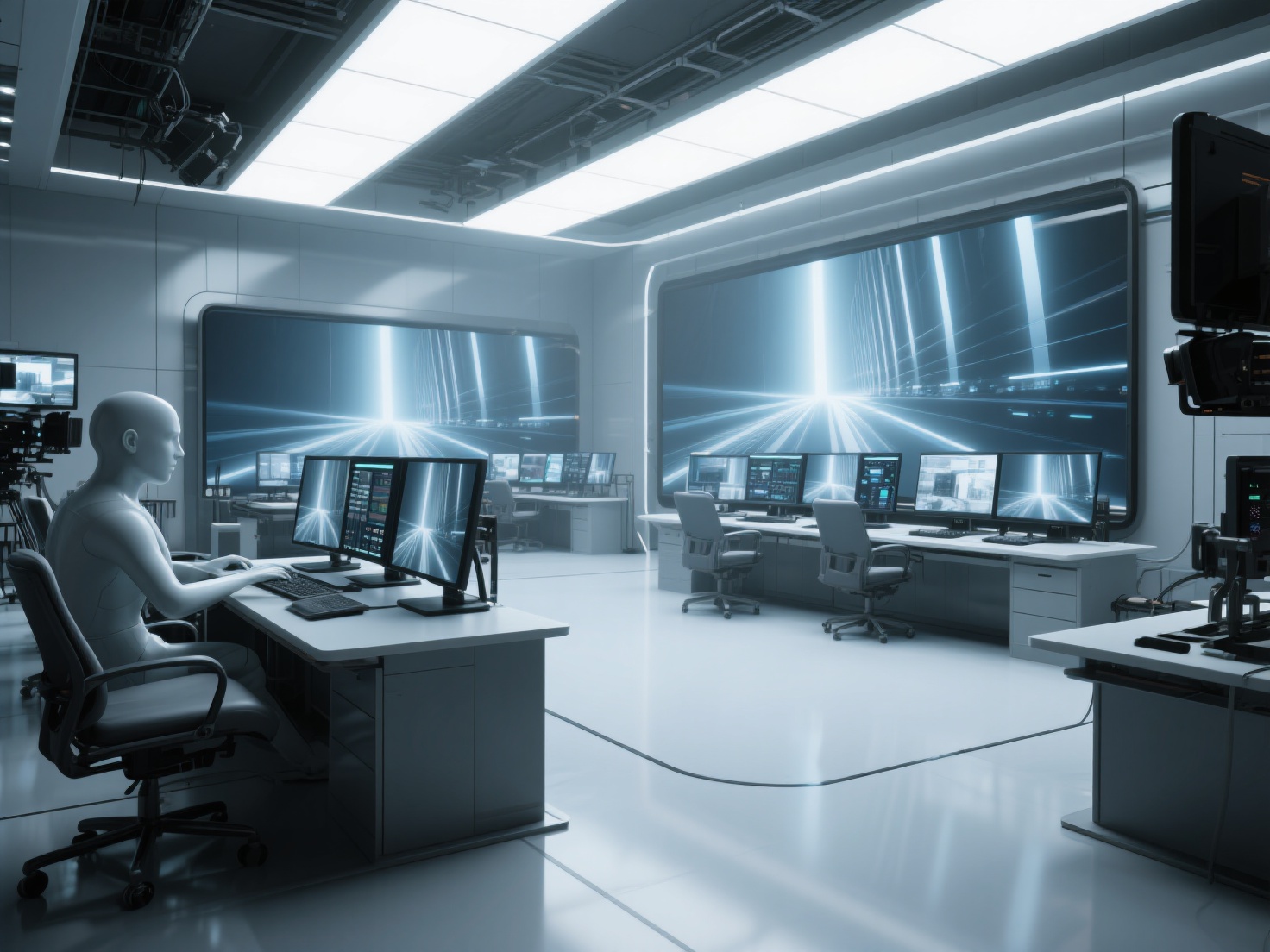
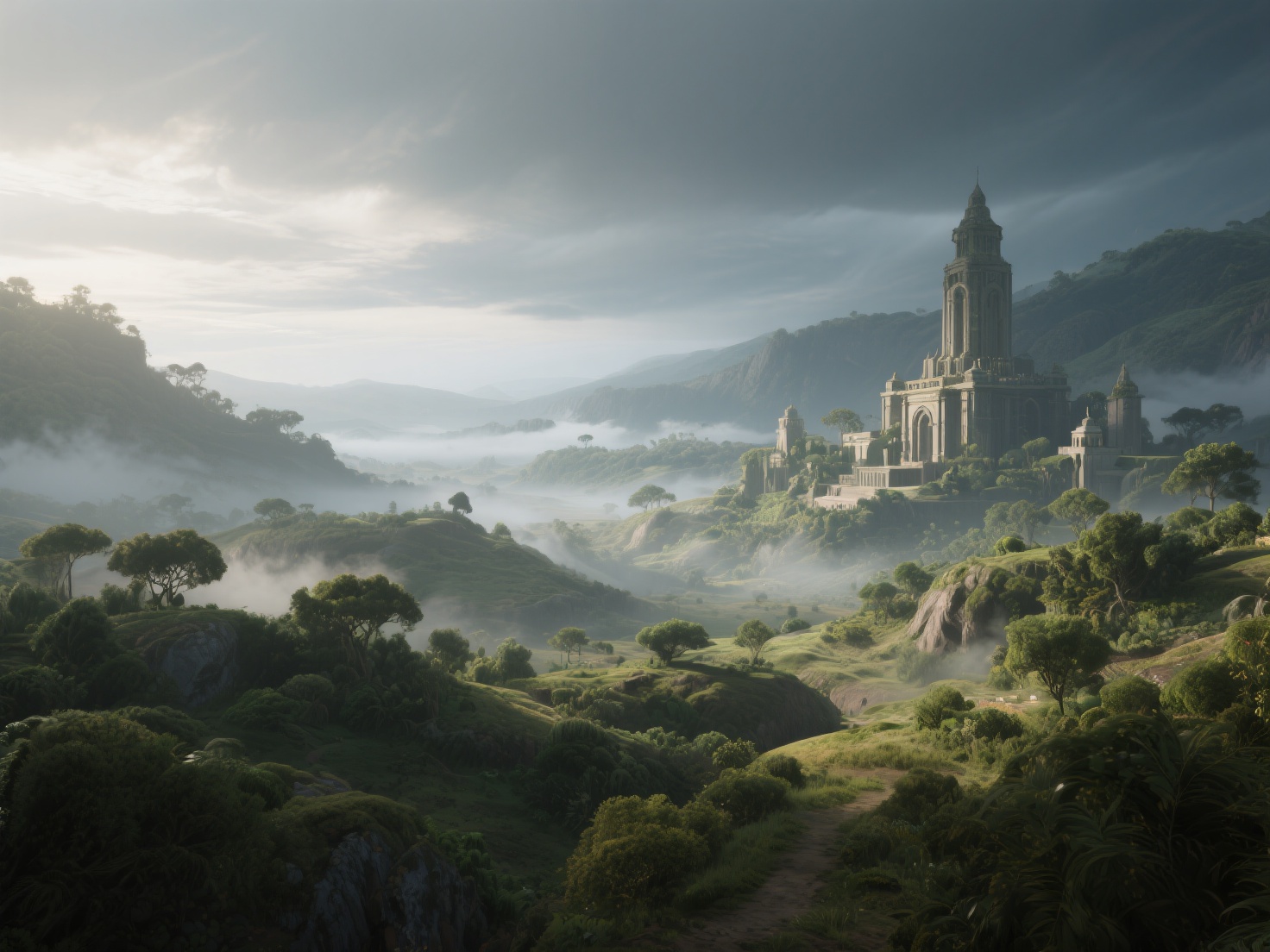
From the sprawling alien jungles of Pandora to the gritty, neon-lit streets of futuristic cyberpunk cities, visual effects have the power to transport audiences to entirely new realities. Behind every breathtaking cinematic landscape is the meticulous work of environment art VFX professionals. Creating these immersive settings is a massive undertaking, requiring a blend of traditional artistic sensibilities and cutting-edge technical workflows.
For 3D environment artists and VFX students, mastering the art of world-building means understanding a complex pipeline. It is not just about placing a few 3D models into a scene; it is about establishing mood, scale, and uncompromising photorealism. As audiences demand higher fidelity, the challenge of executing a believable digital environment film becomes increasingly demanding, often requiring massive libraries of high-quality assets.
In this comprehensive guide, we will explore the complete pipeline for 3D environment creation in the film and television industry. From initial concept art to final rendering, we will break down the techniques used by top studios and look at how modern AI workflows are drastically accelerating asset generation.
What is Digital Environment Art in Film?
Digital environment art in film is the specialized discipline of designing, modeling, texturing, and lighting virtual sets and landscapes that serve as the backdrop for live-action or fully CG cinematic sequences.
Unlike physical set building, digital environment creation allows filmmakers to craft worlds without the limitations of real-world physics, budget, or location constraints. It encompasses a wide range of techniques, including 2D matte painting, 2.5D camera projections, and fully realized 3D volumetric worlds. The ultimate goal is absolute photorealism, ensuring the audience cannot tell where the physical set ends and the digital world begins.
The Environment Art Pipeline for Film & VFX
Building a convincing digital world is a multi-step process that requires collaboration across various departments. Here is a breakdown of the standard environment art VFX pipeline.
1. Concept Art & Reference Gathering
Every great environment starts with a strong foundation. Before any 3D modeling begins, artists rely heavily on concept art to establish the visual language, mood, and architecture of the world.
- Reference Boards: Artists collect thousands of real-world photo references for textures, lighting, geology, and architectural styles.
- Mood Establishment: Concept art dictates the color palette and atmosphere, ensuring the environment serves the narrative of the film.
2. Matte Painting: Traditional vs. Digital
Historically, matte painting involved artists painting highly detailed backgrounds on large sheets of glass to be composited with live-action footage.
- Digital Evolution: Today, digital matte painting (DMP) blends high-resolution photography, digital painting, and 3D elements.
- 2.5D Projections: To allow for slight camera movements (parallax), matte paintings are often projected onto simple 3D geometry—a technique known as camera projection. This bridges the gap between static 2D images and full 3D scenes.
3. 3D Environment Modeling (Terrain, Architecture, Vegetation)
When a scene requires dynamic lighting, complex camera fly-throughs, or heavy interaction with characters, a fully 3D environment is necessary.
- Terrain Sculpting: Artists use specialized software to generate realistic landscapes, eroding mountains and carving riverbeds to mimic natural geological processes.
- Architectural Hard Surface: Buildings, ruins, and sci-fi megastructures are modeled with extreme attention to detail, ensuring bevels and edges react naturally to light.
- Vegetation: Scattering millions of high-fidelity trees, plants, and grass instances requires robust memory management and specialized instancing tools.
4. Procedural Environment Generation
To populate massive cinematic landscapes, artists frequently turn to procedural generation tools like SideFX Houdini or World Machine. Instead of manually placing every rock or tree, procedural workflows use node-based rules to generate natural-looking ecosystems. This ensures mathematically accurate erosion on mountainsides and biologically realistic forest growth, saving thousands of manual hours.
5. Asset Integration & Set Dressing
Set dressing is the art of populating the scene to tell a story. An empty street feels artificial; adding scattered debris, worn-down signage, and varied props makes the world feel lived-in.
The Challenge: Sourcing or modeling hundreds of unique background assets (statues, rubble, background vehicles, ornate pillars) is incredibly time-consuming and often creates bottlenecks in the VFX pipeline.
The Modern Solution: This is where AI-driven tools are revolutionizing the industry. Hitem3D allows environment artists to rapidly generate production-ready assets simply by uploading concept art or photo references. Powered by the in-house Sparc3D (high precision) and Ultra3D models, Hitem3D can reconstruct hidden and invisible parts beyond the visible surface of a 2D image. Whether you need an ancient urn or a complex background architectural element, you can generate clean, print-ready geometry up to 1536³ Pro resolution (2M polygons) and export it directly as an OBJ, FBX, or USDZ to drop into your scene.
6. Lighting, Atmosphere, and Rendering
The final stage is tying the environment together with lighting and volumetrics.
- Atmospherics: Fog, smoke, and volumetric rays (god rays) are crucial for establishing scale and depth (aerial perspective).
- Lighting: Environment artists use HDRI sky domes and carefully placed directional lights to match the live-action plate seamlessly.
- Rendering: Film rendering relies on offline, physically based path-tracing engines (like Arnold, V-Ray, or RenderMan) to calculate realistic light bounces, scattering, and complex material properties.
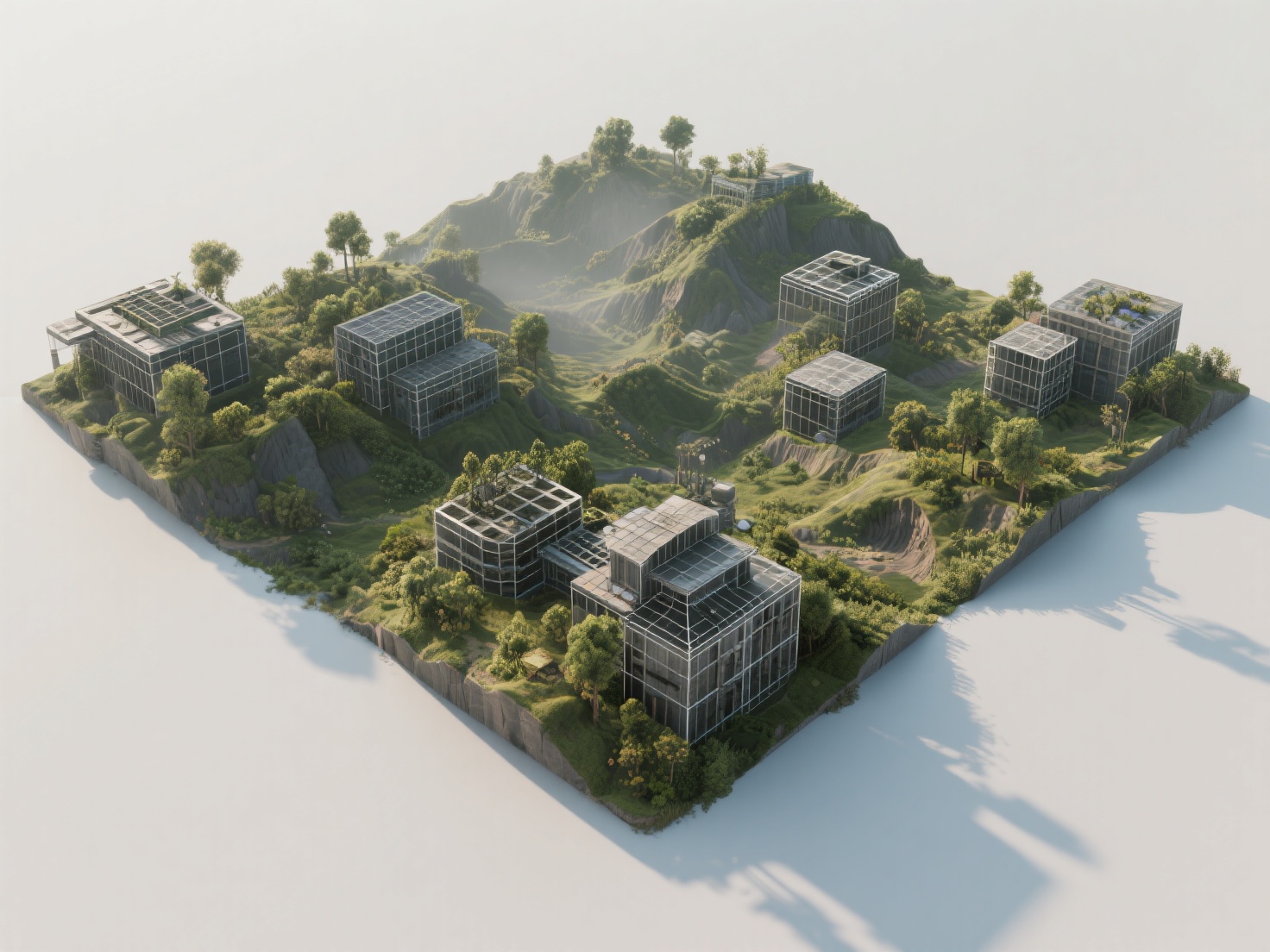
Environment Art: Film vs. Games
While 3D environment creation shares overlapping skill sets in both film and video games, the technical constraints and workflows are vastly different.
| Feature | Film & VFX Environments | Video Game Environments |
|---|---|---|
| Polygon Count | Virtually unlimited. Millions or billions of polygons handled via instancing and offline rendering. | Strictly optimized. Relies heavily on low-poly meshes, LODs (Level of Detail), and normal maps. |
| Lighting | Fully dynamic, ray-traced offline lighting calculating exact physical light bounces. | Often baked lighting, with an increasing shift toward real-time ray tracing (Unreal Engine 5). |
| Camera View | Directed and restricted. The environment only needs to look perfect from the specific camera angles dictated by the shot. | 360-degree freedom. The player can view assets from any angle, requiring optimization on all sides. |
| Texture Resolution | UDIM workflows with massive 4K to 8K textures for extreme close-ups. | Texture atlases, tiling textures, and memory-conscious mipmapping. |
Real-World Applications in VFX
The techniques discussed above are applied across various cinematic scenarios:
- Set Extensions: A physical set may only be built up to the first floor of a building. Environment artists build the upper floors and skyline digitally, blending them seamlessly with the live-action footage.
- Historical Reconstructions: Recreating ancient Rome or 1920s New York requires immense architectural research, relying heavily on modular 3D building assets and digital matte painting for distant cityscapes.
- Fantasy & Sci-Fi Worlds: Entirely CG shots—like a spacecraft approaching an alien Dyson Sphere—rely on full 3D environment creation, combining procedural generation with hyper-detailed hero assets.
Best Practices for World-Building in VFX
If you are an aspiring environment artist, keep these essential best practices in mind:
- Prioritize Scale and Proportion: Nothing breaks immersion faster than incorrect scale. Always use human reference models (scale figures) in your scene to ensure doorways, stairs, and natural features are accurately sized.
- Embrace Imperfection: Perfect lines and spotless surfaces look inherently CGI. Add dirt, edge wear, water damage, and asymmetrical breakups to your models.
- Master PBR Materials: Physically Based Rendering (PBR) is the industry standard. Your textures must accurately represent how real-world materials absorb and reflect light.
- Optimize Your Textures with De-Lighting: When using photogrammetry or generating assets from photos, baked-in shadows can ruin dynamic scene lighting. Utilizing tools like Hitem3D’s De-Lighted Texture feature intelligently removes baked-in lighting, giving you true, relightable 4K PBR materials that react perfectly to your cinematic lighting setup.
The Future of Digital Environments and CTA
The landscape of environment art VFX is evolving rapidly. While traditional matte painting and manual 3D environment creation remain foundational, the integration of AI-powered asset generation is shifting the paradigm. By automating the tedious modeling and texturing of background and mid-ground assets, artists are freed up to focus on composition, mood, and storytelling.
Whether you are a VFX student building your first demo reel or a seasoned professional looking to speed up set dressing, adopting next-gen workflows is essential. Hitem3D is your ultimate partner in this creative journey. As a next-generation AI-powered 3D model generator, Hitem3D transforms 2D images into high-fidelity, production-ready 3D models with clean geometry.
Stop spending hours manually sculpting background props. Benefit from Hitem3D’s Invisible Parts technology, true De-Lighted 4K Textures, and a generous Free Retry system to populate your cinematic worlds efficiently. Trusted by creators in over 50 countries, Hitem3D is built to elevate your digital environments.
Create For Free -> https://www.hitem3d.ai/create
Frequently Asked Questions (FAQ)
What is the difference between a matte painter and an environment artist?
A matte painter traditionally focuses on 2D or 2.5D background elements, using digital painting and photo manipulation to create distant skies, mountains, or cityscapes. A 3D environment artist focuses on building fully volumetric, 3D scenes (terrain, buildings, props) that interact dynamically with lighting and complex camera movements.
What software is standard for environment art VFX?
The industry standard toolkit includes Autodesk Maya or 3ds Max for core modeling, ZBrush for high-res sculpting, SideFX Houdini for procedural generation and scattering, Substance 3D Painter/Designer for texturing, and Nuke for compositing.
How do VFX artists handle massive polygon counts in cinematic environments?
VFX artists manage massive scenes through “instancing” (loading a model once into memory and duplicating it thousands of times without performance loss) and using advanced renderer-specific proxy formats (like Arnold Stand-ins or V-Ray Proxies).
Can AI replace 3D environment artists?
No, AI is a tool, not a replacement. Tools like Hitem3D significantly accelerate the workflow by rapidly generating individual props, assets, and textures from references. However, the artistic eye required for composition, lighting, scale, and storytelling remains firmly in the hands of the environment artist.