


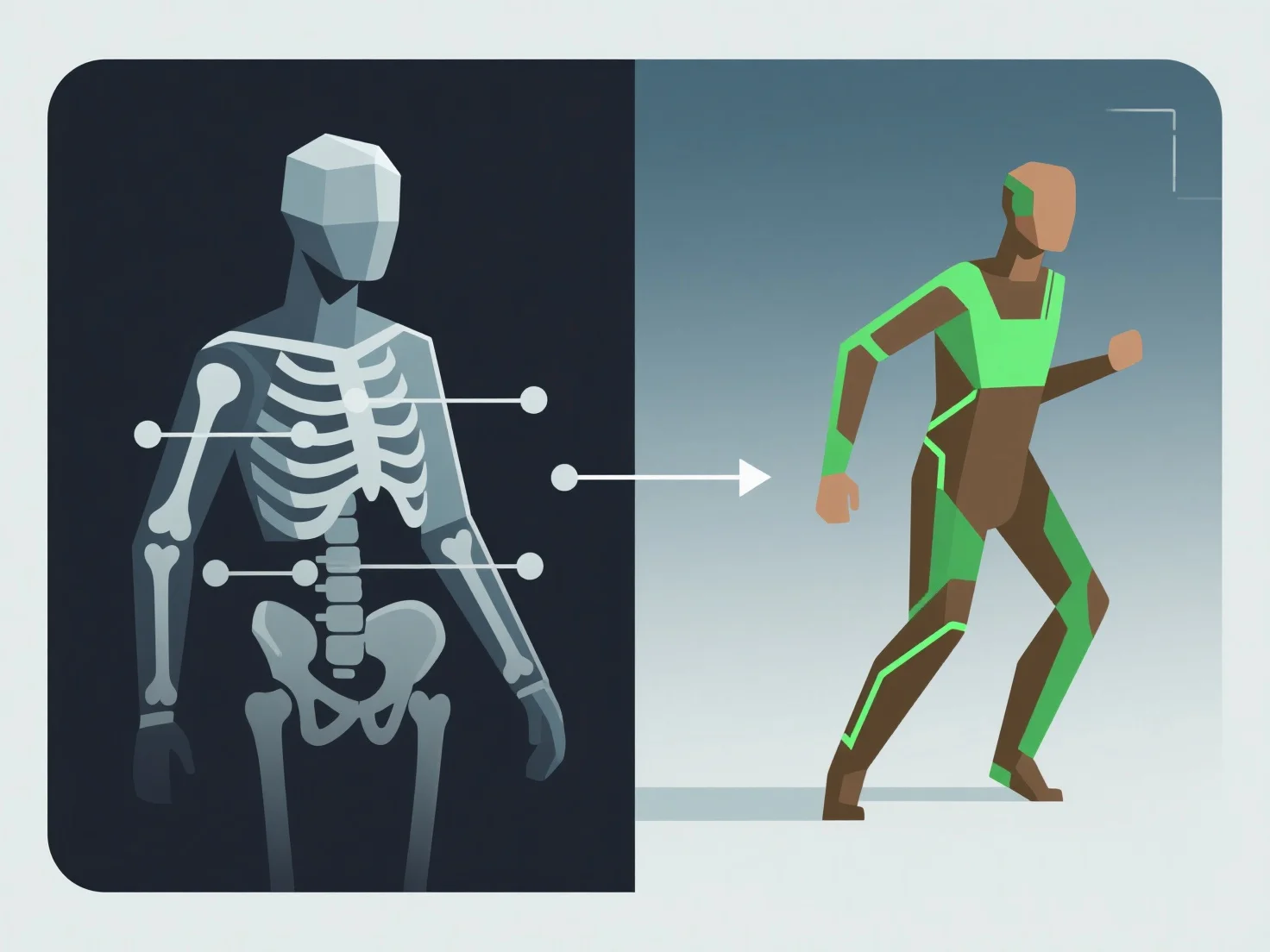
Das Rigging und die Animation sind in der 3D-Pipeline aufgrund unterschiedlicher Fertigkeitsanforderungen und Spezialisierung des Workflows getrennt.
- **Unterschiede im Fähigkeitssatz**: Rigging beinhaltet technische Aufgaben wie das Erstellen von Skeletten, Skinning und das Entwerfen von Steuerungssystemen, um Bewegungen zu ermöglichen, was eine ingenieurähnliche Präzision erfordert. Animation erfordert künstlerische Fähigkeiten bei der Manipulation dieser Steuerungen, um Bewegungen zu gestalten, wobei der Schwerpunkt auf Timing, Ausdruck und Storytelling liegt.
- **Arbeitsablaufeffizienz**: Rigger verfeinern die Steuerungen für Flexibilität und Zuverlässigkeit und stellen sicher, dass Animationskünstler über intuitive Werkzeuge verfügen. Die Animationskünstler konzentrieren sich dann ausschließlich auf kreative Bewegungen und vermeiden technische Ablenkungen durch die Einrichtung des Rigs.
Diese Aufteilung optimiert beide Rollen und sorgt für ein Gleichgewicht zwischen technischer Robustheit und kreativer Freiheit für hochwertige 3D-Ergebnisse.