


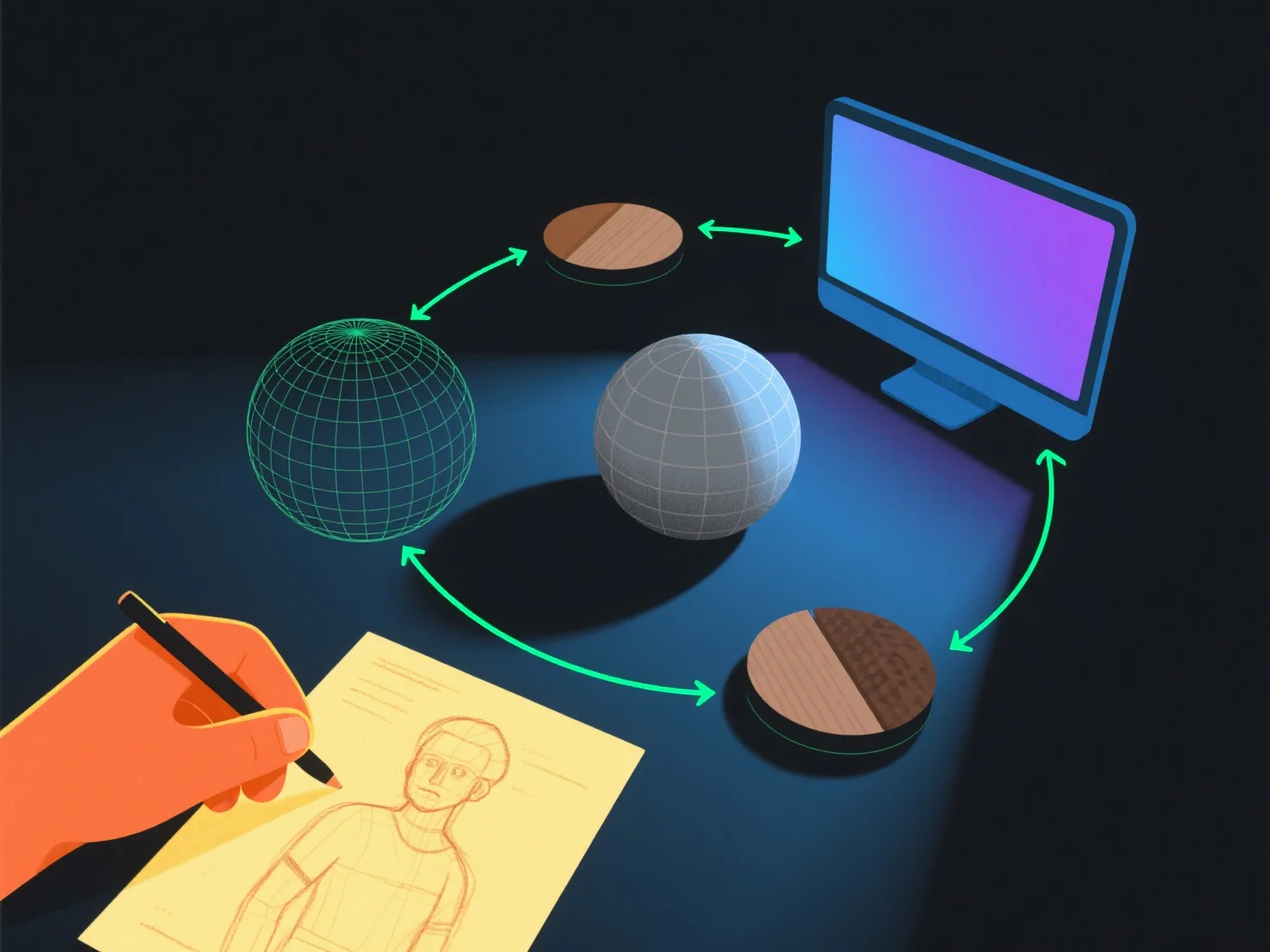
The 3D pipeline from concept to final rendering involves six core steps: concept design, 3D modeling, texturing, rigging (for animated assets), lighting, and final rendering.
- **Concept design**: Translates ideas into visual concepts via sketches or mood boards, setting the project’s creative direction. - **3D modeling**: Constructs digital 3D geometry using software, forming the asset’s basic shape and structure. - **Texturing**: Adds surface details (color, patterns, materials) to enhance realism and visual appeal. - **Rigging (for animation)**: Builds a skeleton with controls to enable movement (e.g., character joints or object articulation). - **Lighting**: Configures light sources to define scene mood, depth, and shadow dynamics. - **Final rendering**: Computes light and material interactions to generate the final image or animation frame.
These sequential steps transform initial concepts into polished, render-ready visuals.