


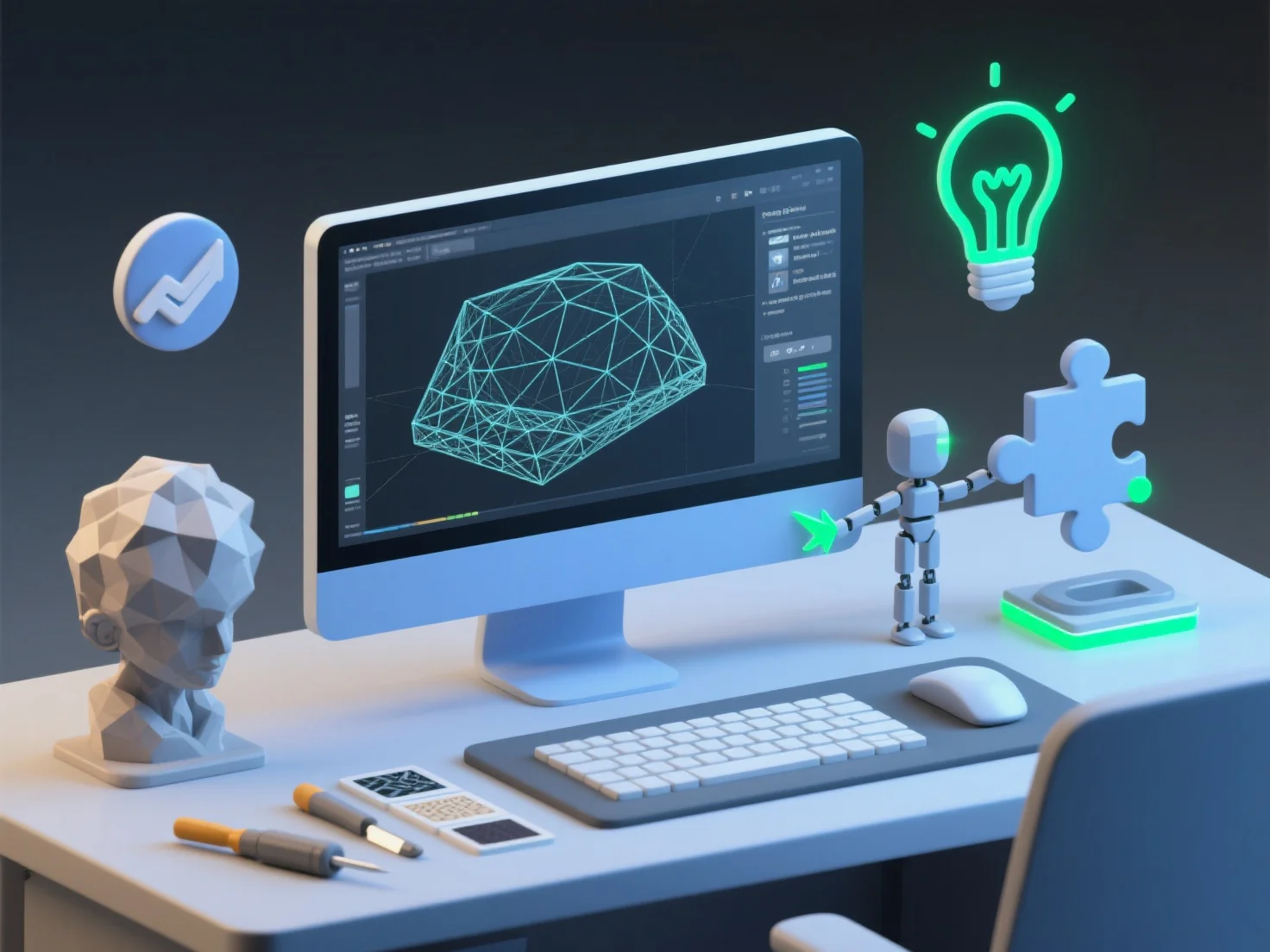
To stay competitive, 3D modelers must master technical software skills, artistic fundamentals, and industry-specific expertise.
Technical software skills involve proficiency in tools like Blender, Maya, or ZBrush for 3D modeling, texturing, and rendering—essential for executing precise and high-quality work. Artistic fundamentals, including anatomy, perspective, and color theory, ensure models are visually balanced and aesthetically appealing. Industry-specific expertise, such as low-poly optimization for gaming or high-detail sculpting for film, allows adaptability to different project needs.
Additionally, continuous practice across diverse projects (e.g., character, environment, prop modeling) and staying updated on software updates and industry trends further enhances competitiveness.