


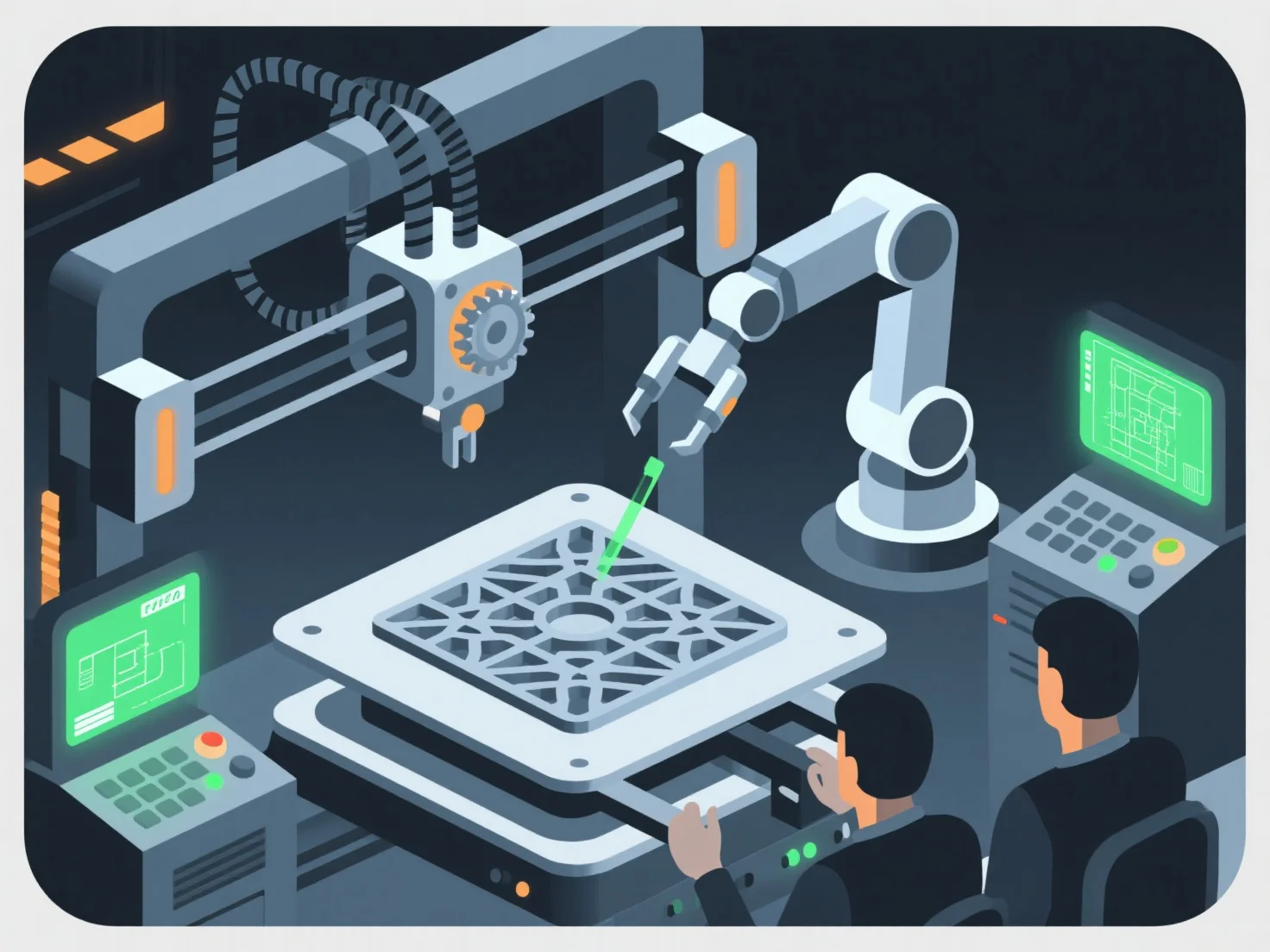
Highly automated 3D systems face key production challenges: workflow integration gaps, technical tool limitations, and reduced human oversight.
First, workflow integration issues. Compatibility mismatches between AI-driven design tools, modeling software, and robotic printers often cause data transfer errors, leading to model inaccuracies or production delays.
Second, technical limitations. Automated systems may struggle with complex geometries (e.g., intricate internal structures) or varying material properties, resulting in inconsistent layer adhesion or structural flaws.
Third, reduced oversight. Over-reliance on automation minimizes manual checks, making early detection of errors (e.g., material defects, calibration drift) harder, increasing rework costs and time.