


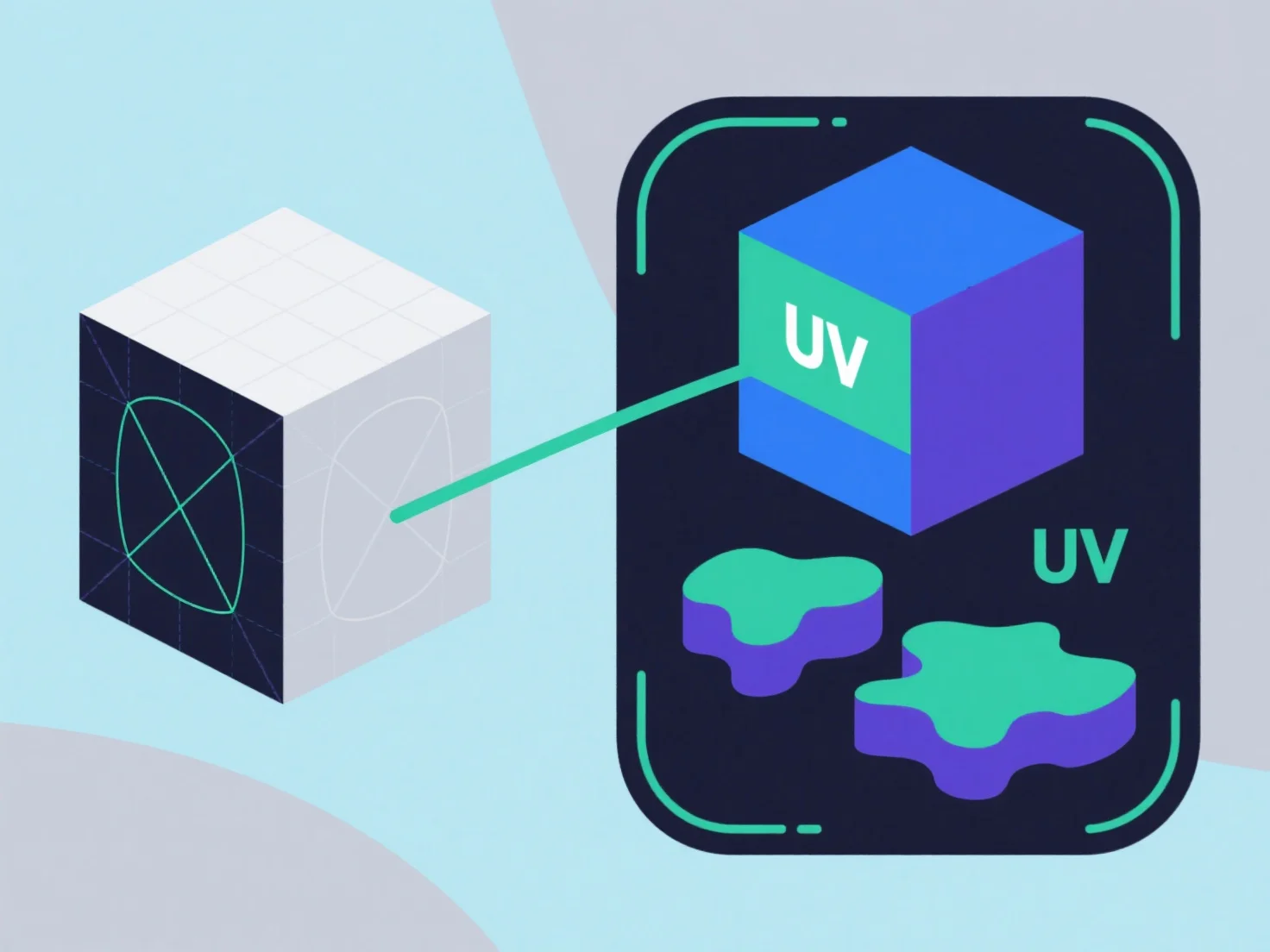
UV unwrapping in 3D modeling is the process of flattening a 3D model’s surface into a 2D texture map, acting as a bridge between 3D geometry and 2D texture design to ensure textures apply accurately without distortion.
Key roles include: - **Precise texture mapping**: Converts 3D surfaces to 2D, allowing artists to apply textures (colors, patterns, details) with control, avoiding stretching or misalignment. - **Simplified texture editing**: 2D maps are easier to modify in software (e.g., Photoshop), enabling detailed adjustments before reapplication to the 3D model. - **Consistent surface flow**: Aligns texture coordinates, ensuring textures flow naturally over complex shapes, enhancing realism.
In short, UV unwrapping is essential for translating 2D art into lifelike, professional 3D visuals.