


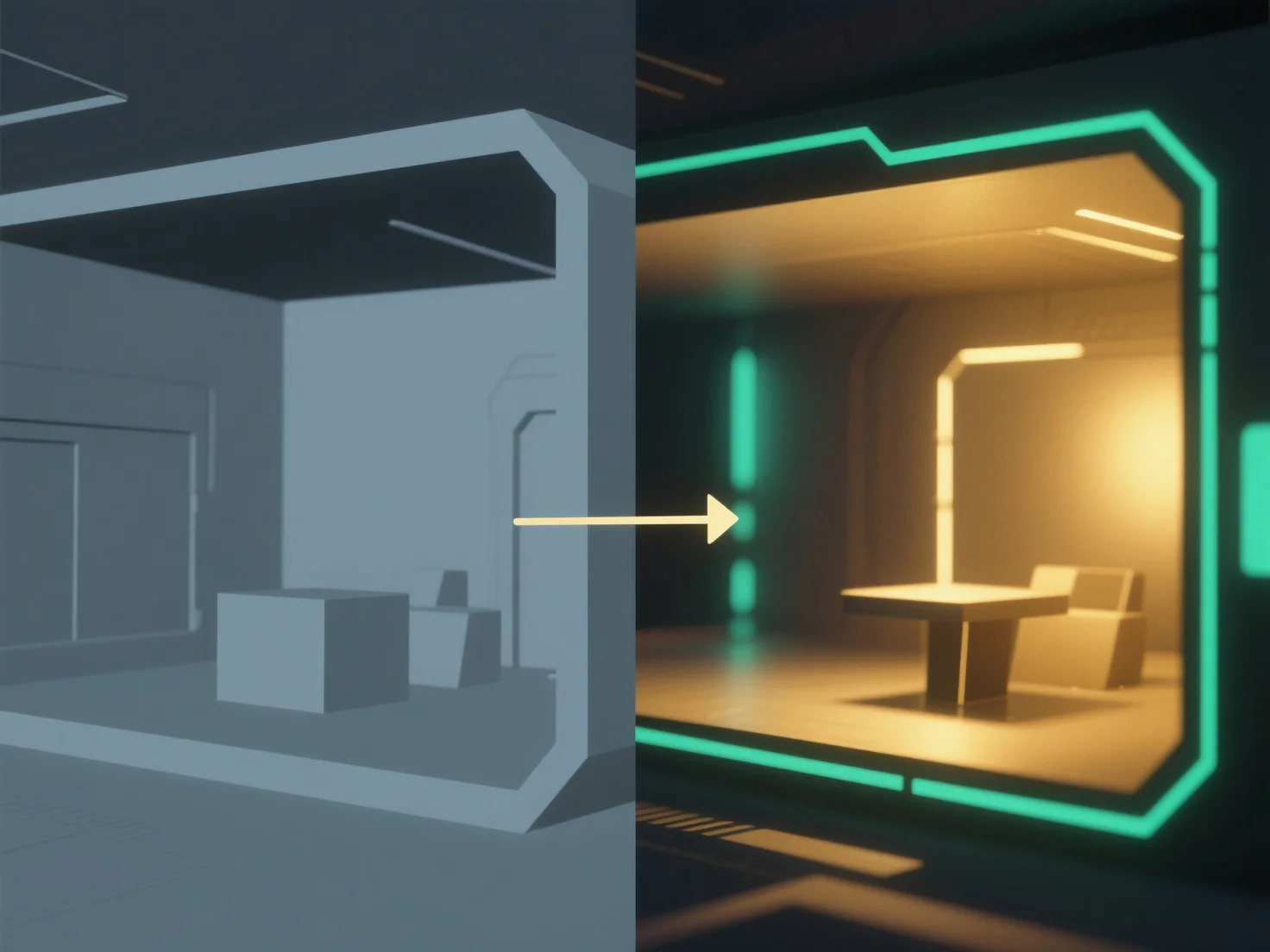
Post-processing dalam grafis 3D meningkatkan kualitas visual dengan menerapkan efek setelah rendering awal, mengubah output mentah menjadi gambar yang dipoles, realistis, atau bergaya melalui penyempurnaan warna, pencahayaan, dan detail.
Fungsi utama meliputi: menyesuaikan warna untuk mengatur suasana hati atau memperbaiki nada; menambahkan efek pencahayaan.
Aplikasi industri: - Pengembangan Game: Menggunakan grading warna dinamis atau motion blur untuk meningkatkan imersi dalam game. - Produksi Film: Menyelaraskan render 3D dengan cuplikan live-action melalui pencocokan warna yang tepat. - Visualisasi Arsitektur: Meningkatkan presentasi klien dengan pencahayaan dan penyesuaian tekstur yang realistis.
Untuk pemula, bereksperimen dengan filter dasar di alat-alat seperti Compositor Blender membantu mengamati bagaimana tweak kecil meningkatkan dampak visual.