


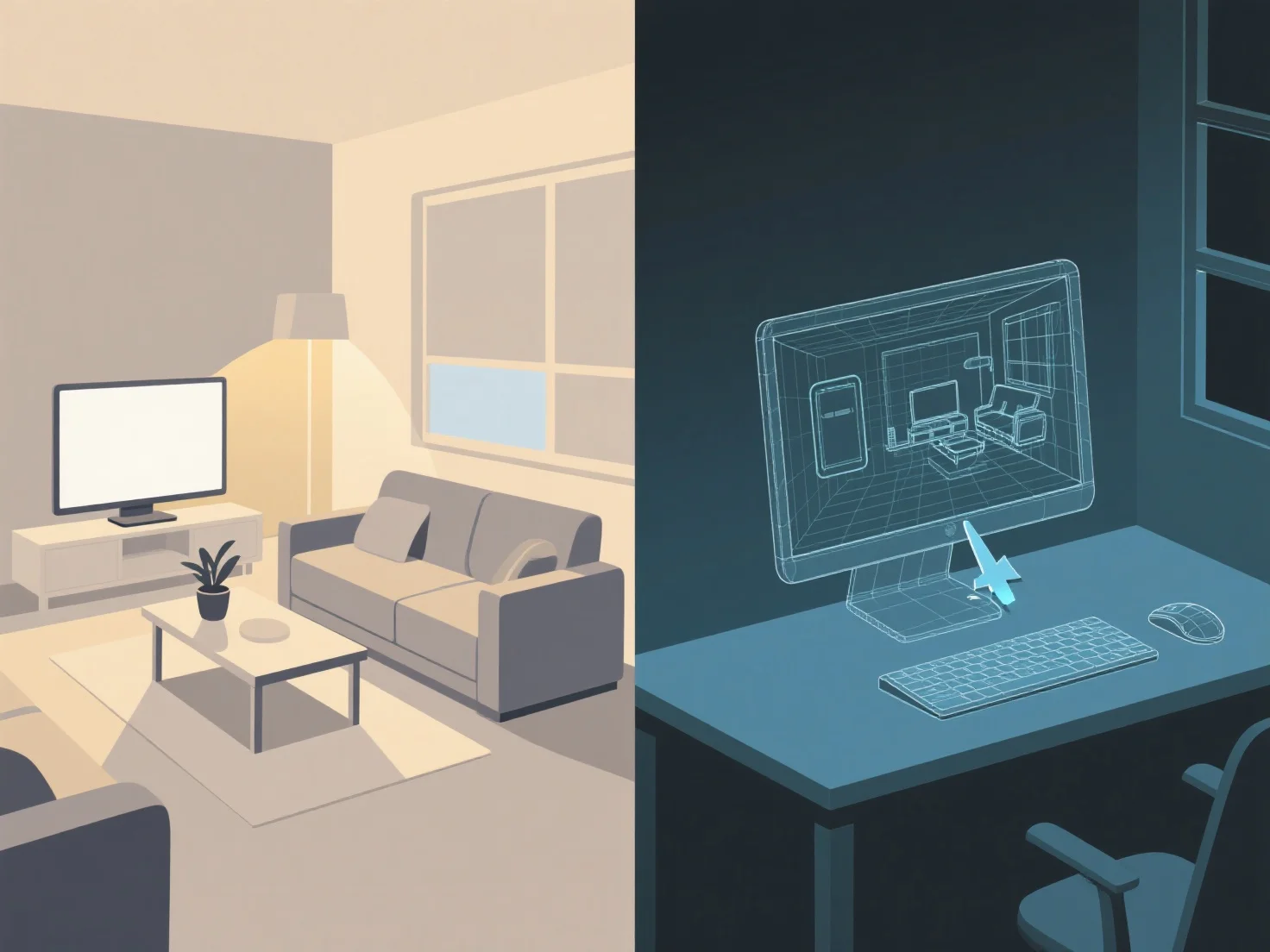
3D modeling in interior design primarily enables realistic visualization of design concepts before physical execution, bridging gaps between ideas and reality.
Key roles include: - **Visualizing details**: It transforms 2D blueprints into lifelike 3D renderings, showing lighting effects, material textures, and spatial proportions, letting clients and designers preview the final space直观. - **Enhancing communication**: Tangible visuals reduce misunderstandings, aligning expectations on color schemes, furniture placement, and aesthetics early. - **Boosting efficiency**: Early previews allow timely adjustments, minimizing costly revisions during construction and speeding up approval.
This streamlines the process, ensuring smoother execution from concept to completion.