


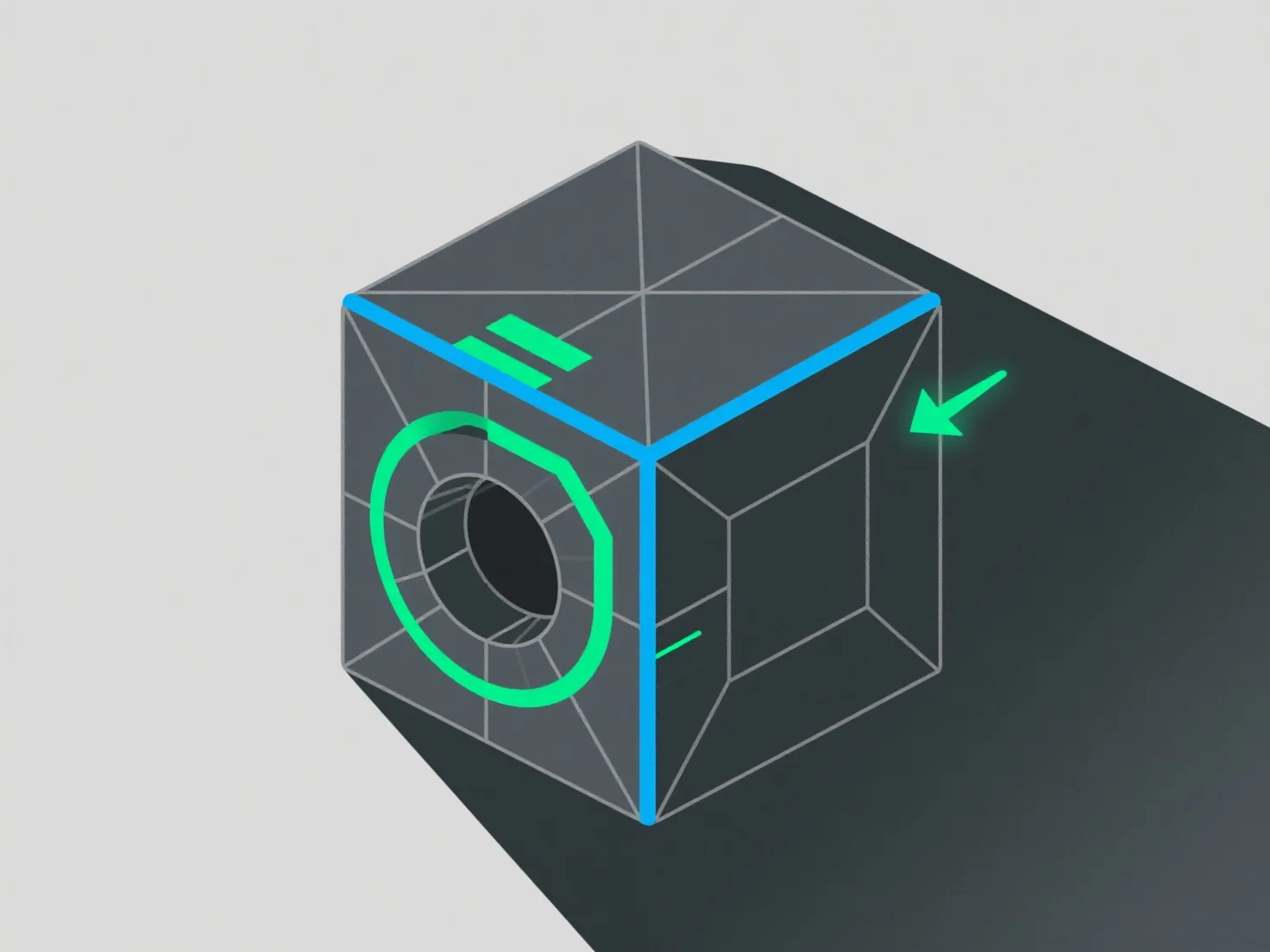
Defining creases and edges in model topology is critical for preserving sharp, precise details and ensuring structural stability during rendering, animation, or deformation.
They act as structural guides, dictating how the model bends, folds, or retains sharpness—essential for applications like 3D printing, game development, or visual effects where surface accuracy is non-negotiable.
Explicitly defining creases (e.g., via edge creasing tools) prevents unintended smoothness, ensuring details like corners or seams stay distinct.
They also maintain consistency across workflows, avoiding rendering/fabrication errors and keeping results uniform.