


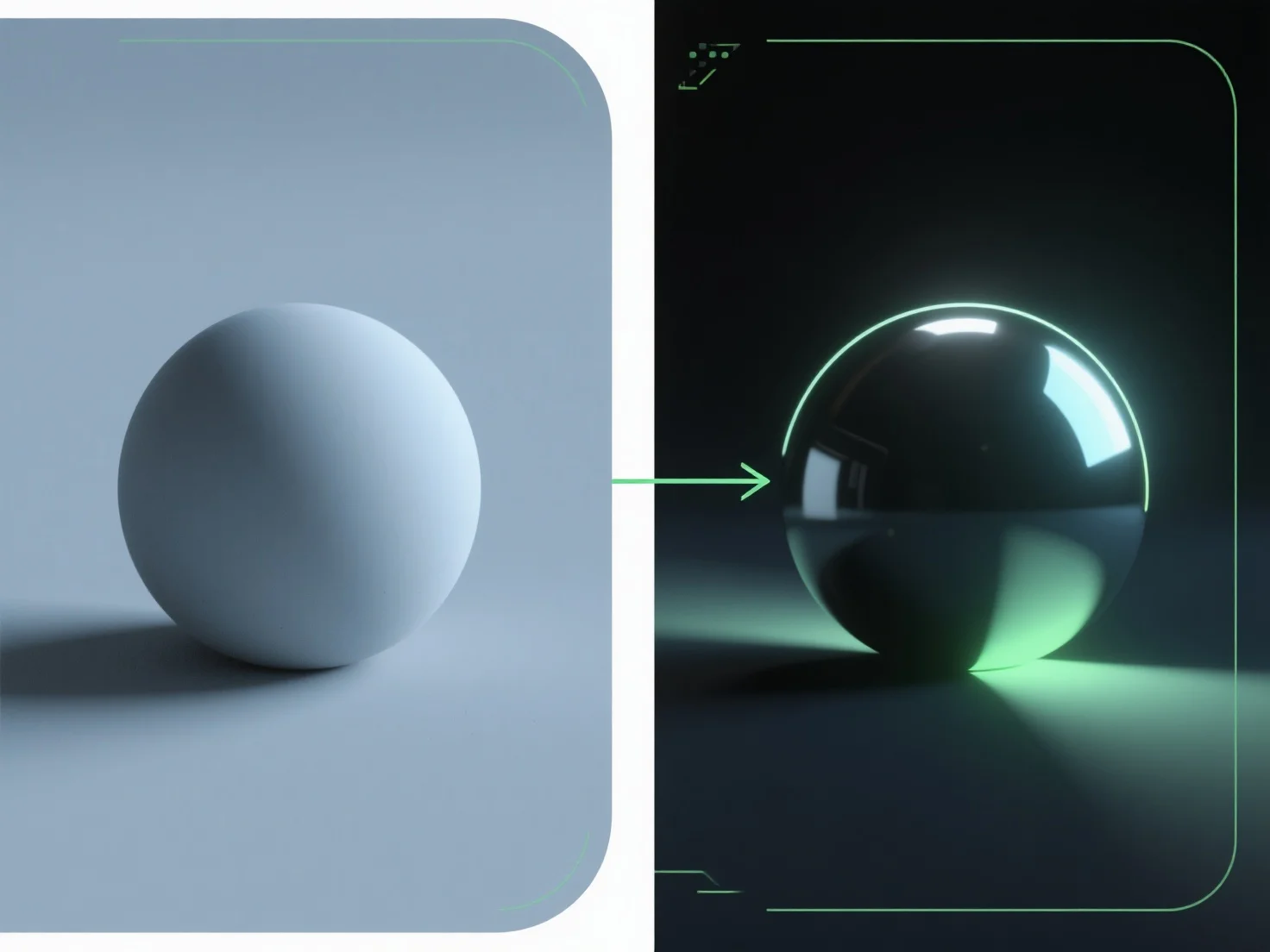
Rendering is the general process of creating 2D images from 3D models, while ray tracing is a specialized rendering technique that simulates light paths to generate lifelike visuals.
Rendering encompasses all methods to convert 3D data into viewable images, including common approaches like rasterization. Ray tracing, as a subset of rendering, works by tracing light rays from the camera to light sources, accurately mimicking real-world lighting effects such as shadows, reflections, and refractions.
In application, rendering techniques vary by need: rasterization prioritizes speed for real-time uses like games, while ray tracing is chosen for high-quality, realistic visuals in films or static images.