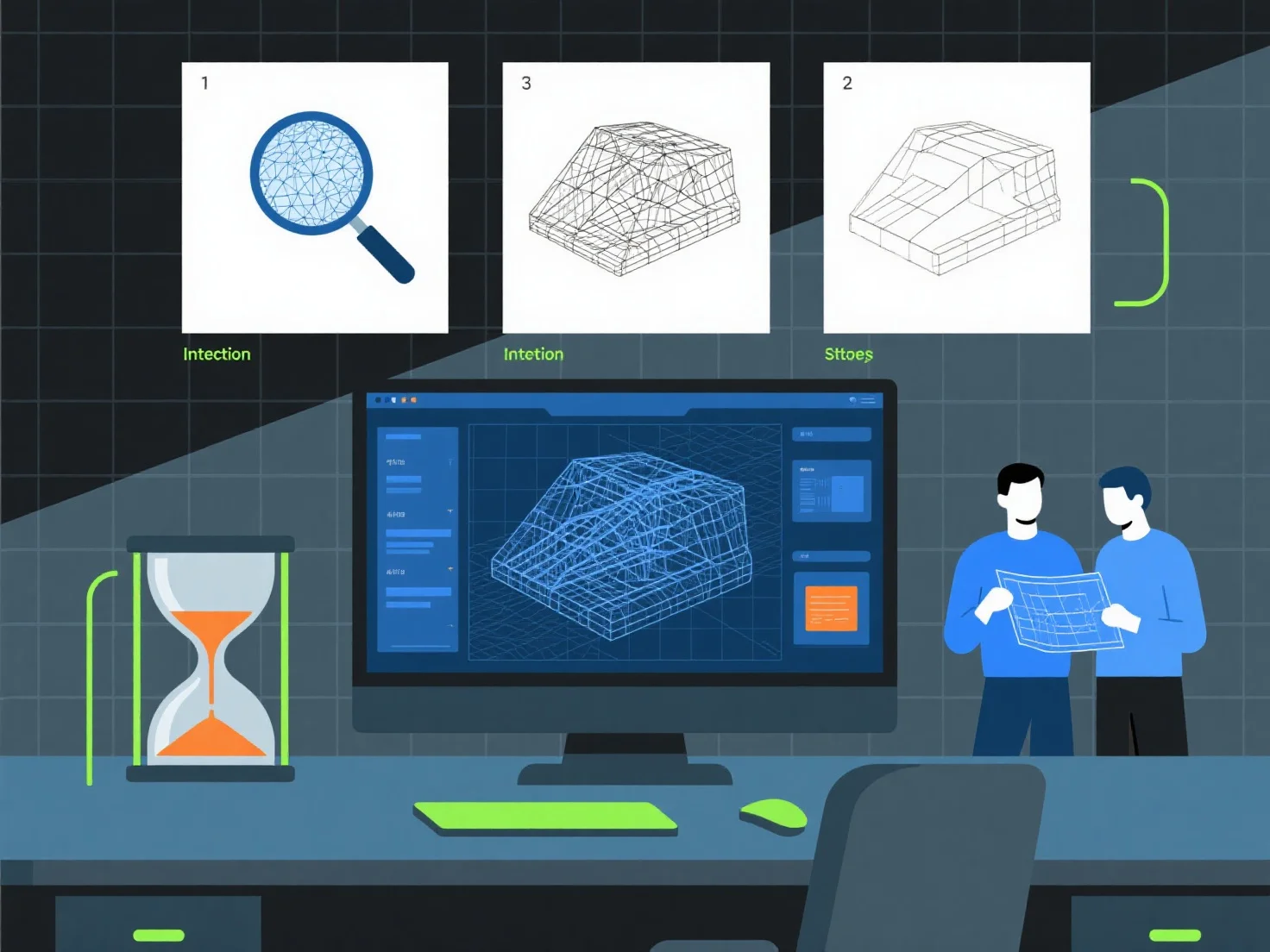
The primary factors contributing to time costs in 3D modeling projects are model complexity, required detail level, and iteration frequency. Model complexity, tied to geometry density and structural intricacy, increases time spent on mesh creation, topology optimization, and error checking. Higher detail levels—such as fine surface textures, high polygon counts, or realistic material simulations—demand additional work in texturing, UV mapping, and rendering adjustments. Frequent iterations, driven by client feedback, design changes, or technical revisions, extend timelines as each round may require reworking models, materials, or animations. To control time costs, clarify detail requirements upfront and establish efficient feedback cycles to minimize unnecessary iterations.


What factors contribute most to time costs in 3D modeling projects?
Model complexity, detail level, and iteration frequency cause 3D modeling time costs; control via upfront detail clarity and efficient feedback.