


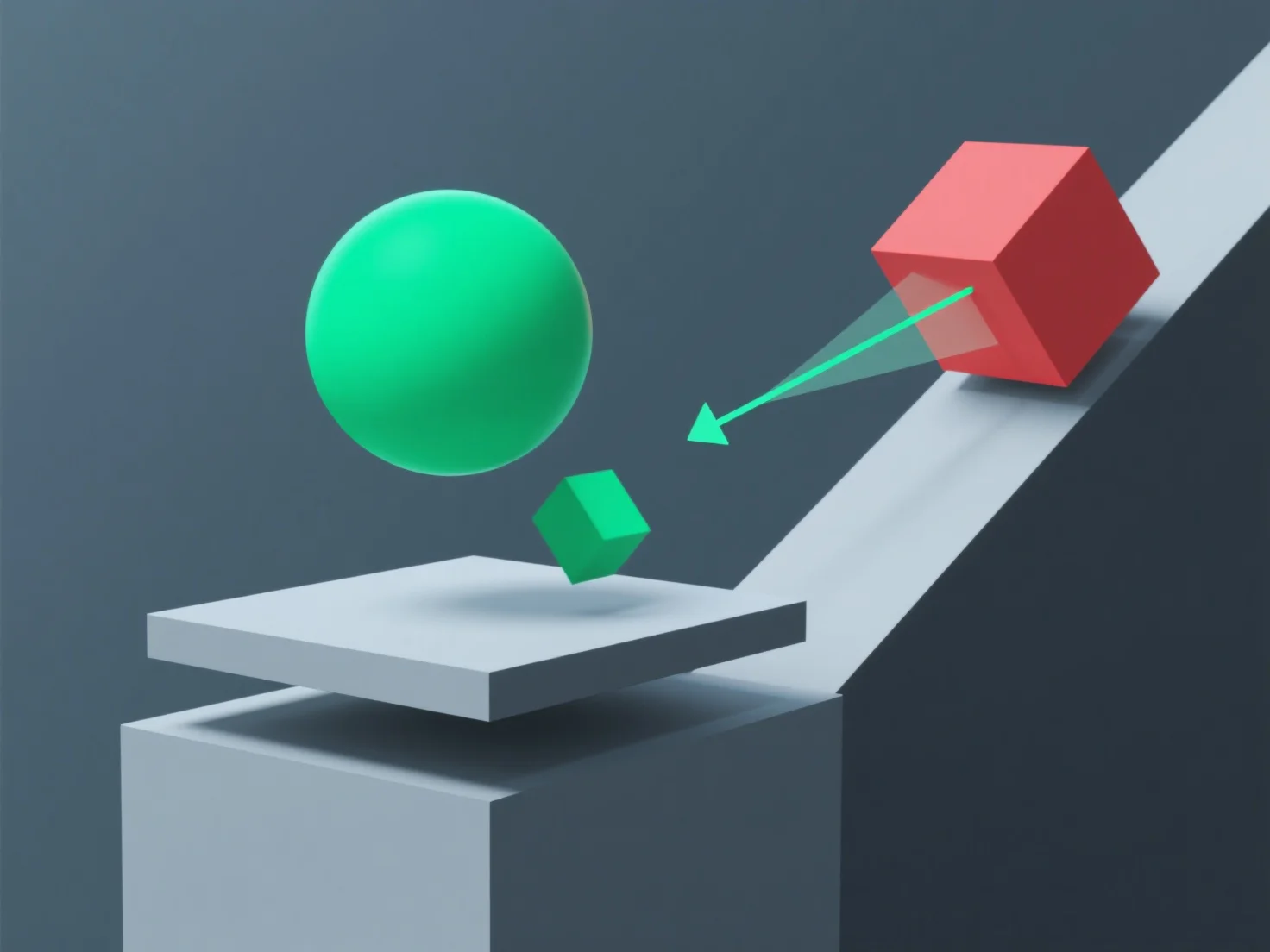
Di lingkungan 3D, simulasi fisika mengacu pada penerapan hukum fisika dunia nyata pada objek virtual untuk meniru gerakan, interaksi, dan perilaku mereka.
Ini menghitung bagaimana objek merespons gaya seperti gravitasi, tabrakan, dan gesekan, meningkatkan realisme adegan virtual. Elemen kunci termasuk: - Dinamika objek: Mensimulasikan akselerasi, tabrakan, atau deformasi seperti yang terjadi di kehidupan nyata. - Interaksi alami: Memastikan objek virtual berperilaku dapat diprediksi, seperti bola yang memantul atau kotak yang meluncur di permukaan.
Untuk proyek 3D, menggunakan perangkat lunak dengan mesin fisika terintegrasi.