


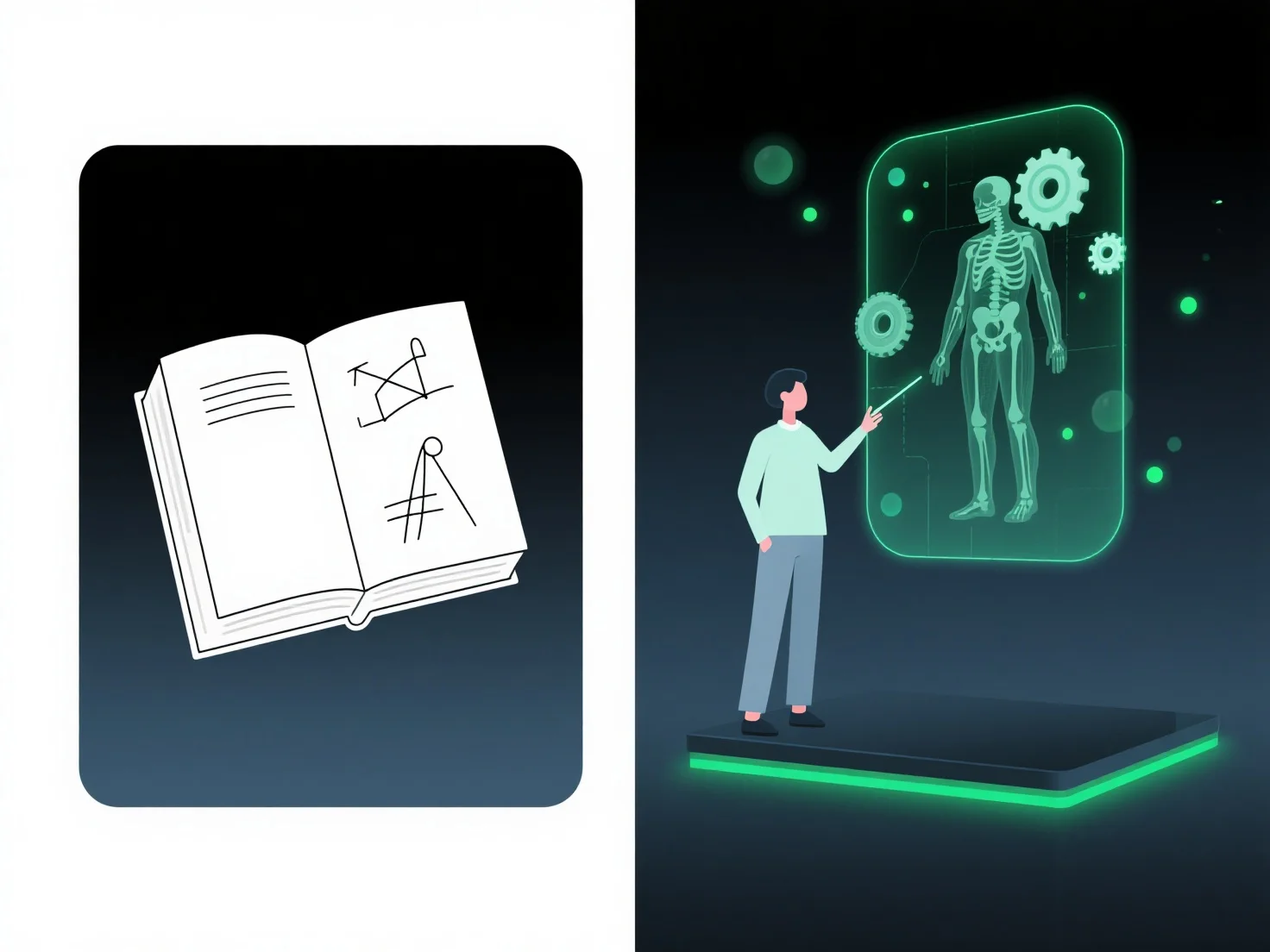
Training and learning with 3D are undergoing key changes centered on enhanced interactivity, immersive visualization, and practical engagement, transforming how complex concepts are understood and applied.
- **Immersive visualization**: 3D models turn abstract or hard-to-grasp subjects (e.g., human anatomy, mechanical structures) into tangible, manipulable objects, making learning more intuitive than static 2D materials. - **Interactive practice**: Learners can directly interact with 3D content—such as simulating surgical procedures or assembling machine parts—strengthening hands-on experience and knowledge retention. - **Diverse applications**: Widely adopted in medical (surgical training), engineering (part assembly), and vocational (equipment operation) fields, adapting to varied educational needs.
These changes bridge theory and practice, making learning more engaging and effective for students and professionals alike.