


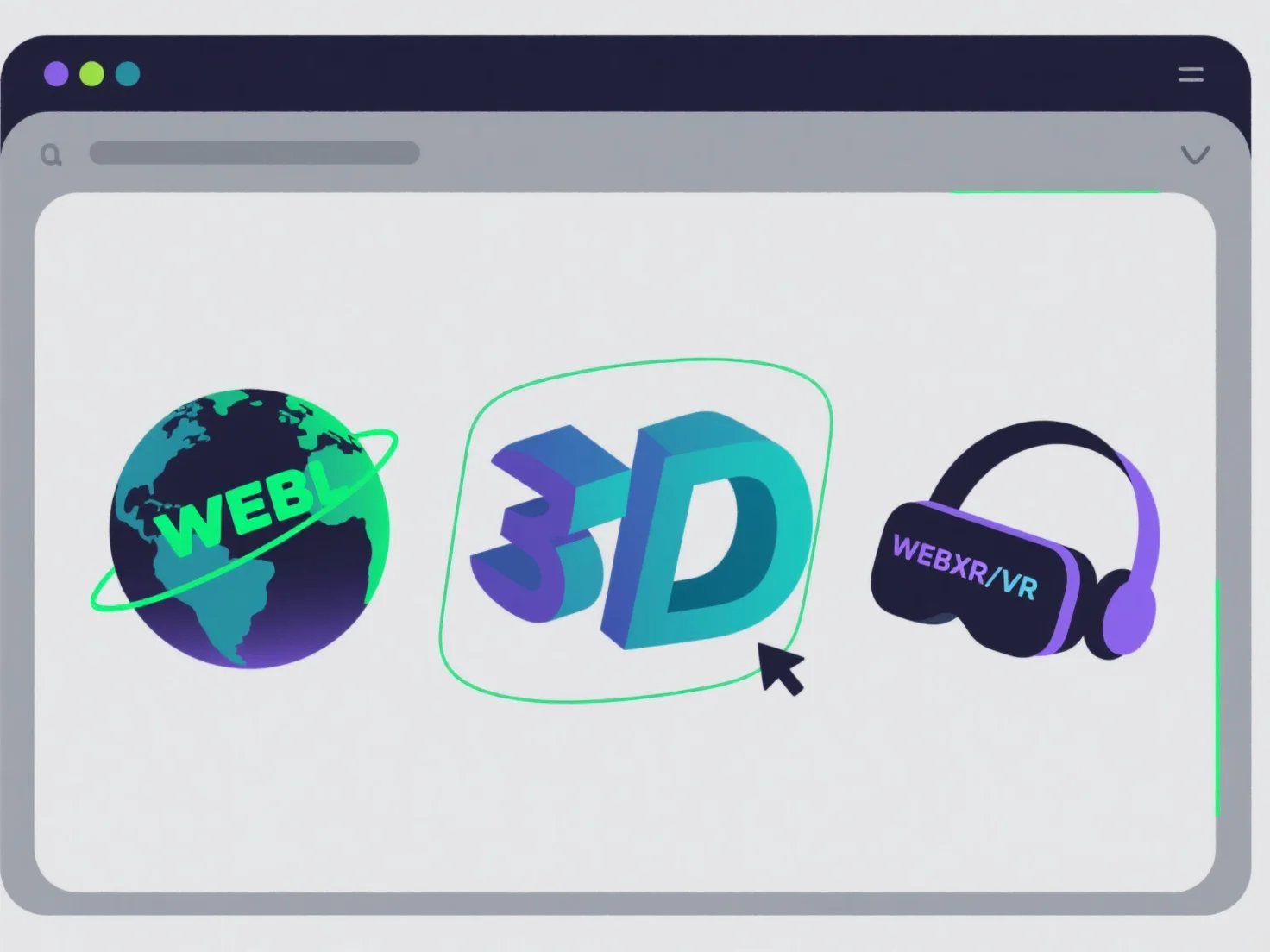
Typische Implementierungsformen für webbasiertes 3D umfassen hauptsächlich WebGL-basiertes Rendering, JavaScript-3D-Bibliotheken und leichte 3D-Modellformate, die in HTML5 integriert sind, und nutzen alle Webstandards für browser-native 3D-Anzeige.
- WebGL-basiertes Rendering: Eine Low-Level-API, die direkten Zugriff auf Grafikhardware ermöglicht und OpenGL ES-Standards verwendet, um 3D-Grafiken ohne Plugins zu rendern, wodurch die Cross-Browser-Kompatibilität gewährleistet wird. - JavaScript 3D-Bibliotheken: Tools wie Three.js, Babylon.js oder PlayCanvas abstrahieren die Komplexität von WebGL und bieten vorgefertigte Funktionen für die Szeneneinrichtung, das Laden von Modellen und Animationen, was die Entwicklung beschleunigt. - Leichtgewichtige 3D-Modellformate: Formate wie glTF (GL Transmission Format) oder USDZ sind für die Bereitstellung im Web optimiert, mit komprimierten Dateigrößen und effizienter Parsing, was die Ladezeiten für eine reibungslose Interaktion reduziert.
Diese Formen sorgen gemeinsam für ein ausgewogenes Verhältnis zwischen Leistung und Zugänglichkeit und ermöglichen eine nahtlose 3D-Integration in Websites auf allen Geräten.