


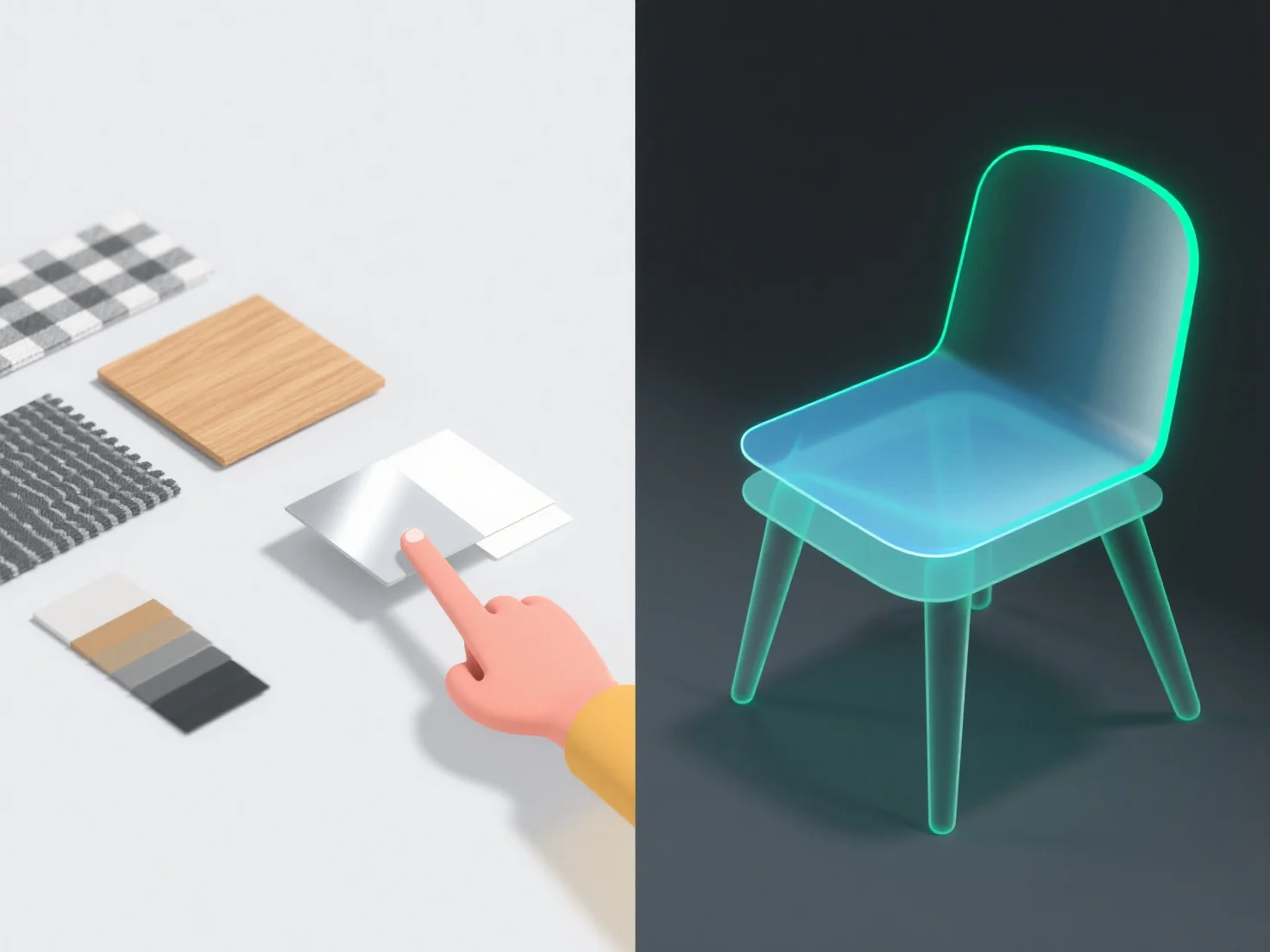
Using 3D models for material selection in design projects enhances decision-making by enabling intuitive visualization of material properties and performance, improving accuracy and efficiency.
Key advantages include: - **Intuitive Preview**: Allows designers to see how materials (plastics, metals, composites) look and behave in simulated real-world conditions, replacing guesswork with clear insights. - **Reduced Costs & Waste**: Minimizes reliance on physical samples and prototyping, cutting material waste and speeding up the selection process. - **Industry-Specific Value**: - Product Design: Test durability, texture, and structural support in 3D prototypes before production. - Architecture: Evaluate aesthetics (color, finish) and functionality (weather resistance) of building materials. - Manufacturing: Simulate assembly to identify issues like warping early, preventing post-production problems.
By leveraging 3D modeling, designers streamline material selection, ensuring optimal choices for both form and function.