


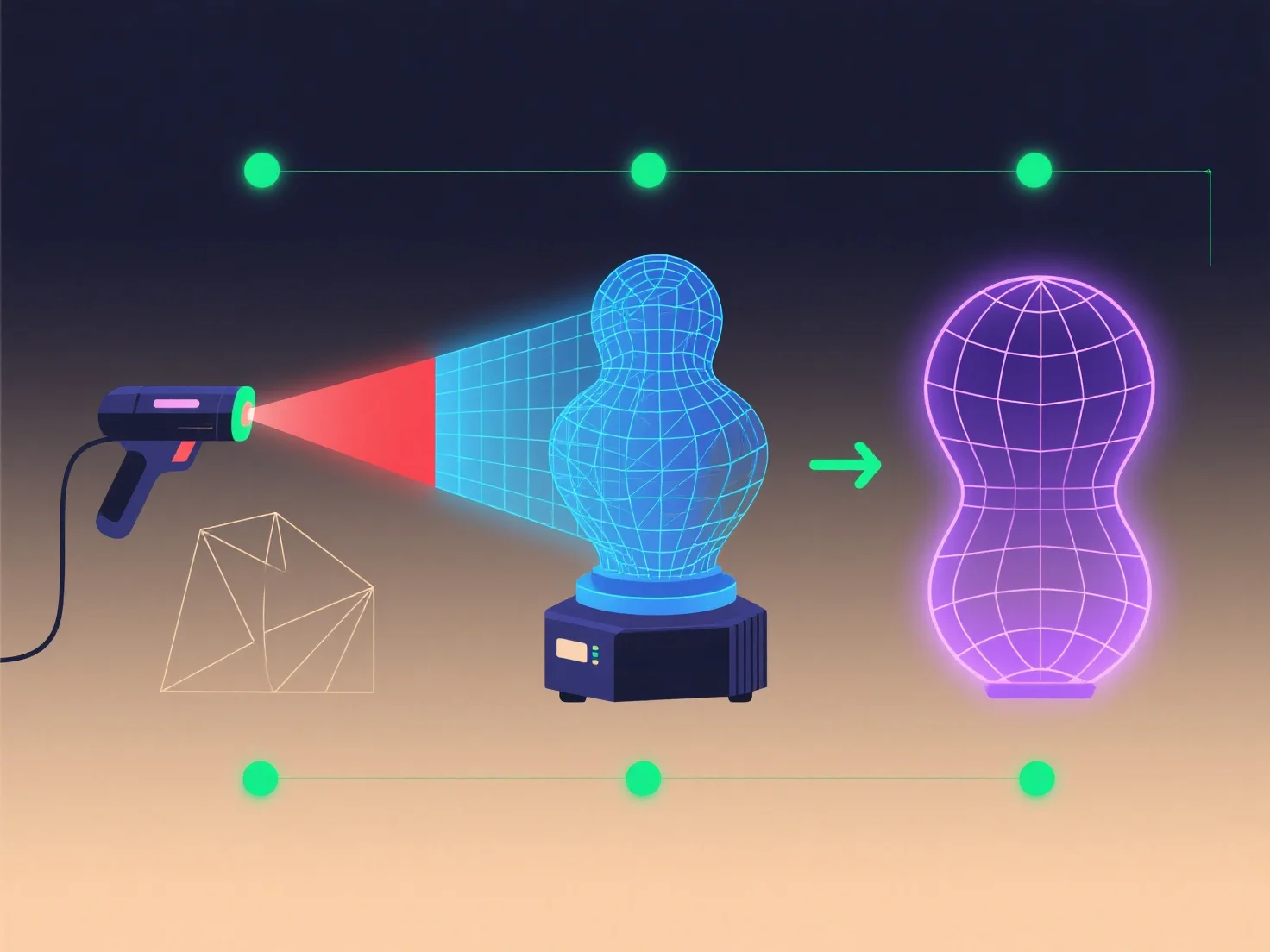
Teknologi pemindaian 3D berkembang menuju akurasi yang lebih tinggi, pengambilan data yang lebih cepat, dan aksesibilitas yang lebih besar, didorong oleh kemajuan dalam teknologi sensor dan integrasi AI. Kemajuan ini meningkatkan presisi, mengurangi waktu pemindaian, dan menurunkan hambatan masuk, memperluas penggunaannya di seluruh industri.
- **Akurasi yang lebih tinggi**: Teknologi sensor dan algoritma kalibrasi baru meningkatkan resolusi, memungkinkan pemindaian terperinci untuk implan medis dan bagian-bagian aerospace, dengan margin kesalahan kini di bawah 0,1 mm pada perangkat tingkat atas. - **Pengambilan data yang lebih cepat**: Pemrosesan yang didukung AI menyederhanakan generasi awan titik, memotong waktu pemindaian dari jam menjadi menit. Sangat penting untuk aplikasi real-time seperti rekayasa balik. - **Aksesibilitas yang lebih besar**: Pemindai portabel, kelas konsumen.
Evolusi ini memposisikan pemindaian 3D sebagai alat serbaguna untuk pembuatan prototipe, pelestarian warisan budaya, dan banyak lagi.