


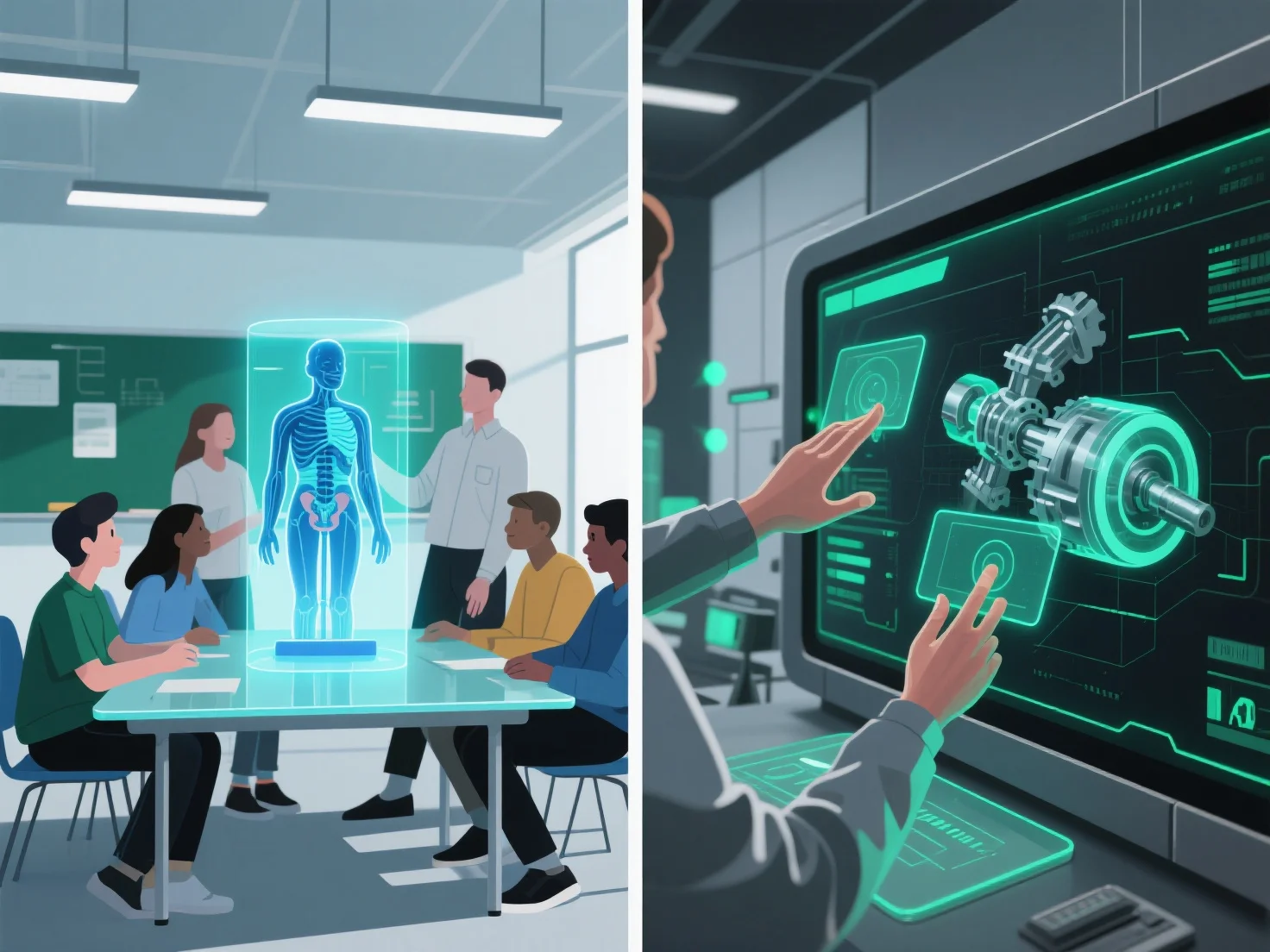
3D modeling is widely applied in education and training to create interactive, visual learning tools that enhance understanding of complex concepts through immersive experiences.
In biology education, 3D anatomical models vividly display organ structures and spatial relationships, making abstract anatomy tangible for students to explore details like tissue layers or organ connections.
In engineering training, 3D mechanical part models enable simulated disassembly and assembly, allowing learners to practice operations safely, repeatedly, and without physical equipment limitations.
In geography or history, 3D terrain or historical site models help visualize landforms, ancient architectures, or geological processes, turning static textbook descriptions into dynamic, engaging content.
These applications boost learning engagement, improve knowledge retention, and simplify complex topics. Educators can use user-friendly 3D tools to develop custom models tailored to course needs, further enhancing teaching effectiveness.