


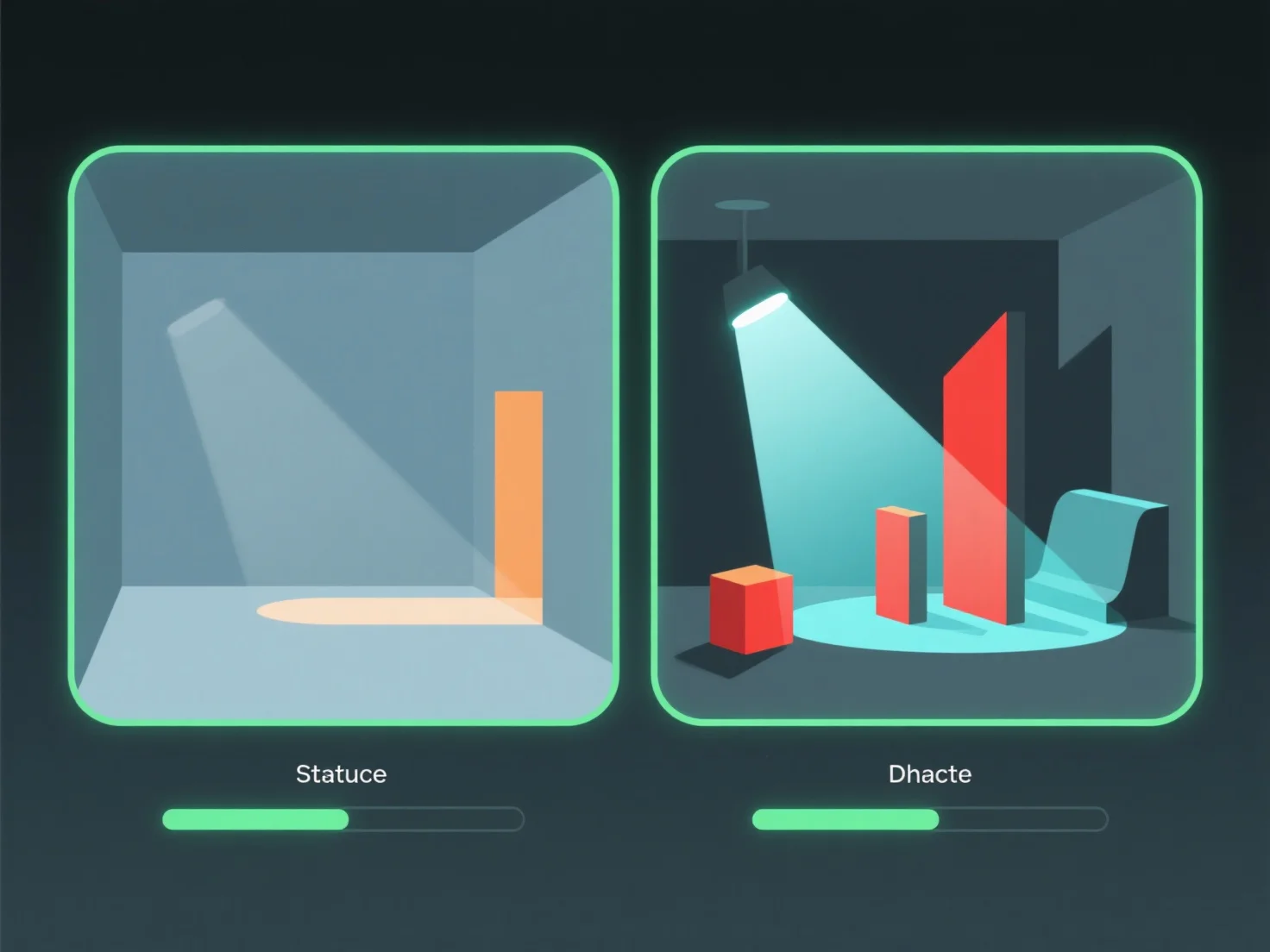
Dynamic lighting typically reduces 3D scene performance by increasing computational load.
It requires real-time calculations for light sources with changing position, intensity, or color, such as simulating shadows, reflections, and light scattering, which consume more GPU and CPU resources.
In game development, for example, complex dynamic lighting (e.g., multiple moving light sources) often results in lower frame rates compared to static lighting.
To mitigate performance issues, simplifying light sources or using baked lighting for static elements can help balance visual quality and performance.