


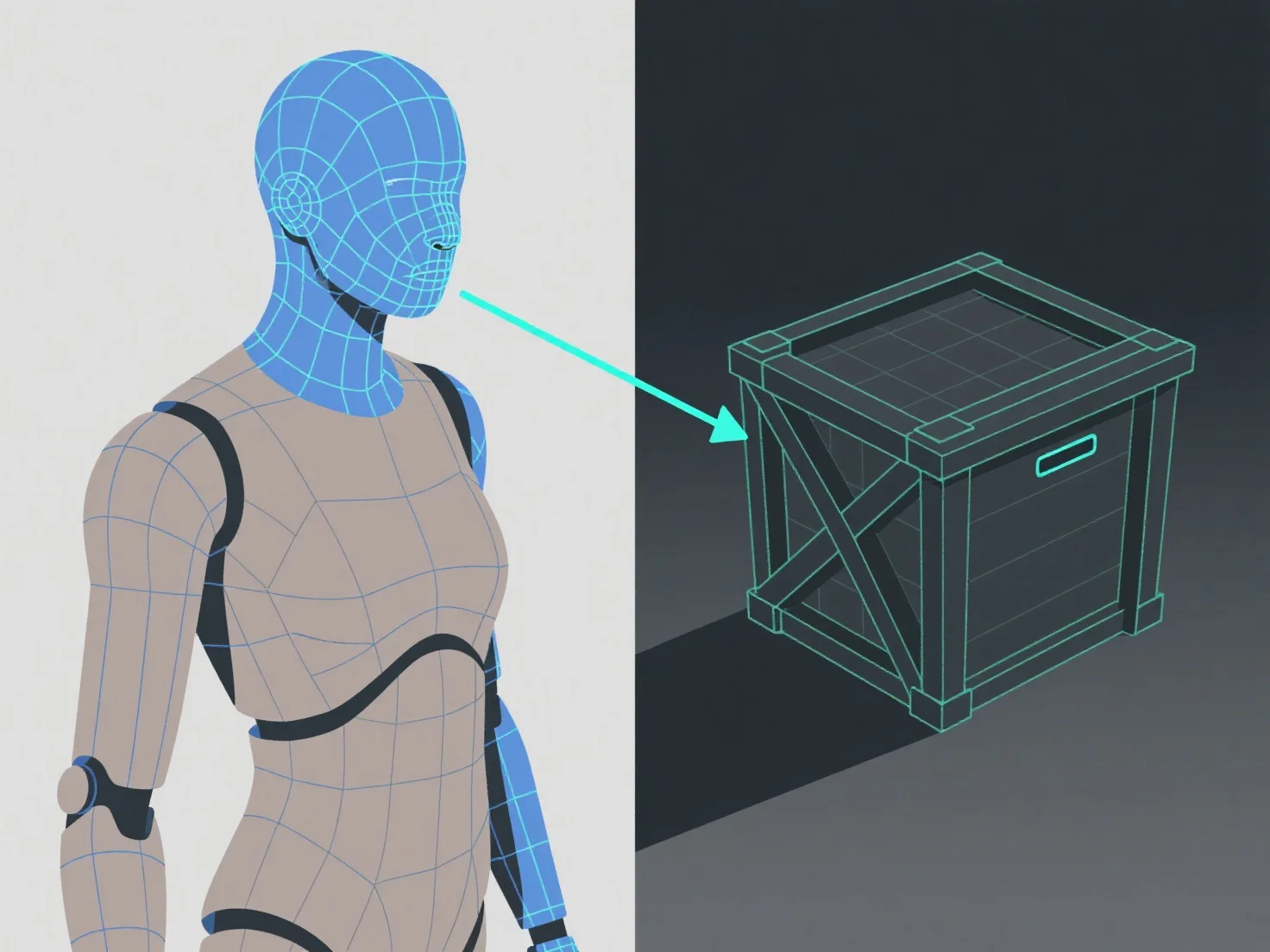
The topology of a character model differs from that of a static object model primarily in its emphasis on animation readiness and deformation performance, while static object topology focuses more on surface detail and structural stability.
Character model topology prioritizes edge loops aligned with muscle and joint movement (e.g., around elbows, knees), ensuring smooth mesh deformation during rigging and animation to avoid distortions like stretching or pinching.
Static object topology, by contrast, emphasizes surface accuracy and polygon efficiency for details like textures or hard edges, as it doesn’t need to accommodate dynamic movement. Its edge flow is optimized for rendering rather than animation.