


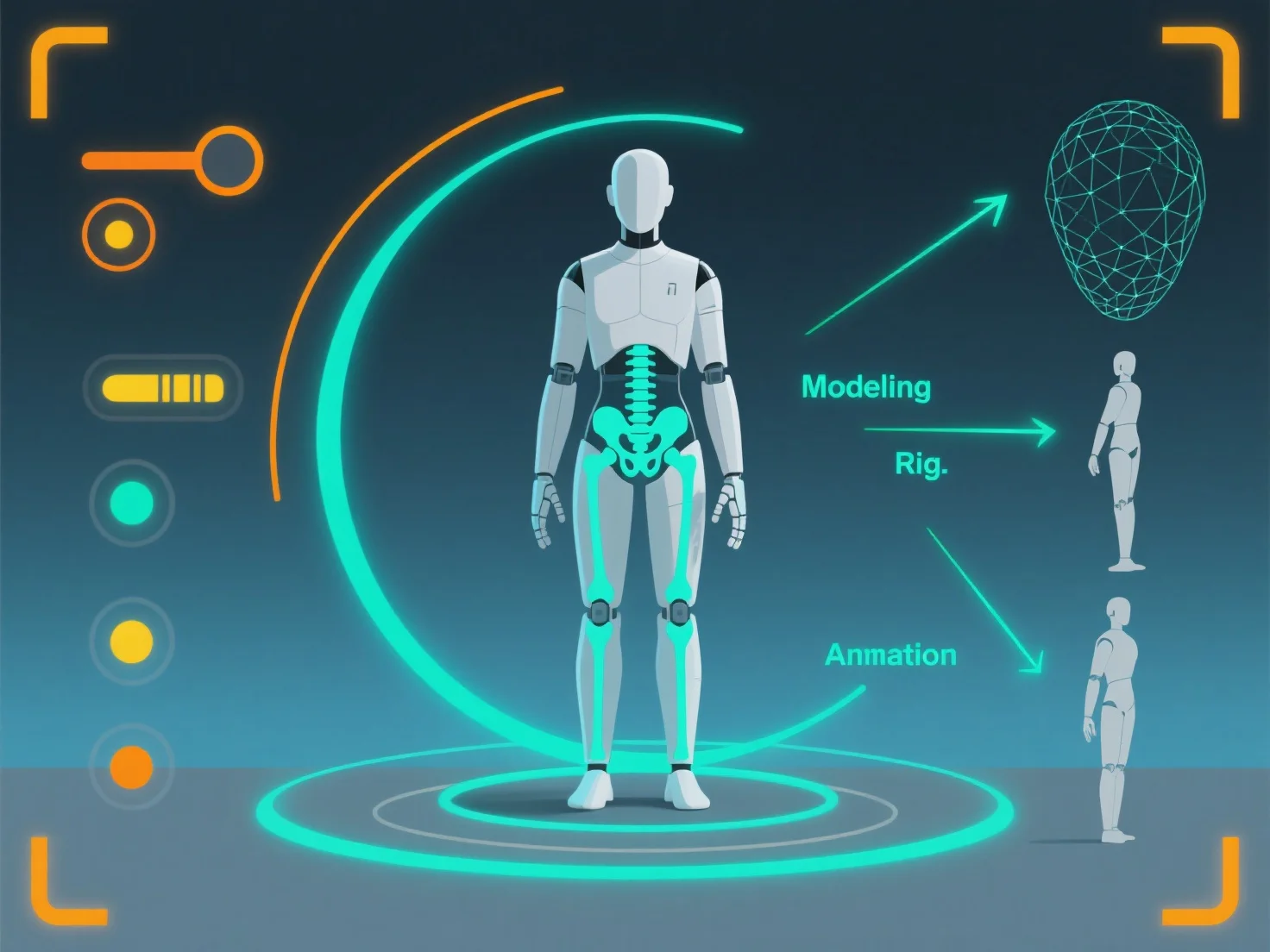
Rigging is a key mid-stage in the 3D animation pipeline, positioned after 3D modeling and before animation. It transforms static 3D models into movable assets by creating digital skeletons and control systems, enabling animators to drive realistic movements.
- **Pipeline placement**: Occurs post-modeling (once 3D models are finalized) and pre-animation, ensuring animators have functional rigs to animate with. - **Core tasks**: Involves building armatures (digital skeletons with joints) and control rigs (user-friendly interfaces) to manipulate movements, expressions, or deformations. - **Key role**: Bridges static models to dynamic animation, making models responsive to animator input for natural, lifelike motion.
In short, rigging is the critical link between modeling and animation, equipping 3D models with the structure needed for movement.