


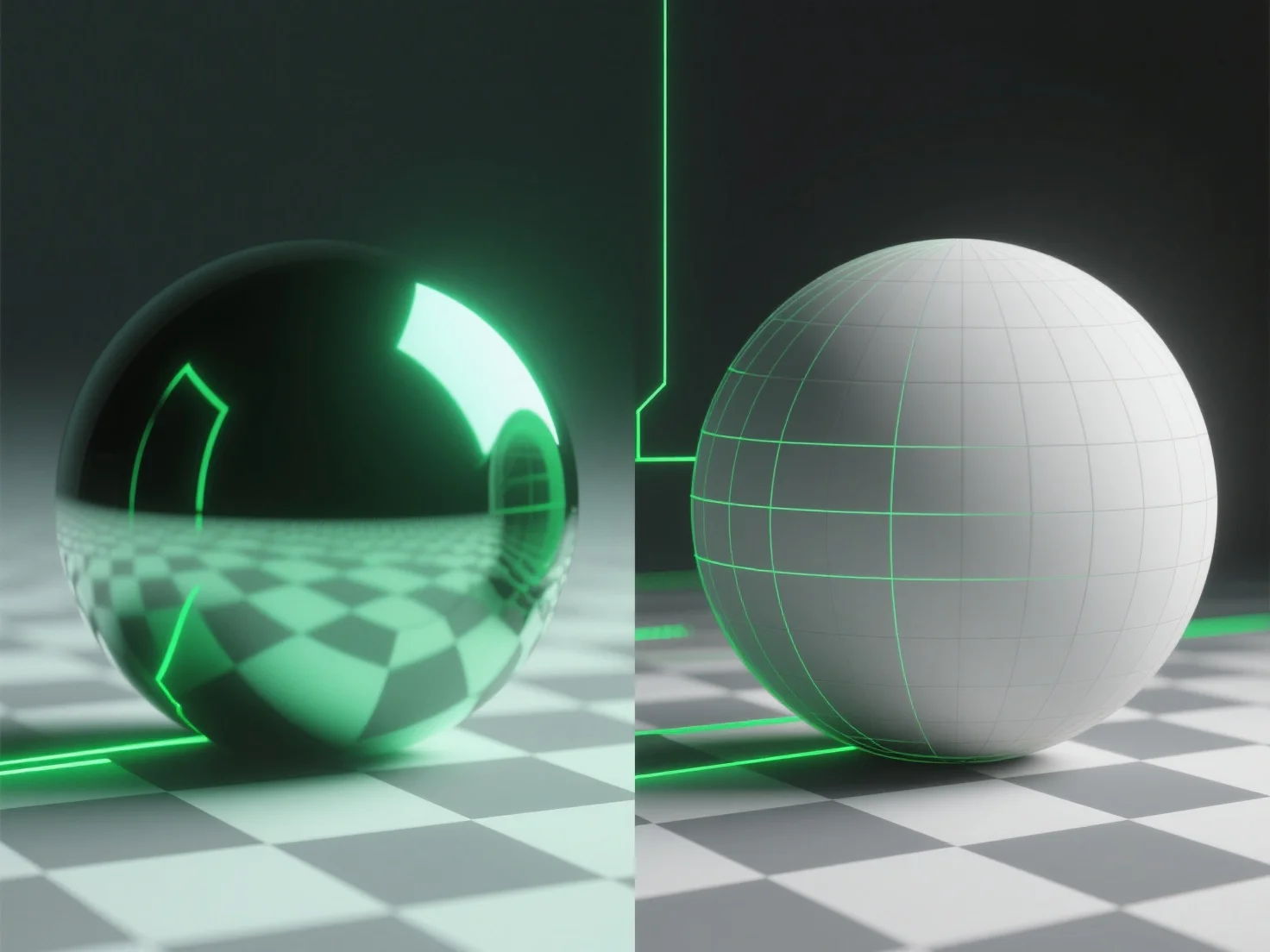
A apresentação 3D com traçado de raios em tempo real normalmente oferece iluminação, sombras e reflexos mais realistas do que o 3D rasterizado, mas requer um maior poder de computação, enquanto o 3D rasterizado prioriza a velocidade e a eficiência.
- **3D rasterizado**: Renderiza projetando polígonos 3D num ecrã 2D, utilizando técnicas como mapeamento de texturas e mapas de sombras para aproximar a iluminação. É rápido e eficiente, ideal para aplicações em tempo real.
- **3D com tração de raios**: Simula os caminhos da luz, traçando raios a partir da câmara e calculando como a luz reflecte nas superfícies. Isto cria efeitos realistas, como iluminação global, reflexos precisos e sombras suaves, melhorando a imersão, mas exigindo GPUs poderosos para um desempenho suave.
Resumidamente, o 3D rasterizado é excelente em termos de velocidade para uso em tempo real, enquanto o traçado de raios oferece um realismo superior com requisitos de hardware mais elevados.