


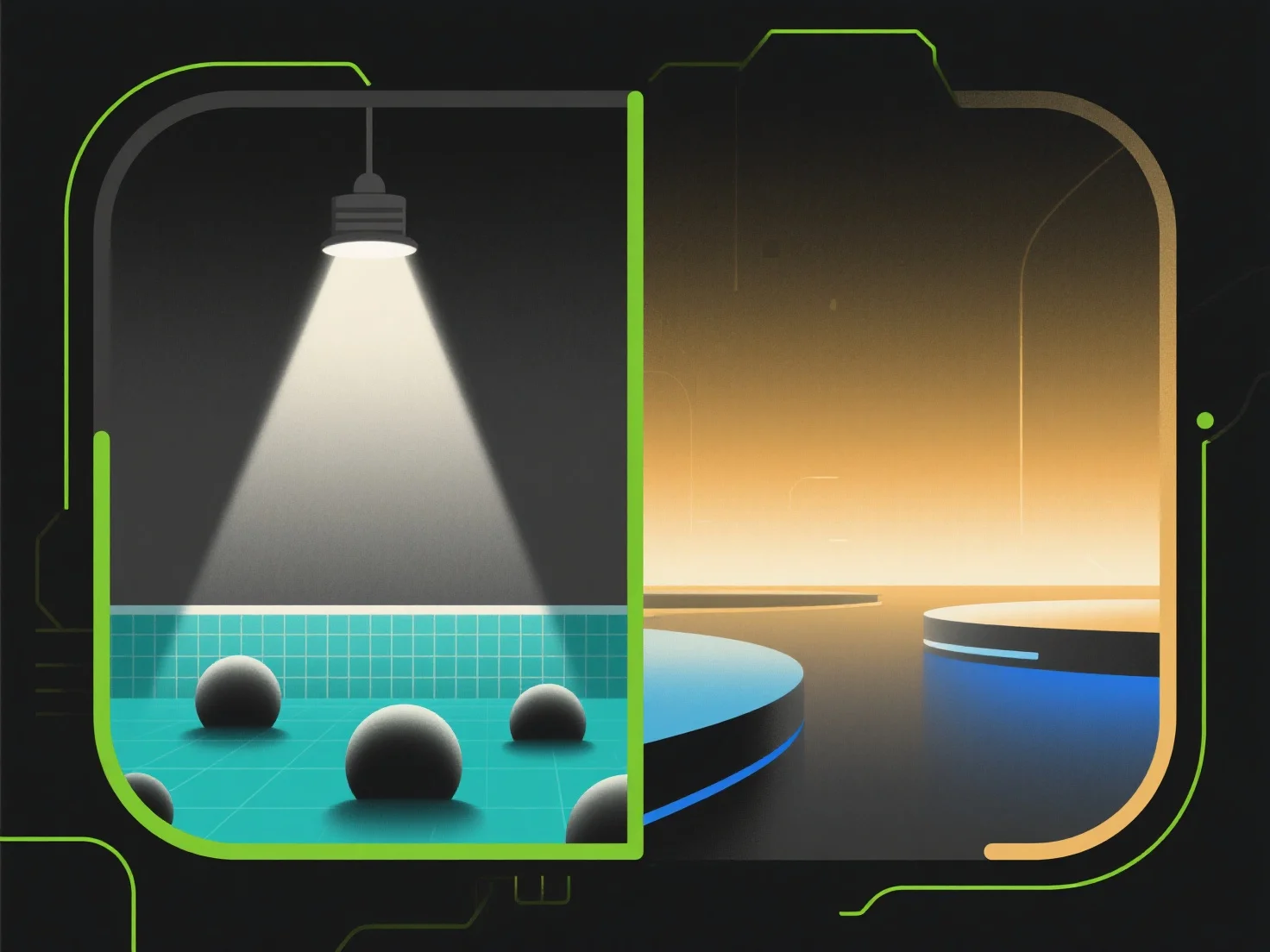
Light falloff in 3D rendering directly influences a scene’s realism, depth, and mood by controlling how light intensity decreases with distance from the source.
It mimics real-world physics: Nearby objects appear brighter, while distant ones naturally dim, helping viewers perceive spatial relationships and avoid a flat, artificial look.
Mood is shaped by falloff type: Softer, gradual decay (e.g., linear) creates warm, intimate atmospheres, while sharper, steep decay (e.g., quadratic) boosts light-shadow contrast, adding drama or tension.
Incorrect falloff breaks immersion—uniform intensity (no decay) looks unrealistic, while overly steep decay may darken distant areas excessively.
Ultimately, adjusting falloff settings is key to balancing realism, depth, and the intended emotional tone in renders.