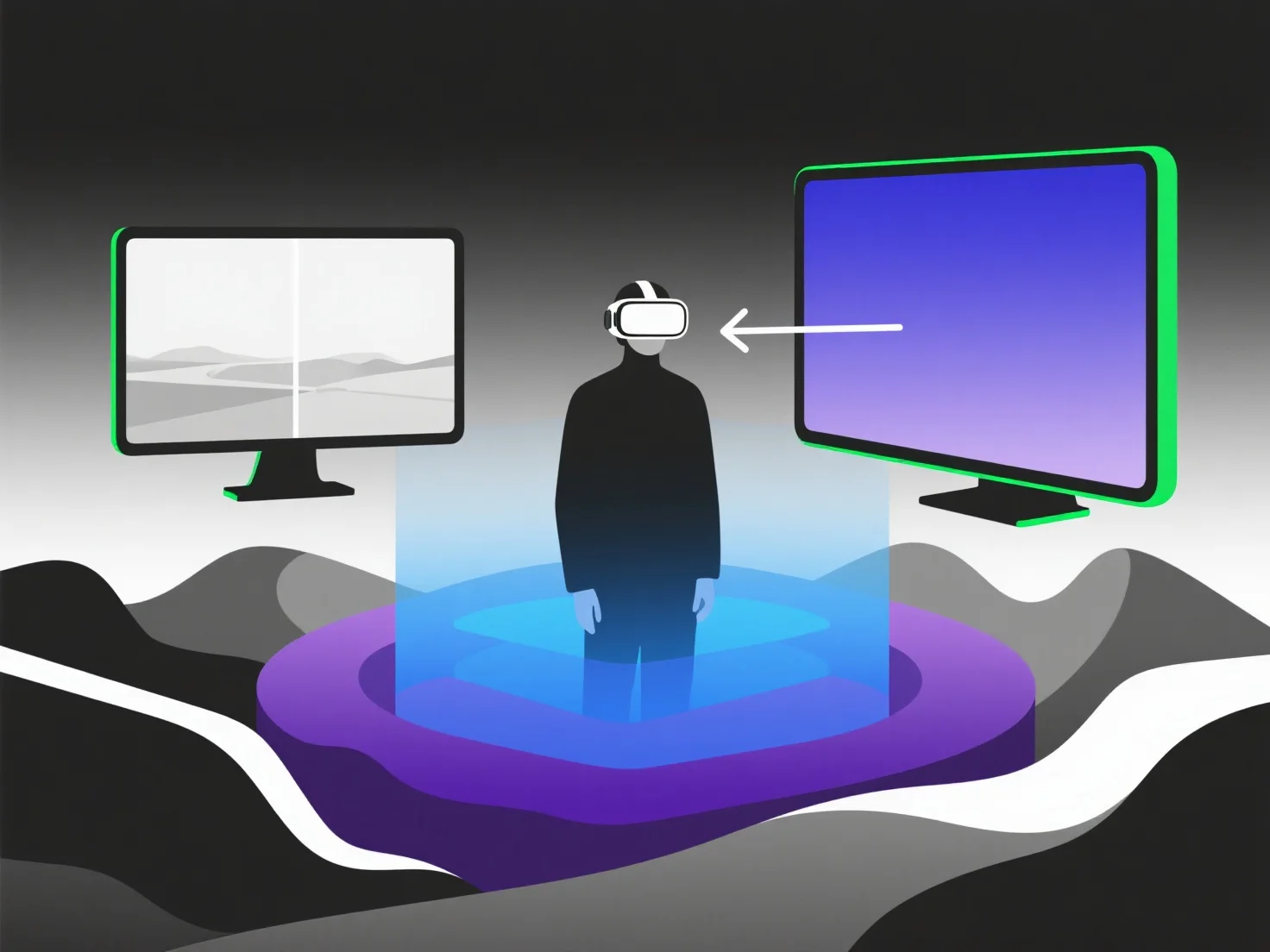
Immersive 3D presentation offers a more engaging, spatially realistic experience compared to flat-screen visualization, leveraging depth perception, wide fields of view, and interactivity to simulate real-world spatial relationships, while flat-screen relies on 2D projections lacking true depth cues.
Key differences in application scenarios include: - Architecture/Design: Enables "walk-throughs" of 3D models for intuitive proportion assessment, unlike flat blueprints. - Medical Training: Allows exploration of 3D anatomy with depth, versus flat images that flatten spatial details. - Product Design: Supports interactive multi-angle prototype views, while flat screens show static 2D visuals.
Immersive 3D is ideal for detailed spatial understanding or interactivity; flat-screen remains practical for quick, simple content display.
