


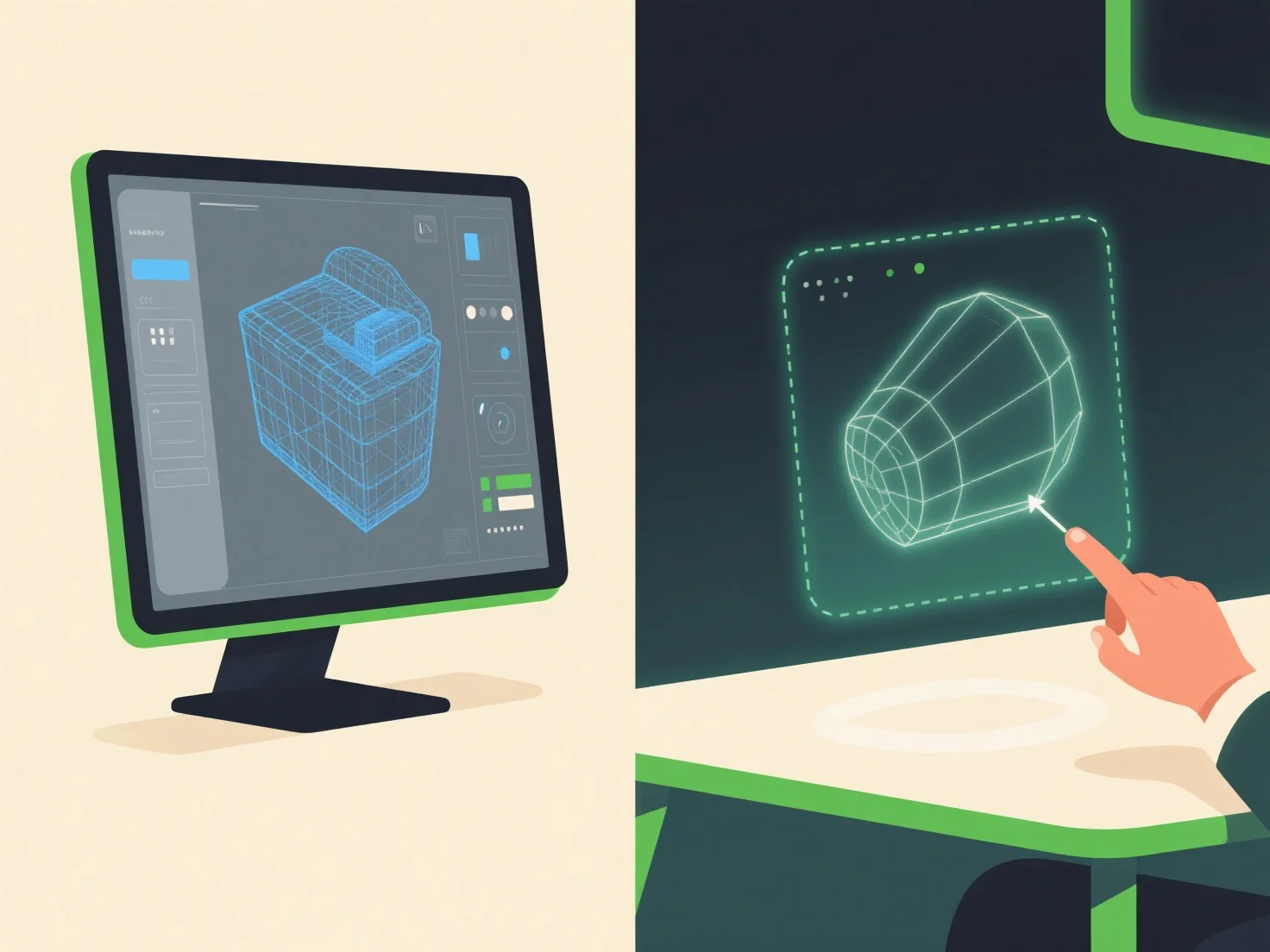
AR-based 3D presentation differs from on-screen 3D visualization mainly in environment integration and interaction: AR overlays 3D models onto the real world, while on-screen 3D is confined to a 2D screen.
- **Display Environment**: AR merges 3D content with the user’s physical surroundings (e.g., a furniture model in a living room), creating a sense of presence. On-screen 3D visualization shows models within a fixed screen, lacking real-world context. - **Interaction Experience**: AR enables spatial interaction, letting users rotate, scale, or walk around 3D models to view details from all angles. On-screen 3D restricts interaction to screen boundaries, limiting immersive exploration.
In short, AR suits scenarios needing real-world context and interactive immersion, while on-screen 3D is better for detailed, screen-bound analysis.