


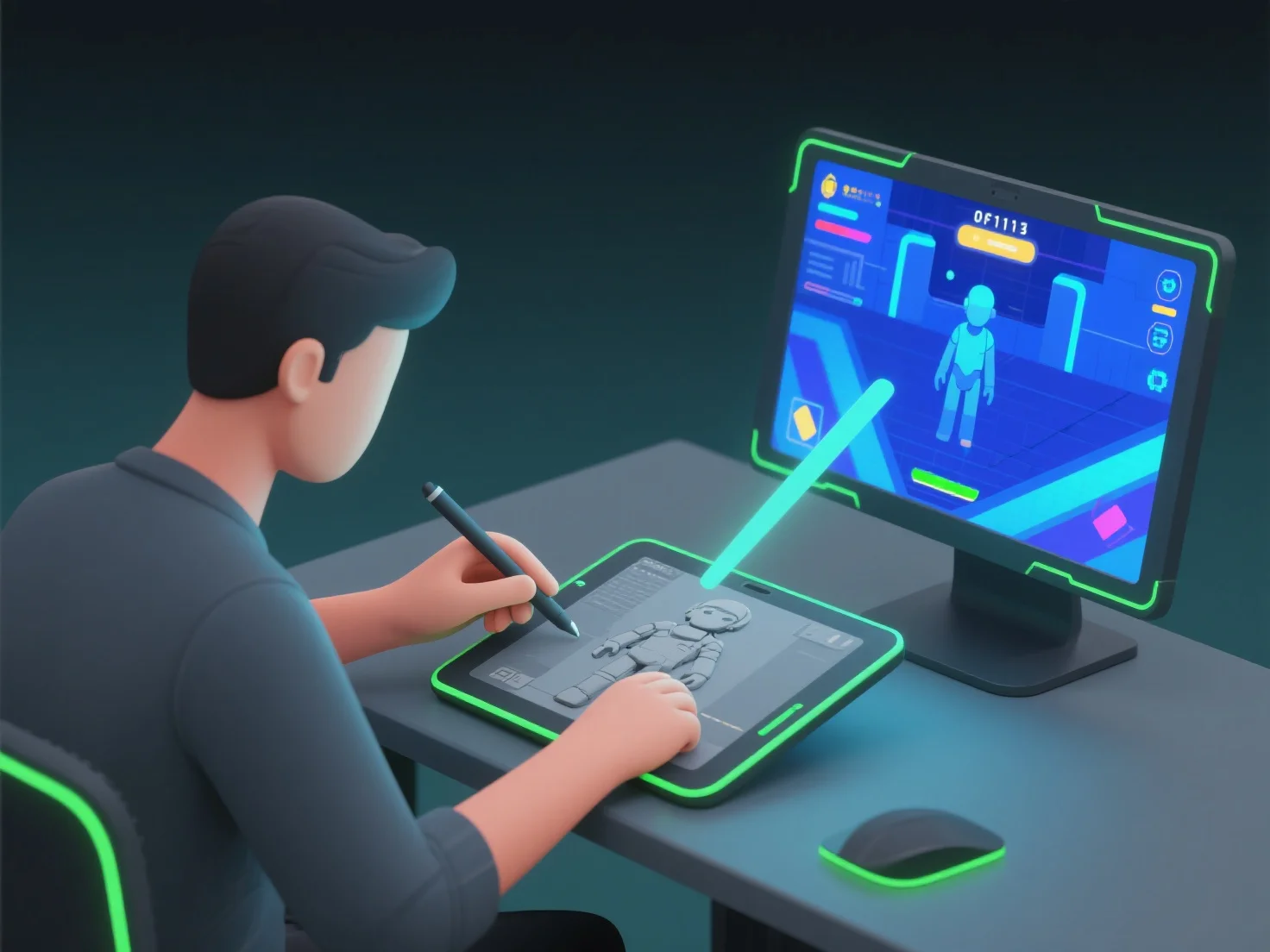
A 3D modeler contributes to interactive media development by creating core 3D assets that form the visual foundation for user interaction, enabling dynamic engagement through manipulable, explorable, or responsive virtual elements.
Key applications across industries include: - Video Games: Designing playable characters, immersive worlds, and interactive objects (e.g., a character reacting to player controls or a door opening on command). - AR/VR: Developing 3D models that integrate with real environments, enhancing immersion (e.g., virtual furniture placed in a real room via AR). - Interactive Simulations: Creating accurate 3D representations for training tools (e.g., medical or industrial simulations where user actions drive learning, like virtual equipment operation).
To support smooth interaction, modelers focus on optimizing assets for real-time performance, balancing detail with polygon count for seamless user experiences.