


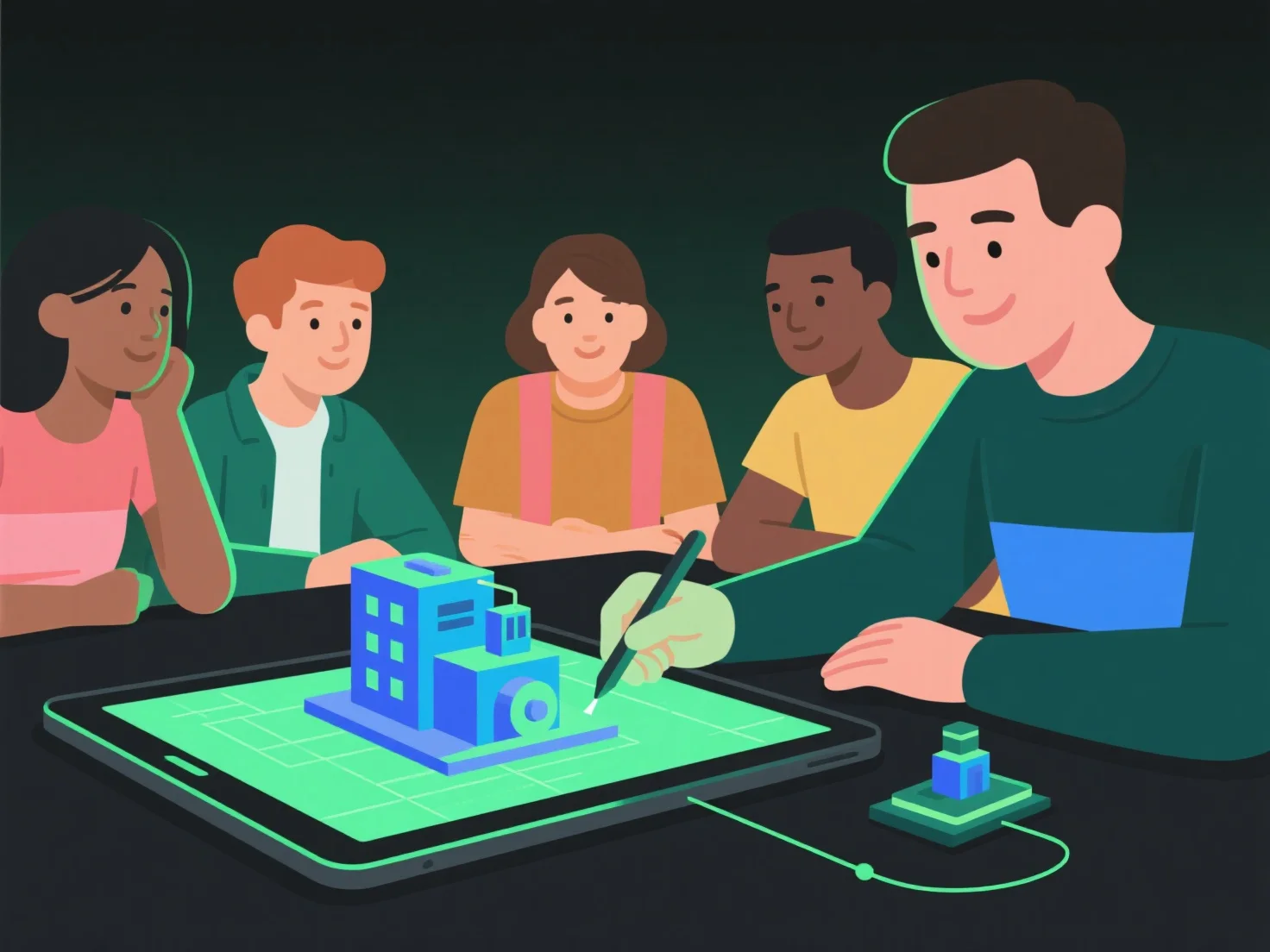
A modelagem 3D melhora a aprendizagem baseada em projetos, permitindo que os alunos transformem conceitos abstratos em modelos tangíveis e interativos, fazendo a ponte entre a teoria e a prática.
Primeiro, melhora a visualização: Os alunos convertem ideias complexas
Em segundo lugar, promove a aplicação prática: os estudantes aplicam conhecimentos teóricos, como geometria ou princípios de engenharia, ao projetar, ajustar e refinar modelos para alinhar com os objetivos do projeto, transformando a aprendizagem passiva em criação ativa.
Em terceiro lugar, promove a colaboração e a resolução de problemas: iterar sobre os designs.
No geral, a modelagem 3D torna a aprendizagem baseada em projetos mais envolvente e eficaz, ao combinar a criatividade com o desenvolvimento de competências práticas.