


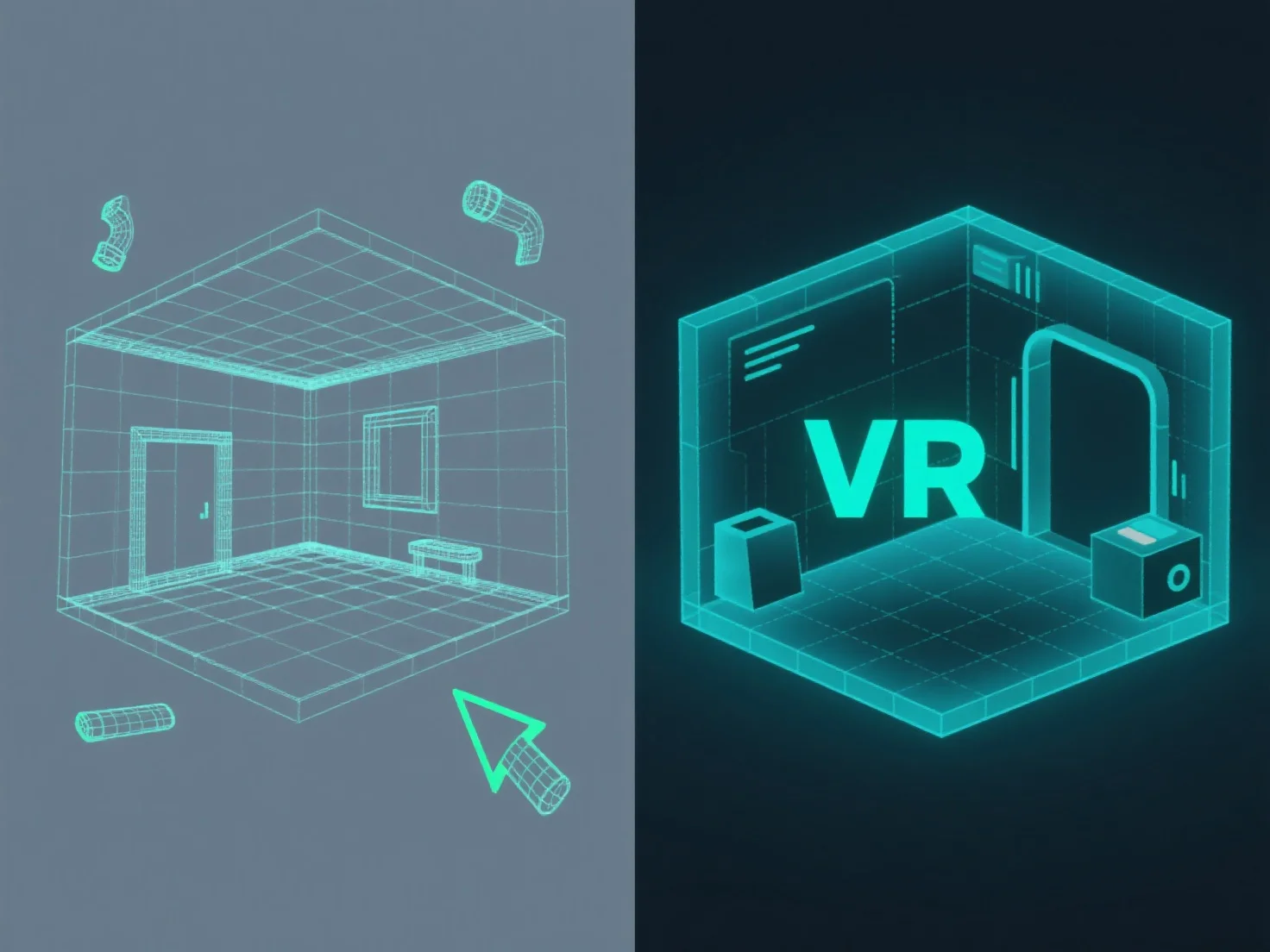
3D modeling is critical in VR implementation planning by providing a visual and structural blueprint for virtual environments, objects, and interactions, ensuring alignment between design intent and technical feasibility from the start.
It clarifies spatial relationships, mapping out layout and navigation paths to ensure intuitive user movement.
It defines asset details—such as size, texture, and polygon count—helping estimate rendering loads and technical requirements early.
It enables early adjustments: refining models for environment scale or interaction paths in pre-production reduces rework during later development stages.
This foundational framework streamlines planning, making VR implementation more efficient and aligned with both design and technical goals.