


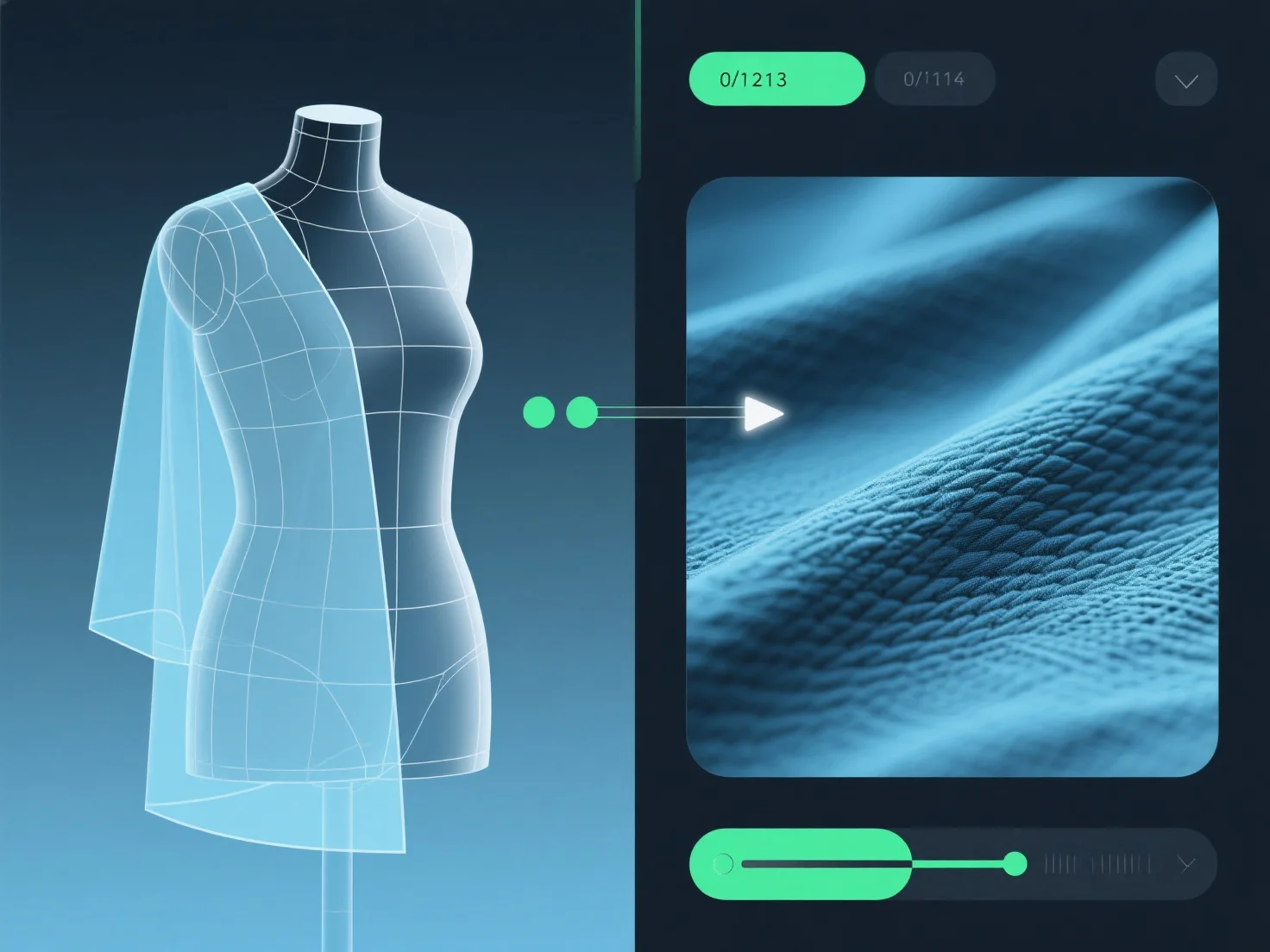
3D modeling creates realistic clothing and fabric textures by simulating physical properties and surface details, merging material behavior and visual mapping for lifelike results.
- **Simulating physical properties**: It defines key attributes like elasticity, thickness, and friction. These determine how fabrics drape, stretch, or fold over 3D forms, mimicking real-world movement (e.g., silk’s flow vs. denim’s stiffness).
- **Adding surface details via texture maps**: High-resolution maps replicate weave patterns, stitching, wrinkles, or fabric flaws. This layers visual realism, making textures appear tactile even in digital renderings.
Together, these steps ensure 3D clothing textures look and behave authentically, bridging virtual and physical fabric characteristics.