


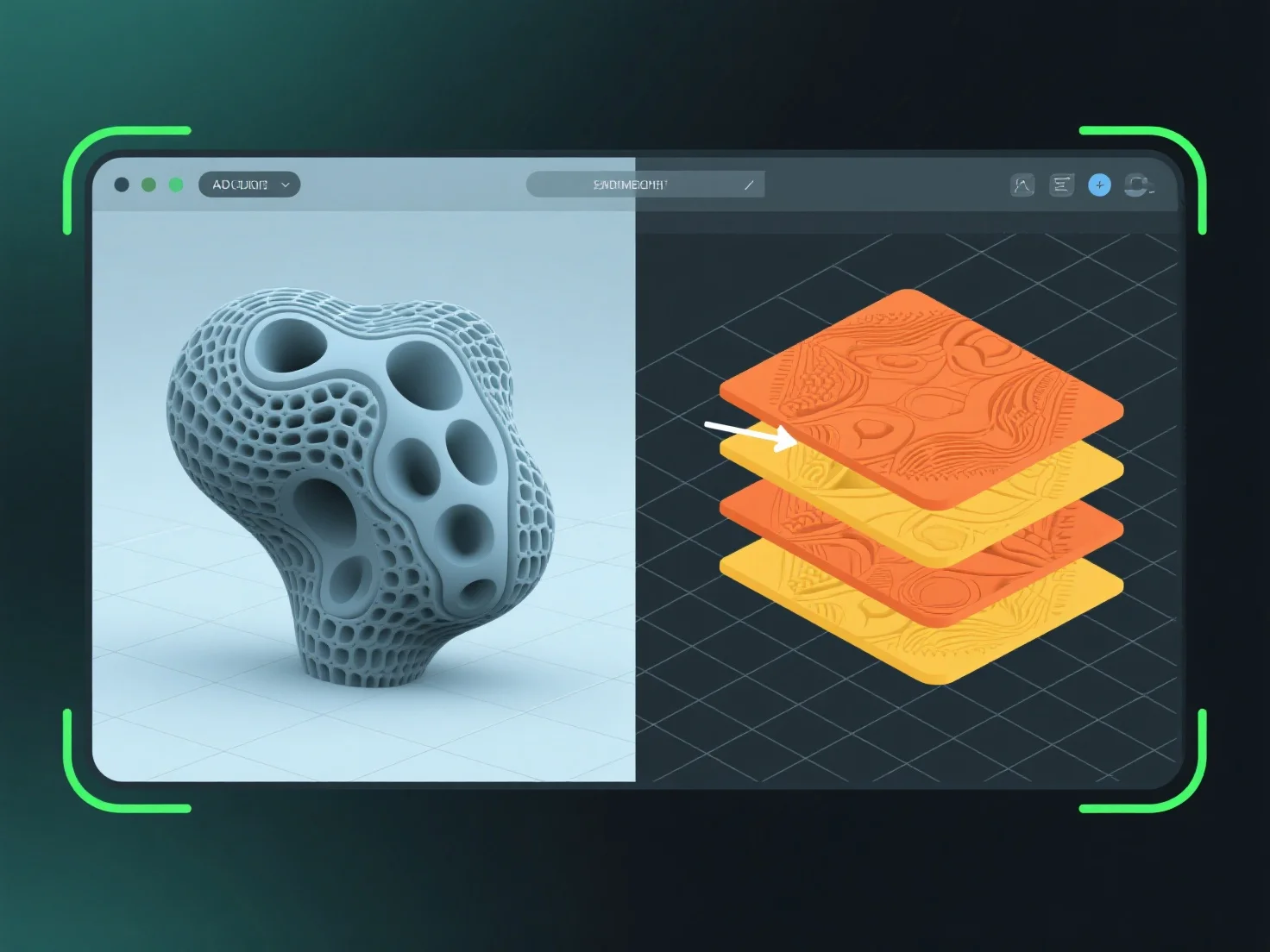
3D-Druck-Softwaretools konzentrieren sich auf die Vorbereitung von 3D-Modellen für die physische Produktion, während traditionelle 3D-Modellierungstools hauptsächlich zum Erstellen und Entwerfen von 3D-Modellen dienen.
Traditionelle Werkzeuge
3D-Drucksoftware
Kurz gesagt, erstellen traditionelle Werkzeuge den "digitalen Bauplan", während 3D-Drucksoftware diesen Bauplan in produktionsbereite Anweisungen für den Drucker umwandelt.