


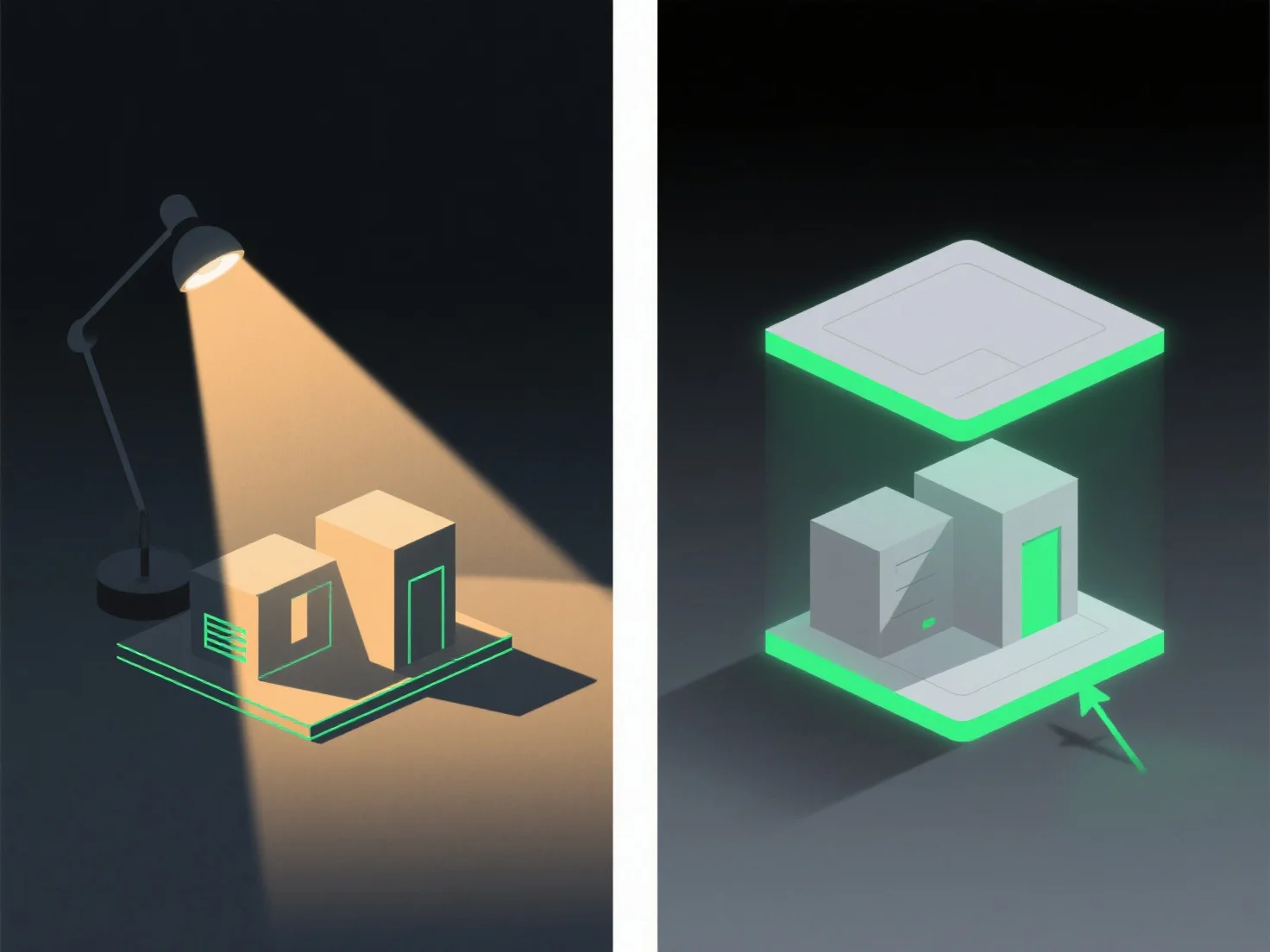
3D presentations with real-time lighting dynamically adjust lighting effects based on scene changes, while baked lighting precomputes and stores lighting data for static elements, differing in flexibility, performance, and ideal use cases.
Real-time lighting is suited for interactive or changing scenes (e.g., user-controlled camera movements). It calculates shadows and illumination in real time, offering high flexibility to adapt to dynamic changes but requiring more processing power.
Baked lighting works best for static scenes. It uses pre-rendered lighting data to reduce performance load, enhancing efficiency but limiting adaptability to lighting adjustments.
In summary, real-time lighting prioritizes interactivity and flexibility, while baked lighting emphasizes performance and efficiency for static environments.