


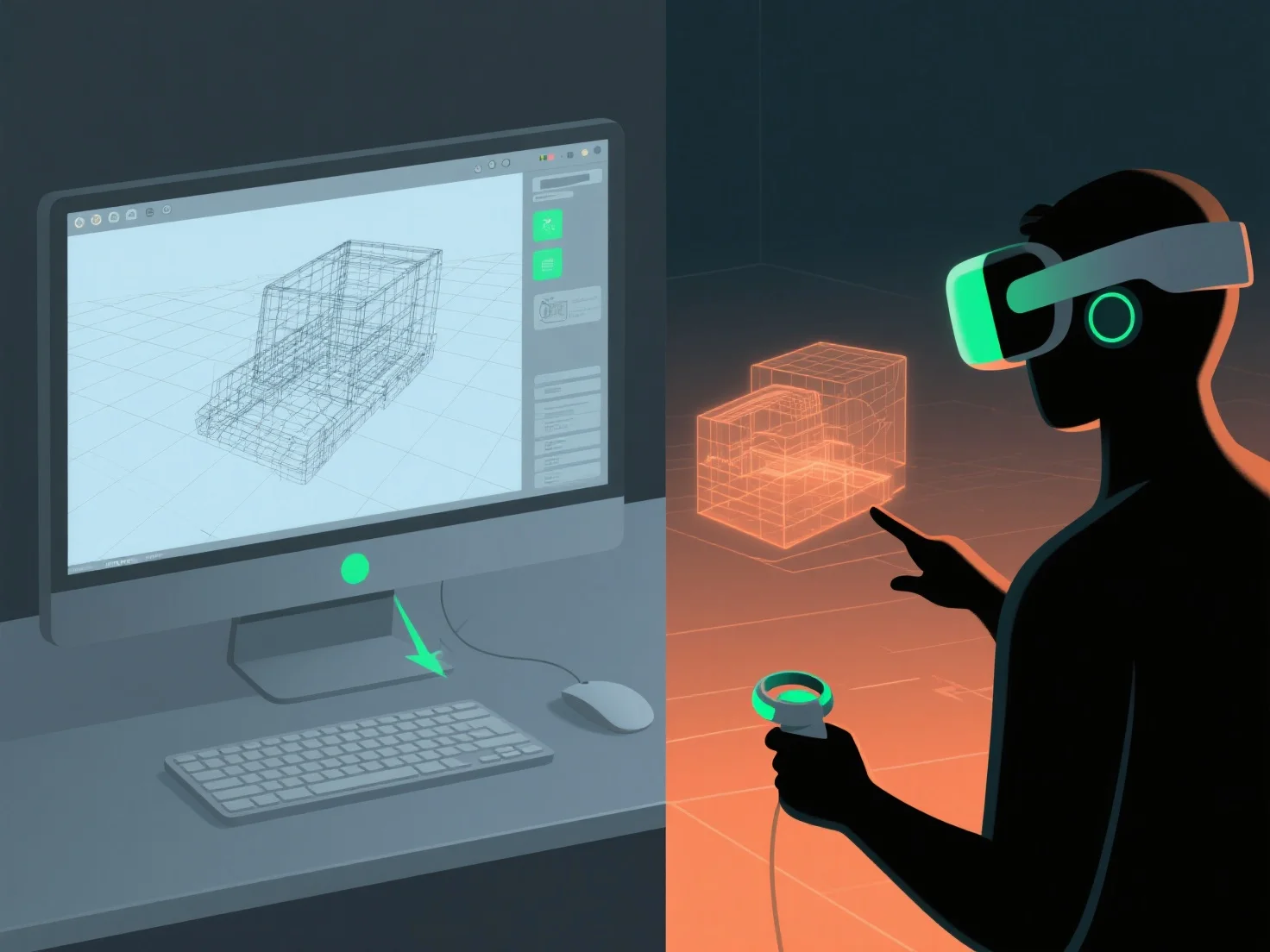
Alat pemodelan 3D untuk realitas virtual berbeda dari alat aplikasi desktop karena memprioritaskan kinerja real-time, desain interaktif, dan simulasi interaksi pengguna, sedangkan alat desktop lebih fokus pada rendering dengan detail tinggi dan kualitas visual statis.
- **Optimisasi kinerja**: Alat VR mengoptimalkan jumlah poligon yang lebih rendah untuk memastikan frame rate yang lancar (sangat penting untuk mencegah mabuk perjalanan dalam VR), sedangkan alat desktop seringkali memprioritaskan jumlah poligon yang tinggi dan detail tekstur untuk output visual yang statis dan berkualitas tinggi. - **Fitur interaktif**: Alat VR sering kali mencakup fitur-fitur seperti dukungan umpan balik haptic, pelacakan gerakan, dan simulasi interaksi pengguna untuk meningkatkan imersi, yang kurang penting untuk aplikasi desktop yang berfokus terutama pada tampilan visual.