


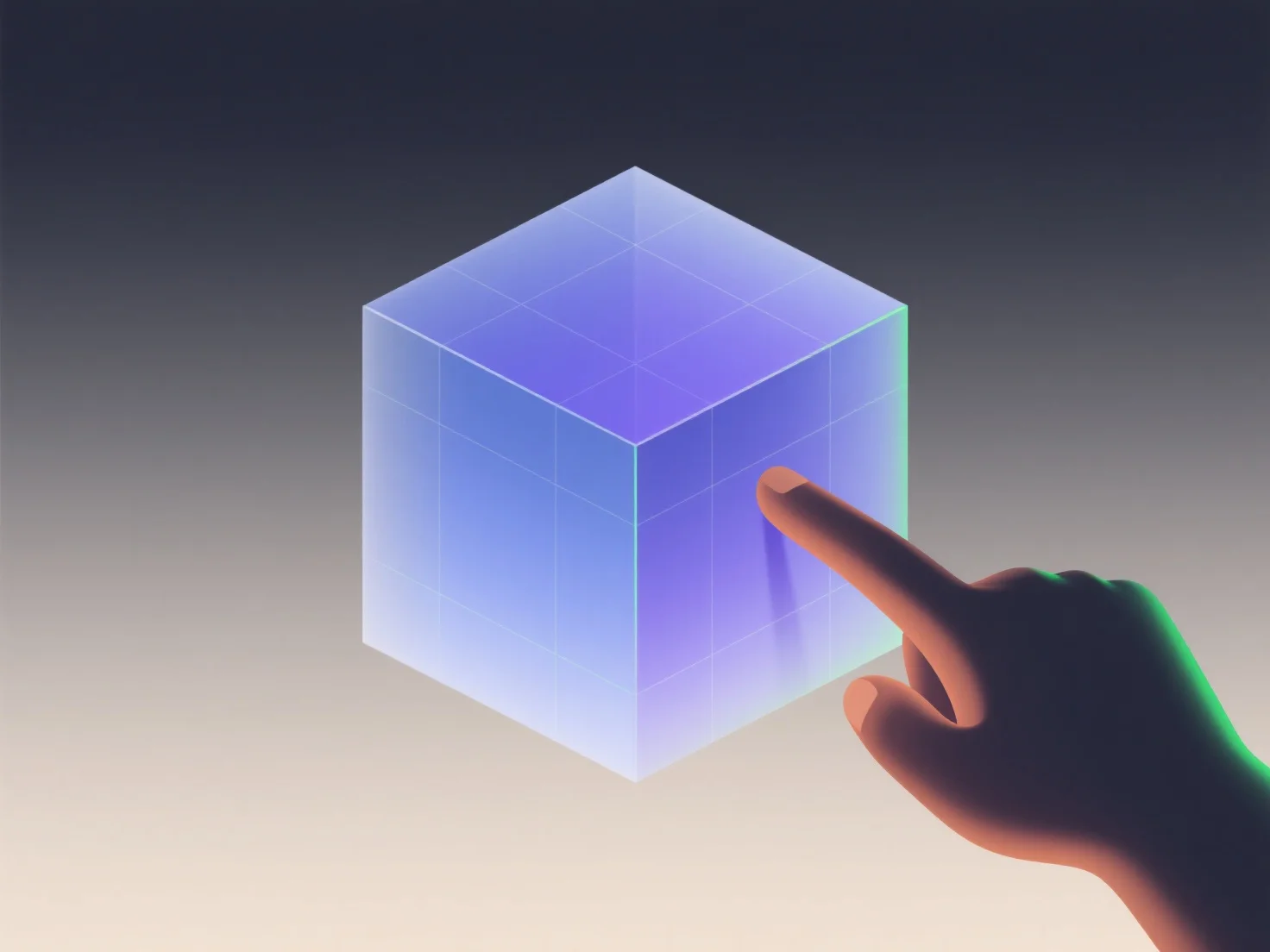
3D models simplify abstract mathematical concepts by transforming intangible formulas, geometric relationships, or spatial ideas into tangible visual representations, making complex ideas more intuitive than text or 2D diagrams alone.
Key applications across mathematical fields include: - Geometry: Visualizing 3D shapes (e.g., polyhedrons, spheres) to grasp properties like volume, surface area, or spatial component relationships. - Calculus: Demonstrating 3D integration (volume under a surface) or vector fields via dynamic graphs showing variable changes in space. - Topology: Illustrating abstract spaces (e.g., Möbius strips, Klein bottles) to clarify non-intuitive properties like connectivity or orientability.
For learners, starting with simple tools to create basic 3D shapes (e.g., cubes, pyramids) builds foundational understanding step by step.