


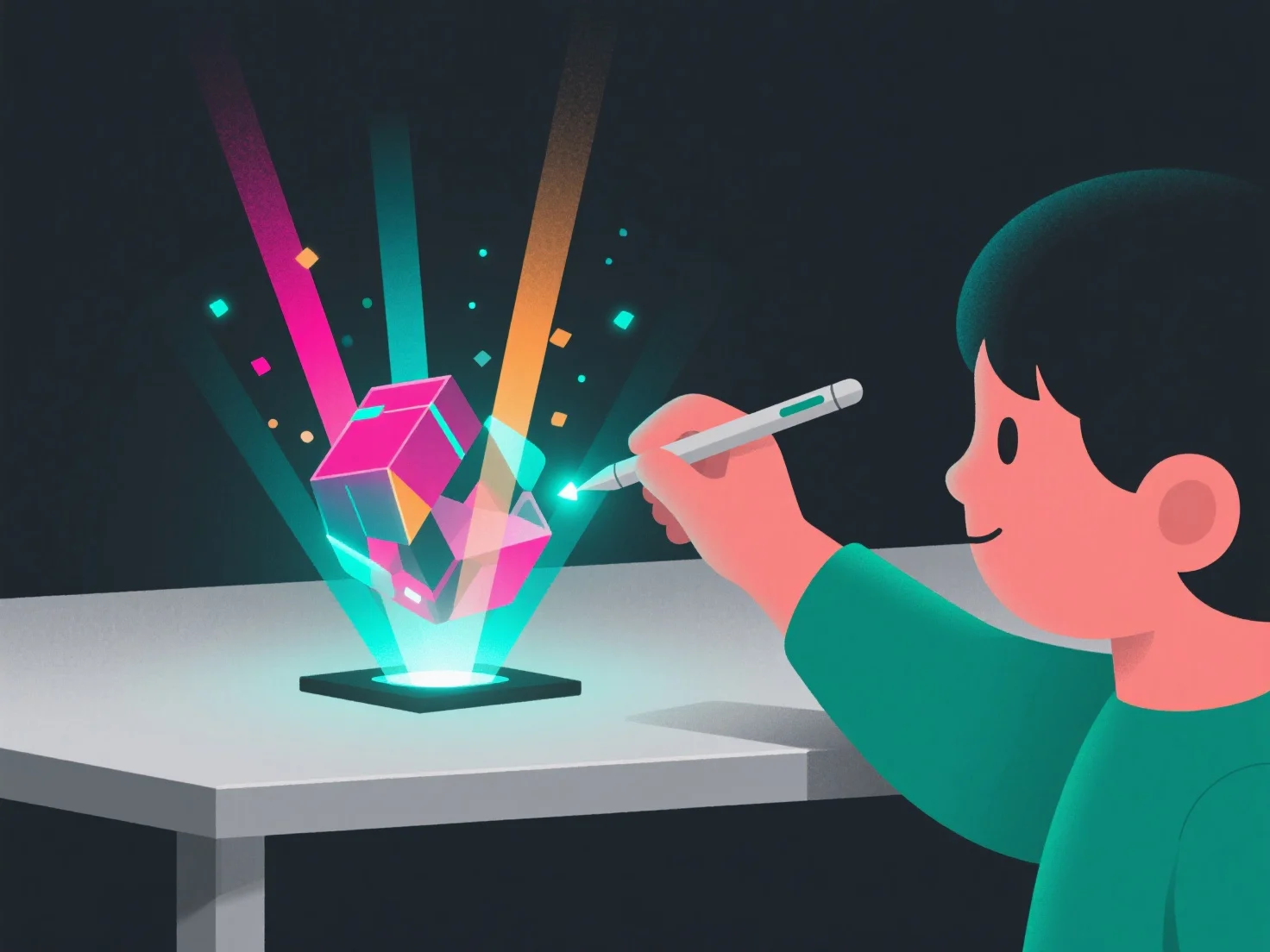
3D modeling fosters creativity in the learning process by enabling students to transform abstract ideas into tangible 3D visuals, encouraging hands-on design, experimentation, and innovation beyond 2D limitations.
It turns abstract concepts into concrete forms: In STEM, learners might model biological cells or mechanical systems; in art, design 3D sculptures or virtual environments, making creativity actionable.
It promotes iterative design: Students adjust shapes, structures, and details through trial and error, refining ideas and solving problems creatively.
User-friendly tools lower barriers: Beginners can start with simple projects (e.g., a custom pencil holder), gradually building confidence to explore more complex creative ideas.
By merging visualization, iteration, and accessibility, 3D modeling empowers learners to actively create and express creativity across subjects.