


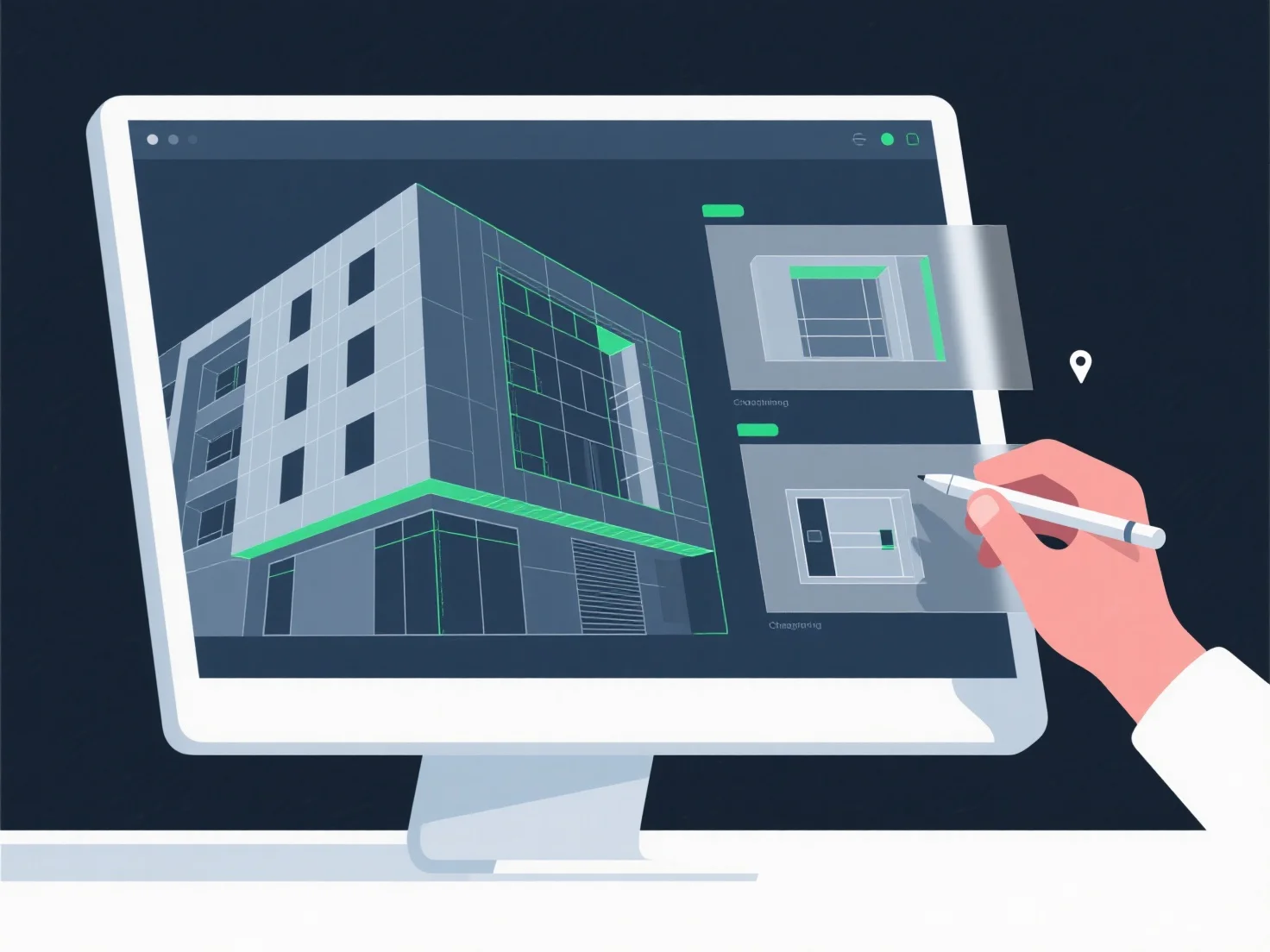
3D modeling tests architectural designs by simulating spatial relationships, structural feasibility, and aesthetic effects to compare options before decision-making.
It converts 2D plans into interactive 3D models, allowing stakeholders to visualize details like room layout, lighting, and material textures, making design differences tangible.
It helps identify potential issues early, such as space waste or structural conflicts, by providing a realistic preview of how designs function in practice.
Additionally, adjusting parameters (e.g., window size, wall thickness) in 3D tools lets teams instantly preview changes, speeding up iteration and decision-making.