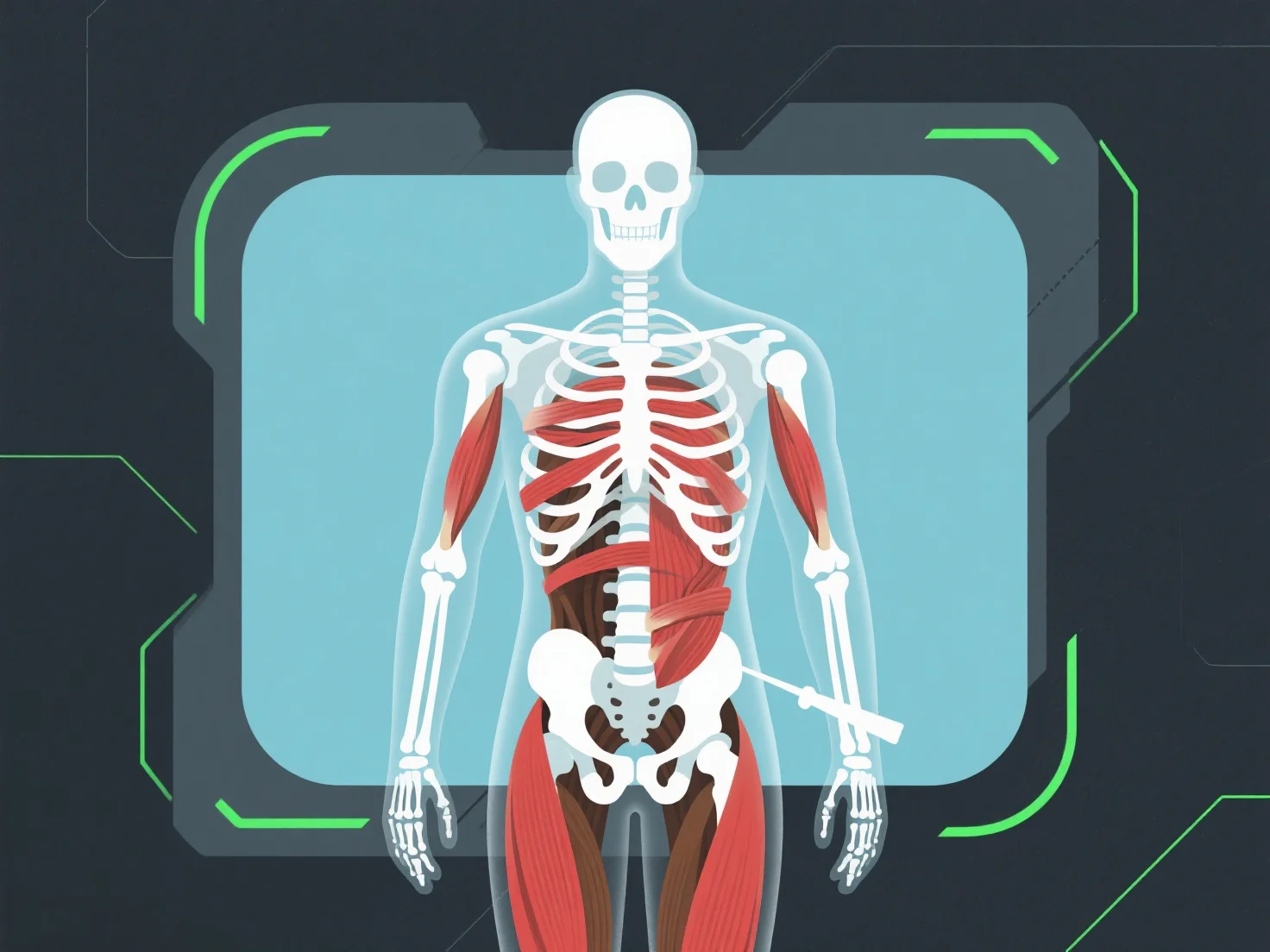
Skeletal and muscle systems in 3D human models are represented through structured bone hierarchies and dynamic muscle simulations tied to joint movement. The skeleton is modeled as a hierarchical chain of bones with defined joints, forming the model’s rigid framework. Muscles are typically represented in two ways: either as deformable meshes attached to bones or via physics-based simulations that mimic contraction and relaxation. This integration enables realistic movement—muscles stretch or bulge as bones rotate at joints—making it widely used in medical visualization, character animation, and biomechanical research.


How are skeletal and muscle systems represented in 3D human models?
3D human models use structured bone hierarchies and dynamic muscle simulations for realistic movement in various fields.