


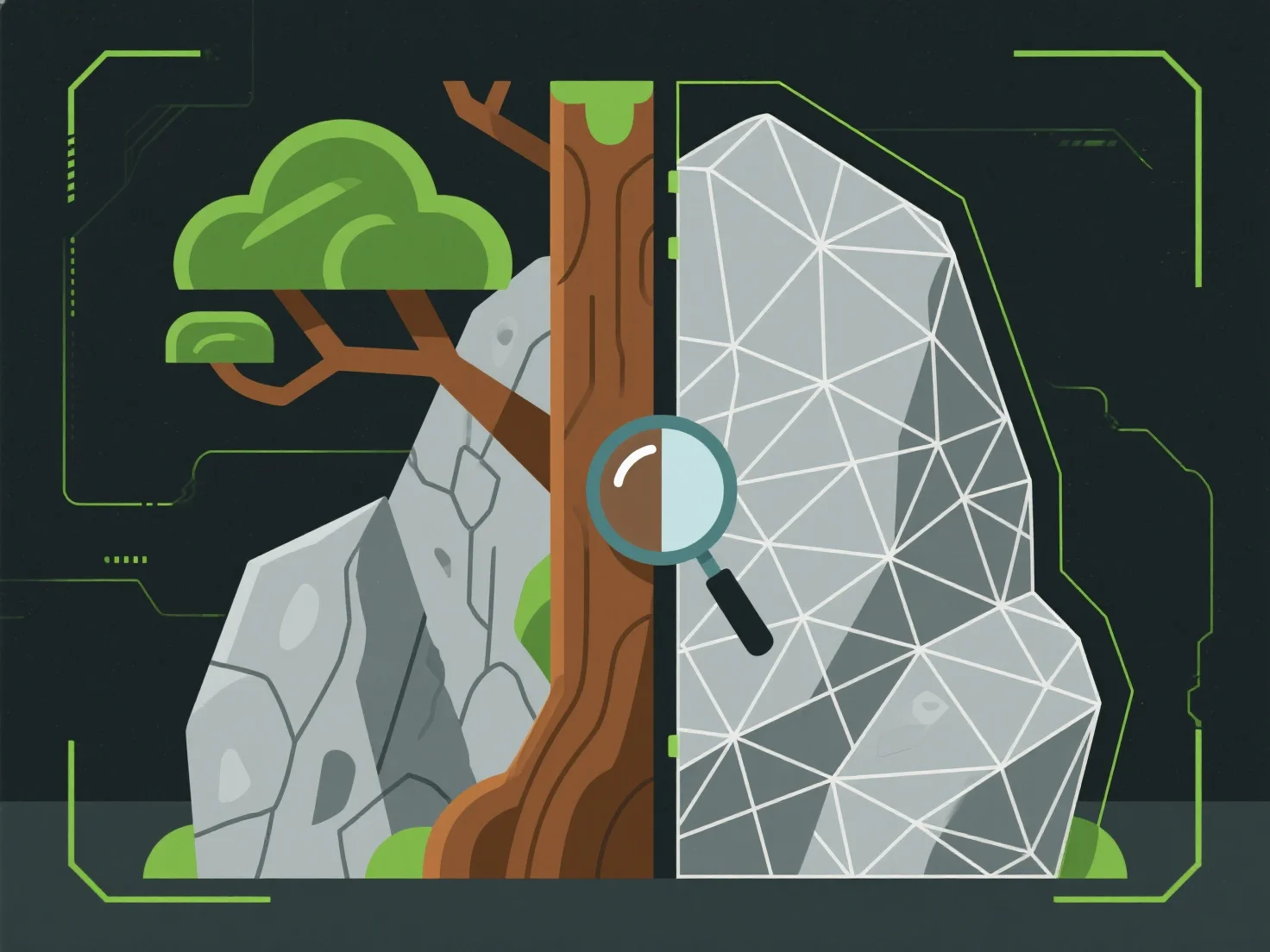
In 3D modeling, environmental assets like trees and rocks are composed by combining basic geometric foundations with texture, detail, and specialized techniques to achieve realism.
They begin with a simplified base mesh (often low-poly) to define the core shape—e.g., a cylinder for a tree trunk or a rough polygon for a rock.
Next, high-resolution textures are applied: bark patterns for trees, stone grain for rocks, using tools like PBR (Physically Based Rendering) to mimic real-world materials.
For trees, leaf clusters or branches may be added via particle systems or instanced geometry; rocks often use displacement maps to simulate cracks or bumps.
This layered approach balances efficiency and realism, making it accessible for beginners to start with basic shapes and free texture libraries.