


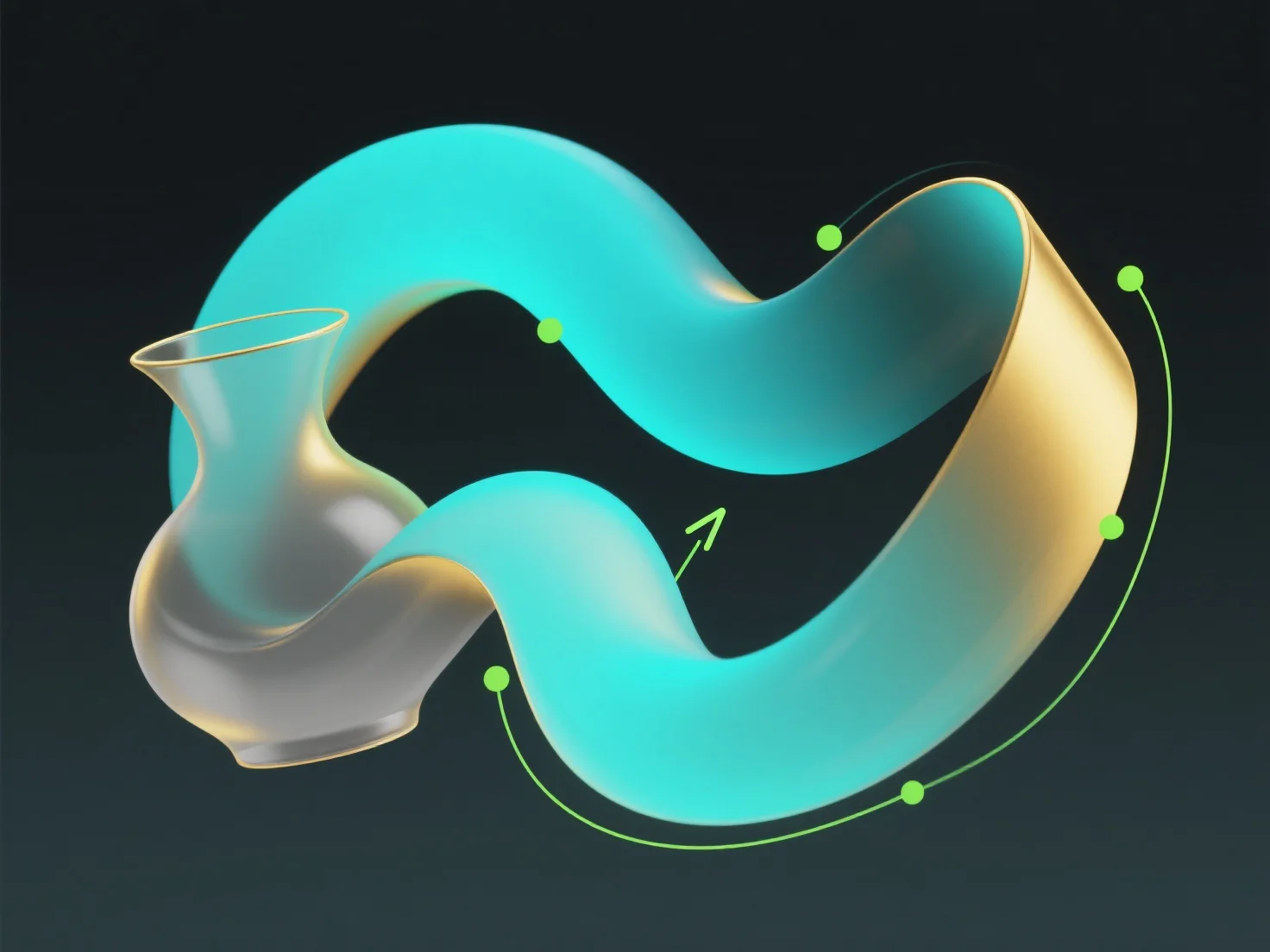
Curves are foundational guides for creating complex 3D shapes, enabling the generation of surfaces or volumes through key operations like extrusion, lofting, or sweeping.
- Extrusion: A 2D curve (e.g., a circle or polygon) is extended along a straight or curved path to form a 3D shape, such as a cylinder from a circle curve. - Lofting: Multiple curves (e.g., cross-sections) are connected to generate a smooth surface, ideal for organic forms like human faces or car bodies. - Sweeping: A profile curve moves along a guide curve, shaping surfaces—for example, a bottle’s neck from a circle and spiral guide.
Using precise curve types (e.g., Bézier, NURBS), these methods balance flexibility and accuracy, making curves essential for both organic and mechanical 3D designs.